


Why Southeast Asia Is Becoming a Top Choice for Notebook Sourcing?

You’re under pressure to keep margins healthy while retailers demand fresh designs, greener materials, and rock-solid on-time delivery.
Yet every RFQ feels like threading a needle: tariffs wobble, freight surcharges spike overnight, and one late notebook shipment can blow a season. The old “China-only” playbook suddenly looks brittle.
After two decades running paper factories, I’ve learned that diversifying into Southeast Asia isn’t a nice-to-have; it’s a lifeline. Today I’ll show you why the region is quietly becoming the go-to hub for planners, journals, and calendars—and how you can tap in before your competitors do.
Southeast Asia offers tariff relief, nimble lead times, and a young, skilled workforce—all without sacrificing the print fidelity and bindery finesse buyers expect.
I still remember pacing the loading dock in 2018, waiting for a container of coil-bound planners that was already twelve days late. A typhoon had paralyzed our coastal supplier, and rerouting volumes inland meant juggling capacity we didn’t really have. That night I asked myself a blunt question: If one storm can tip my entire Q4 upside-down, what happens when geopolitics start howling?
Fast-forward to 2025. Section 301 duties on Chinese stationery is becoming crazy. Customs documentation keeps ballooning. Meanwhile, large retailers whisper two words I never thought I’d hear together—China risk. Shifting even 30 % of notebook SKUs to Southeast Asia has insulated Lion Paper from the tariff roller-coaster and cut average door-to-door lead time by nine days.
But I’m not here to wave a flag; I’m here to give you the same roadmap I use when mentoring sourcing managers. We’ll tackle four burning questions:
Is cost still king, or has risk taken the throne?
Can Southeast Asia really match China’s scale and quality?
How do logistics and lead times stack up?
What about compliance, sustainability, and ethics?
By the end, you’ll see how countries like Vietnam, Cambodia, Thailand, and Malaysia have matured from “low-cost workshops” into serious partners for custom stationery. More importantly, you’ll have a checklist to act on—today.
Is Cost Still King, or Has Risk Taken the Throne?
Cheaper pages mean nothing if uncertainty eats your profits alive.
Five years ago a notebook FOB price was the only headline that mattered. Today, total landed cost is a three-ring circus: duties, currency swings, port congestion, and yes—your CFO’s blood pressure. Southeast Asian governments have responded with aggressive trade policies. Cambodia, for instance, enjoys duty-free access to the U.S. market under GSP for many paper goods. Vietnam and Thailand sign bilateral agreements that slash tariffs at the stroke of a pen. Factor in lower labor costs (30 %–40 % below coastal China) and you recoup 8–12 cents per unit on a typical A5 case-bound planner. But the real juice? Spreading production across two regions shaves your business-interrupt insurance premiums and throttles the risk of lockdowns or raw-paper shortages. In short, cost matters—but the predictability of that cost matters more.
The Hidden Math Behind “Savings”
Break down a 128-page ruled notebook and roughly 55 % of unit cost is raw paper, 25 % labor, 10 % overhead, and 10 % logistics. Moving bindery to Phnom Penh slices labor by a third and trims overhead (electricity, compliance fees) by another 5 %. Even if raw paper is imported, the blended cost still lands 12 % below comparable Chinese output.
Currency Buffers
Most factories quote in USD, shielding you from the yuan’s fluctuations. Cambodia’s dollarized economy virtually eliminates FX surprises—an underrated perk when you’re locking in Q3 back-to-school budgets.
Case Example
Last year a U.S. retailer shifted 600 K units of dot-grid journals to our Takeo plant. Tariff exemption alone saved $210,000. When Red Sea rerouting added $1,200 per container, the shorter Southeast-Asia-to-West-Coast lane neutralized the shock. That buffer kept retail price points intact—a win-win my buyer still brags about in QBRs.

Can Southeast Asia Really Match China’s Scale and Quality?
Quality once lived exclusively in the Pearl River Delta—no longer.
I won’t sugarcoat it: a decade ago, Southeast Asian notebooks felt like “good-enough” tourist swag. Fast forward to today and Japanese Heidelberg presses hum in Ho Chi Minh City, while PUR binding lines in Jakarta spit out lay-flat spines that rival anything in Dongguan. Regional governments offer tax holidays for imported equipment; suppliers reinvest, chasing OEM work from brands like Moleskine and Ban.do. My Cambodian line now pumps 5,000 spiral planners a day with <1 % defect, verified by third-party AQL 1.5 standards. We appointed our print-engineering experts to our Cambodia Factory, marry ISO 9001 audits with local hustle, and raise the bar each quarter. Quality is no longer a compromise; it’s a competitive edge.
Training the “Next Gen”
We dispatch experienced masters to the Cambodian factory to teach and train new local employees to ensure smooth production and guaranteed quality.
Material Sourcing Networks
While 60 % of premium paper still ships from Japan or Europe, regional mills in Vietnam now produce acid-free ivory sheets at 92 % the opacity of Italian stock but 15 % cheaper. Same goes for FSC-certified kraft covers out of Thailand’s Rayong mill.
Automation Leap-Frogs
Because many factories are greenfield builds, they skip legacy belt-drives and jump straight to servo-driven cutters and robot palletizers. That means fewer jams, cleaner trims, and a throughput rivaling mature Chinese plants.

How Do Logistics and Lead Times Stack Up?
Speed kills—especially when school seasons don’t wait for boats.
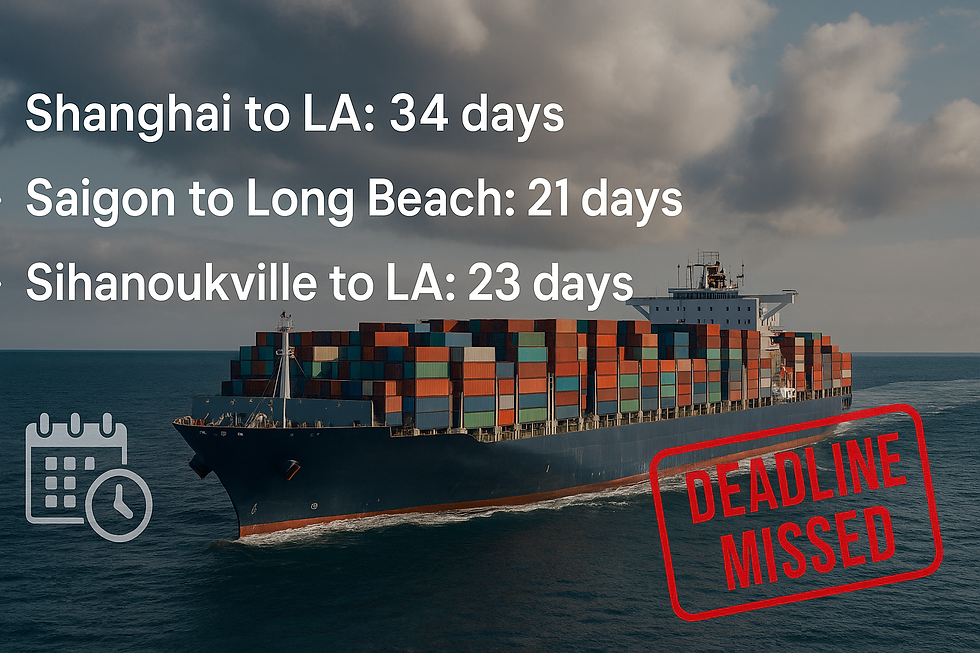
A 40-foot container from Shanghai to LA used to sail in 18 days door-to-door; last winter it clocked 34 thanks to port rollovers. By contrast, Saigon-Long Beach routes averaged 21. Westbound transits from Sihanoukville? 23. And when every planner missed back-to-school sets by one week, guess whose deliveries still hit floor sets? The brands splitting volumes across regions. Add direct flights out of Bangkok for urgent sample drops, and Southeast Asia wins the agility award. Remember: consumer-packaged calendars live or die on shelf dates. A regional portfolio trims buffer stock, lowers warehouse fees, and shrinks working capital traps.
Port Infrastructure Snapshot
Vietnam: Cat Lai terminal added two super-post-Panamax cranes in 2024—lifting capacity 25 %.
Cambodia: National Road 4 upgrade slashed factory-to-port trucking to 2 hours.
Thailand: Laem Chabang’s new rail link to the Eastern Economic Corridor shaves a day off inland haul.
Air Freight as a Safety Valve
Need 5,000 premium gift-box planners for a sudden influencer collab? DHL Phnom Penh moves them to JFK in <72 h at $5.30/kg—pricey, yes, but peanuts compared to missed revenue.
Inventory Optimization
Our hybrid China-Cambodia model lets us stage blank text blocks in Jiaxing and finish-bind in Takeo, syncing production with regional demand spikes. The result: 18 % less finished-goods inventory on our buyer’s balance sheet.
What About Compliance, Sustainability?
Cheap goods lose their shine if auditors shut your doors.
Sustainability moved from “nice story” to purchase-order clause. Southeast Asia is catching up fast. Vietnam’s Extended Producer Responsibility (EPR) law forces mills to improve effluent treatment; FSC chain-of-custody certificates have tripled since 2022. Cambodia’s garment code morphed into a paper-goods audit template, making BSCI and Sedex approvals straightforward. At Lion Paper’s Cambodia Factory, our products, from raw materials to final production, all meet the certification standards.
Regulatory Landscape
Thailand’s BIOCIRC policy incentivizes recycled fiber by 10 % tax credits, while Malaysia’s Green Lane speeds customs for eco-labelled goods. Staying ahead of these shifts means faster approvals and smoother inbound logistics into U.S. ports flagged for ESG screening.
Certifications That Matter
FSC® COC for paper origin
ISO 14001 for environmental management
CPSIA/Prop 65 for chemical compliance
Human Stories
We provide dormitories, daily necessities, and fixed bonuses and vacations for our employees.

Conclusion
Diversify now—Southeast Asia’s blend of savings, speed, and sustainability is too compelling to ignore.
Final Thoughts: I’ve spent half my career betting on print lines across three countries, and the pattern is crystal clear: buyers who spread their notebook sourcing into Southeast Asia weather storms—literal and figurative—better than those who don’t. Start small if you must, but start. Request test runs, audit plants, and let the numbers speak.
Contact us as your reliable notebook supplier!
Leo Xia,
CEO of Lion Paper Products
"You design, we deliver."


Comments