top of page

1. OEM accounts for 80–90% of our total sales, covering paper product design, R&D, and manufacturing.
2. ODM services provide derivative design and production of paper products, gifts, and storage items for markets in Southeast Asia, the Middle East, and beyond.
We offer OEM and ODM services to our clients.
With production facilities in Jiaxing (China), Phnom Penh (Cambodia), and Gyeonggi-do (South Korea), we enable our clients to ensure tariff compliance and effectively counteract the US-China trade tariffs.
International Supply Chain
We collaborate with licensed IPs such as Disney, Crayon Shin-chan, and Mikko, while also developing our own IPs like “Orion” and the “Xiao Bai” series. We also create tech-inspired cultural and creative products.
Where Creativity Meets Technology
Leveraging China’s extensive supply chain network, we match clients with new products and deliver a “Trading Plus” solution.
Product Development
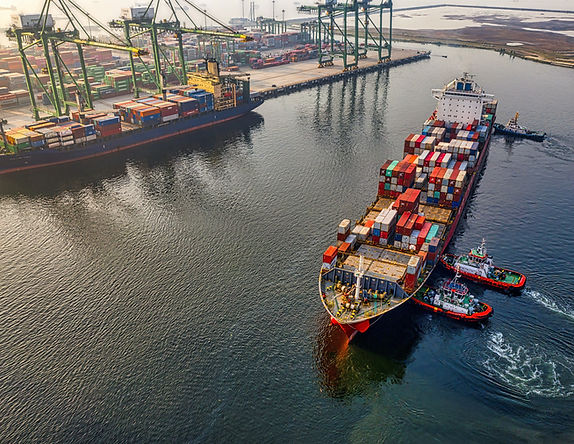
Fast and Secure Global Shipping Solutions.
Flexible shipping solutions for any notebook and stationery businesses.
Shipping Solution
We can help Amazon E-commerce sellers with sourcing, Inspection, and logistics.
Amazon FBA
1. Raw Material Checking
2. Production Process Checking
3. First Sample Checking
4. Mid-term Production Checking
5. Final Checking
6.Pre-shipping Checking
Quality Control
Production & Manufacturing
Frequently asked questions
There isn’t one universal number—lead time depends on structure (hardcover vs. spiral), materials (special paper/PU/foils), and how “ready” the spec is (artwork, dielines, and approvals).
As a practical planning range in our category, buyers usually separate the schedule into two parts: sampling and mass production.
• Sampling: concept sample → pre‑production (PP) sample (typically 2–4 weeks total, depending on complexity and revisions)
• Mass production (after PP approval): typically 30–60 days depending on SKU complexity and quantity
• Shipping time is separate (ocean/air/express) and should be planned as its own buffer.
Lion Paper Products: we run notebook programs mainly from our China (Jiaxing) + Cambodia bases; if you are comparing Vietnam suppliers, use the same milestone logic and ask for a dated critical path.
In OEM notebooks, “fast” only counts if it’s repeatable with stable quality. In reality, fast lead time comes from: (1) standard structures, (2) locked materials, and (3) reserved line capacity.
For well‑defined, repeat‑spec orders, 30–40 days ex‑works can be achievable. For highly customized seasonal items, 45–60+ days is more realistic.
• Fast is easier for repeat orders than first‑time development
• Fast is easier for spiral and standard softcover than complex hardcovers with multiple finishes
• Fast requires early booking + early material lock
If your ship date is non‑negotiable, we recommend building a written contingency plan before PO (see FAQ #7).
Instead of trusting “30–40 days” marketing claims, look for a supplier who can prove they have the structure to protect schedules.
• Dedicated notebook lines (not “we can do everything”) and a clear monthly capacity by binding type
• A dated critical path template (sampling → PP → bulk → packing → booking) used on real POs
• OTIF/ship‑date performance evidence (shipping logs, inspection pass dates, peak season history)
• Materials readiness plan (paper/PU/coil/packaging lead times and backup options)
• A consistent QC system across sites (golden sample control + IQC/IPQC/FQC/OQC)
Lion Paper Products can support 30–40 day production windows on selected standard structures when materials and capacity are locked early.
Good suppliers don’t just say “we deliver on time”—they show proof. OTIF (On‑Time In‑Full) is a common metric used to measure whether orders ship on the promised date and in the promised quantity.
• 12‑month OTIF summary (by customer segment, redacted if needed)
• Shipping logs: requested ship date vs. actual ETD/ATD + B/L dates
• Inspection timeline: PP approval date, FQC pass date, PSI reports (if used)
• Peak season record: Aug–Sep production schedule snapshots + rollover handling
• Customer references for similar programs (under NDA)
Lion Paper Products can provide redacted shipping evidence and milestone logs under NDA where confidentiality allows.
Peak season is where weak factories break. The best predictor is not their normal‑season performance—it’s how they plan capacity and materials when everything is tight.
• Ask for a peak season capacity plan: reserved lines, capped WIP, and escalation rules
• Require a pilot run + first‑article sign‑off before full ramp
• Lock key materials early (paper/board/coil/PU/packaging) with written confirmation
• Set weekly checkpoints with a “critical path” report, not casual updates
• Define a contingency ladder: overtime → alternate line → split shipment → air expedite
If a supplier can’t explain how they avoid rollovers in Aug–Sep, they won’t protect your ship dates.
For BTS, earlier is cheaper and safer. The practical answer is: book production capacity first, and book freight space early as well.
• Production capacity: ideally 8–12+ weeks ahead for large seasonal programs (earlier if there are special materials)
• Freight booking: ocean bookings commonly need 30–45 days ahead in peak season; air capacity often needs 2–3 weeks ahead
• Artwork/spec freeze: the earlier you freeze, the more realistic 30–40 day production becomes
Lion Paper recommendation: treat BTS as a project, not a PO—start with forecast + reserved capacity + locked materials.
A serious factory should offer a written “Plan A / Plan B / Plan C” before you place the PO—so you’re not improvising when time is gone.
• Plan A (standard): normal production + standard ocean booking; weekly milestone reports
• Plan B (recover): overtime or shift extension + priority line scheduling + partial delivery (30% first)
• Plan C (last‑mile): air/express for critical SKUs + ocean for the remainder; or route via alternative port/forwarder
• Decision triggers: clear dates where you switch from A → B → C (e.g., if PP approval slips, or if bulk start is late)
Lion Paper Products’ll propose the contingency ladder after we review your ship date, quantity, and SKU complexity.
Delays usually come from long‑lead or non‑standard materials and finishes—especially when the buyer locks them late.
• Special paper (dyed, textured, FSC claims, custom mill orders)
• Custom PU/leatherette colors, special coatings, anti‑scratch films
• Foil/UV/emboss plates and complex multi‑pass finishing
• Rigid gift boxes, magnets, custom inserts, and special carton specs
• Coils/metal parts in custom colors (especially in peak season)
How to avoid: freeze materials early, approve alternates in writing, and build buffer for anything custom‑made.
Different structures have different choke points. Knowing the bottleneck helps you judge whether a schedule is realistic.
• Hardcover (casebound): casing‑in alignment, glue curing/drying time, multi‑finish registration, warp control
• Spiral: punching accuracy, coil insertion speed, cover lamination cure, packing efficiency
• Both: print queue time, special material lead time, and final packing/labeling for retail
If your timeline is tight, choose structures and finishes that match the capacity bottleneck you can actually secure.
Repeat orders are faster because development work is already done. The key variables become material readiness + line availability.
• Best case: materials in stock/locked + reserved line → 30–45 days door‑to‑port for many standard notebook SKUs
• More realistic: 45–60 days if materials need re‑ordering or if peak season congestion exists
• Add shipping transit separately (ocean West Coast vs. East Coast differs significantly)
If you want consistent reorders, we recommend a rolling forecast + reserved capacity agreement (see FAQ #15).
Split shipments usually increase cost because you are paying extra fixed work twice (packing, documents, handling, and sometimes separate inspections). MOQ doesn’t always change, but unit cost can rise.
• Common cost drivers: extra packing labor, extra cartons/labels, extra documentation, and additional freight bookings
• When MOQ changes: if split shipments require separate production set‑ups or separate materials lots
• How to minimize impact: split at natural production milestones (e.g., ship finished SKUs first)
Lion Paper Products quotes split‑shipment cost case‑by‑case based on quantity split, timing, and destination requirements.
Partial delivery works when the supplier treats it like two mini‑projects with clear boundaries—not one messy order.
• A locked split plan: quantities by SKU, ship dates, and packaging/labeling rules for each batch
• Independent QC gates: each batch must pass FQC/PSI separately
• Clear warehouse control: batch IDs, carton labels, and photo evidence before loading
• Document readiness: separate packing lists and shipment documents to avoid customs confusion
Lion Paper Products can execute partial deliveries when the split plan is confirmed at PO stage and tied to defined checkpoints.
Port flexibility depends on where production finishes and how much inland trucking time you can afford.
• Our primary export gateways are typically Ningbo/Shanghai for East China production.
• If schedule or freight space requires, we can coordinate alternative ports (including South China) via forwarder networks—this may add inland trucking time/cost and must be confirmed per PO.
• For time‑critical programs, we recommend deciding the “default port” and “backup port” in advance.
If you share your destination (West/East Coast) and required ETD/ETA, Lion Paper Products can recommend the most reliable routing option.
Yes—strategic stockholding can protect lead times, but it must be managed with clear ownership and change rules.
• Typical models: customer‑owned stock (paid in advance) or supplier‑held stock with minimum consumption commitment
• What’s usually held: base paper/board, coils, standard components, or semi‑finished inner blocks
• Risks: spec changes, aging/yellowing for some materials, storage cost, and write‑off responsibility
For repeat programs, a small buffer stock plus rolling forecast is often the best balance.
Yes—but only if they run one quality system and one “single source of truth” for specs across sites.
• A shared golden sample + version control for artwork, materials, and finishes
• Same QC gates (IQC/IPQC/FQC/OQC) and the same defect definitions across sites
• Cross‑site training records and audit reports
• Traceable batch records linking materials lots to finished goods lots
• Redacted multi‑site program examples: same SKU produced in two sites with consistent results
Lion Paper’s China + Cambodia model is built for scaling while keeping specs consistent—when the spec is locked and controlled through the same system.
bottom of page