


White Label vs Private Label Notebooks: Complete Sourcing Guide for Brands and Retailers

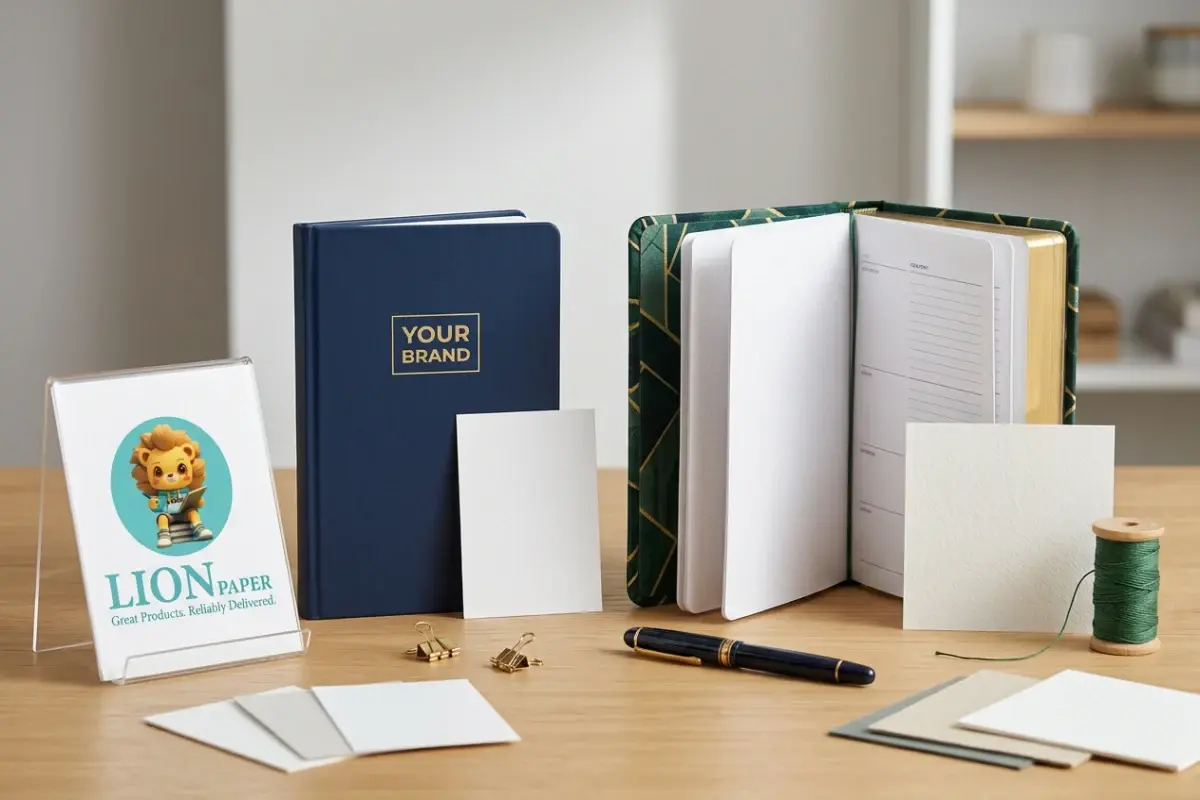
White label notebooks use existing pre-engineered factory templates with standardized specifications and custom logo placement for fast turnaround, whereas private label notebooks involve custom-engineered materials, bespoke layouts, proprietary structures, and exclusive packaging designed specifically for your brand. While white label sourcing minimizes upfront development costs and shortens lead times, private label manufacturing establishes distinct market differentiation, defensible retail margins, and full control over physical paper product specifications.
What Is the Difference Between White Label, Private Label, and Logo Imprinting for Notebooks?
Understanding the exact terminology in stationery procurement prevents misaligned expectations between brand buyers and production facilities. The paper goods industry classifies custom production into three distinct tiers of customization and ownership:
Logo Imprinting (Promotional / Co-Branding): Sourcing finished, shelf-ready blank books from existing distributor inventory and applying a surface treatment such as blind debossing, foil stamping, or screen printing on the front cover. Specifications cannot be changed, and page counts, ruling, and paper weight remain strictly as manufactured.
White Label Notebook Sourcing: Manufacturing stationery based on an established factory catalog of pre-engineered designs, standard book blocks, and fixed cover templates. The buyer selects from predetermined trim sizes, paper stocks, and binding structures, adding their brand name, custom belly bands, and packaging without altering inner technical layouts or physical tooling.
Private Label Notebook Manufacturing: Engineering a fully customized stationery product from the raw material level upwards. The brand specifies custom page layouts, bespoke cover textiles, tailored dimensions, specialty ribbon markers, custom-printed endpapers, custom-tooled hardware, and retail-ready packaging engineered exclusively for their product line.
In the stationery industry, white label stationery sourcing allows corporate gift buyers and emerging e-commerce brands to test market demand with minimal engineering overhead. Conversely, established lifestyle brands, retail chains, and specialized publisher imprints rely on private label notebook manufacturers to create bespoke collections that reflect precise aesthetic values and functional specifications.

Smyth-sewn book blocks, specialty cover fabrics, and tooling dies used in private label notebook manufacturing.
How Do Customization Depth, Tooling, and Unit Costs Compare Across Sourcing Models?
Selecting between white label vs private label notebooks requires evaluating commercial trade-offs between initial tooling investments, customization depth, piece costs, and market defensibility. When brands invest in bespoke molds, cutting dies, and custom-printed inner sheets, their initial capital outlay increases, but long-term per-unit margins and brand equity improve significantly.
Procurement Parameter | Logo Imprinting | White Label Notebooks | Private Label Notebooks |
|---|---|---|---|
:--- | :--- | :--- | :--- |
Design Ownership | Generic distributor design | Factory catalog template | Fully proprietary brand IP |
Cover Customization | Logo foil stamp or deboss | Custom cover material, foil, deboss, screen print | Bespoke cover construction, layered textures, custom die-cut windows, metal corners |
Inner Page Layout | Stock lined, blank, or dot grid | Pre-set lined, grid, or blank page blocks | 100% custom graphic layout, multi-color offset, dated calendars, tailored prompts |
Paper Stock Selection | Fixed stock (cannot change) | Factory-standard 80–100 gsm offset/woodfree | Custom gsm (70–160+ gsm), bamboo, cotton rag, FSC-certified recycled, stone paper |
Binding Options | Fixed stock binding | Standard casebound, wire-o, or softcover | Custom exposed spine, Swiss binding, lay-flat flexi-bound, thread-sewn hardcovers |
Tooling & Setup Fees | Low ($30–$80 per logo die) | Low to Medium ($100–$300 for plate setups) | Medium to High ($500–$2,500+ for custom dies, molds, and multiple plate passes) |
Unit Manufacturing Cost | High per unit | Moderate per unit | Lowest unit cost at volume scale |
Production Lead Time | 1–2 weeks | 3–5 weeks | 6–10 weeks (plus sampling) |
White label production eliminates the need to develop new industrial cutting dies, plate separations for hundreds of interior pages, or custom packaging structures. Private label notebook production requires higher initial investment in pre-press proofs, tooling dies, and structural sample iterations, but it delivers an exclusive product that competitors cannot duplicate via standard factory catalogs.
What Are the Typical Custom Journal Production MOQs and Lead Times?
Minimum order quantities (MOQs) in paper manufacturing are determined primarily by industrial machinery setup requirements rather than labor limits. Large offset printing presses, automated high-speed casing-in machines, and industrial paper-folding lines require substantial paper yardage and manual setup time to calibrate tension, ink density, and folding alignment.
Standard custom journal production MOQs and timeline expectations across the supply chain typically follow these operational thresholds:
White Label Standard MOQs: Generally start at 500 to 1,000 units per design. Because the factory uses existing inner-block paper stock and standardized case sizes, press setup time is reduced, making smaller production batches economically viable.
Private Label Baseline MOQs: Typically range from 1,000 to 3,000 units per SKU. If a brand requests custom-dyed PU leather covers, bespoke endpapers, full-color illustrated inner pages, or specialized gilded page edges, raw material suppliers impose minimum batch runs for raw paper pulp, custom fabric rolls, and edge-foiling equipment.
High-Volume Retail MOQs: Enterprise retail orders for mass-market retailers generally start at 5,000 to 20,000+ units, unlocking automated mass-production efficiencies and lower landed unit costs.
Lead times also differ significantly across sourcing pathways:
Sampling Phase: White label digital or material swatches take 3 to 7 business days. Private label physical pre-production samples (PPS), including fully printed custom book blocks, embossed covers, and custom retail gift boxes, require 12 to 20 business days.
Mass Production Window: White label runs typically finish within 25 to 35 calendar days after sample approval. Private label production requires 40 to 60 calendar days to accommodate multi-pass offset printing, sheet curing, thread sewing, spine rounding, casing-in, and custom gift packaging assembly.
Transit and Freight: Ocean freight from Asia to North America or Europe adds 20 to 35 days, while air freight takes 5 to 10 days for urgent inventory replenishment.
What Level of Material and Structural Control Can You Achieve in Notebook Manufacturing?
Material engineering defines the sensory feel, functional durability, and retail price ceiling of a journal. When sourcing private label paper goods, brands exercise complete authority over every physical layer of the book structure.
Paper Stock and Weight Optimization
Selecting the right paper stock requires balancing opacity, ink feathering resistance, tactile hand-feel, and book weight. Available paper grades include:
Woodfree / Offset Paper (70–120 gsm): Standard for everyday writing, note-taking, and planner interiors; provides smooth texture and clean ink absorption.
Heavyweight Woodfree & Art Paper (140–180 gsm): Preferred for bullet journals, sketching notebooks, and multimedia art journals; prevents fountain pen bleed-through and ghosting.
Sustainable & FSC-Certified Stocks: 100% post-consumer recycled paper, FSC-certified traceable virgin pulp, bamboo fiber paper, and agricultural residue papers that support corporate ESG procurement mandates.
Specialty Coated & Uncoated Stocks: Cotton rag paper, stone paper (calcium carbonate composite), and rough ivory deckled stocks for heritage stationery collections.
Cover Construction and Binding Formats
Notebook durability and openability depend directly on cover mechanics and binding methods. Sourcing partners provide various structural executions:
Hardcover Casebound (Smyth Sewn): Signatures of folded sheets are thread-sewn together and glued into a rigid board wrapped in PU faux leather, book cloth, genuine leather, or printed laminated art paper. This structure ensures true 180-degree lay-flat writing performance.
Softcover Flexi-Bound: A lighter, flexible cover adhered to a Smyth-sewn book block, offering portability while retaining lay-flat functionality.
Wire-O and Spiral Twin-Ring Binding: Metal dual-loop wire binding that allows 360-degree rotation and flat opening, ideal for desktop planners, student workbooks, and project pads.
Saddle Stitch and Singer Sewn: Folded sheets bound along the spine by staples or decorative stitching; ideal for slim pocket memo pads and field guides.
Specialty Embellishments and Finishing Techniques
Custom tactile embellishments elevate retail perceived value and reinforce premium brand aesthetics:
Cover Surface Finishes: Blind debossing, deep embossing, hot foil stamping (metallic, matte, holographic), spot UV varnishing, soft-touch matte lamination, and edge-to-edge silkscreen pattern printing.
Functional Add-Ons: Elastic closure bands, ribbon page markers (woven, satin, dual-color), expandable back-cover gusset pockets, elastic pen loops, magnetic flap closures, and gilded or sprayed colored page edges.

High-speed automated casing-in and binding lines in a large-scale notebook production facility.
How Does the OEM Notebook Manufacturing Process Work from Concept to Delivery?
The OEM notebook manufacturing process follows a structured engineering workflow to ensure that digital artwork files translate into physically sound, commercially viable paper products. A professional manufacturing workflow spans seven clear phases:
Concept Brief and Specification Alignment: The procurement team and OEM engineering department define target dimensions, page count, paper gsm, cover construction, Pantone color codes, surface finishes, packaging standards, target unit price, and required testing compliances.
Pre-Press Engineering and Die-Line Generation: Structural packaging and book engineers create vector die-lines for the cover, endpapers, inner sheets, belly band, and packaging boxes. Digital artwork is checked for bleed margins, trim boundaries, safe zones, and CMYK color space calibration.
Prototyping and Pre-Production Sampling (PPS): The factory produces a complete physical prototype. This involves creating magnesium foil/deboss dies, digital or wet proofing inner sheet layouts, constructing the cover, and hand-binding the sample to verify lay-flat capability, spine tension, material alignment, and structural rigidity.
Raw Material Inbound and Printing Production: Upon PPS approval, bulk raw paper rolls and cover materials are sourced and acclimated to factory humidity levels. Large-format offset printing presses print interior book signatures and covers with automated ink density monitoring to maintain color consistency across thousands of press sheets.
Folding, Gathering, and Smyth Sewing: Printed sheets are precision-folded into 16-page or 32-page signatures, gathered in sequential order, and fed into automated Smyth sewing machines that stitch the signatures together with durable polyester thread.
Book Block Binding and Casing-In: Sewn book blocks pass through adhesive spine-gluing, trimming on three-knife book cutters, spine rounding, head-band and ribbon application, and automated casing-in machines that bind the book block into rigid or flexible covers under pneumatic pressure.
Quality Control, Packaging, and Logistics Fulfillment: Finished notebooks undergo automated and manual quality checks according to AQL 2.5 standards, checking for glue stains, foil misregistration, crooked corners, or paper blemishes. Units are shrink-wrapped or boxed, packed into heavy-duty export master cartons with moisture desiccant packs, and palletized for global container shipment.
When Should Stationery Brands, Retailers, and Creators Choose White Label vs Private Label?
Choosing between white label vs private label notebooks depends on your distribution model, design resources, go-to-market speed requirements, and long-term brand equity goals. Evaluating your organizational capabilities against specific business scenarios clarifies the optimal strategic choice.
Optimal Scenarios for White Label Notebook Sourcing
Corporate Gifting and Event Merchandise: Organizations requiring branded corporate stationery for conferences, employee onboarding kits, or client gifts with tight delivery deadlines (3 to 5 weeks).
Emerging Brands and Creator IP Pilots: Content creators, personal brands, or boutique shops testing audience willingness to purchase physical stationery without investing heavily in custom manufacturing dies.
Promotional Add-Ons: Subscription box companies and promotional agencies looking for reliable, high-utility branded goods to complement primary product shipments.
Rapid Seasonal Catalogs: Retailers needing to fill immediate inventory gaps or capitalize on fast-moving seasonal color trends using proven factory base designs.
Optimal Scenarios for Private Label Notebook Manufacturing
Dedicated Stationery and Lifestyle Brands: Companies whose core business value proposition rests on proprietary layouts, unique sensory paper experiences, and distinctive brand aesthetics.
Specialized Functional Planners: Productivity, wellness, financial, and fitness brands requiring proprietary daily/weekly/monthly inner layouts, guided journal prompts, and multi-ribbon bookmark setups.
Tier-One Supermarkets and Department Retailers: National retail chains building exclusive in-house stationery lines that require barcode compliance, anti-theft tagging, specific retail display packaging, and competitive cost-per-unit metrics at 10,000+ unit scale.
Luxury and Executive Gift Houses: Brands developing high-ticket executive goods that demand genuine leather covers, custom metal hardware, gilt page edges, and premium rigid presentation boxes.
How Should Buyers Evaluate Private Label Notebook Manufacturers for Compliance and Scale?
Selecting a reliable manufacturing partner requires assessing technical engineering capabilities, factory scalability, quality management systems, and international trade compliance. A tier-one stationery manufacturer should operate with full transparency across both prototyping and high-volume mass production.
Key operational criteria for evaluating notebook manufacturing partners include:
Dual-Site Manufacturing Infrastructure: Tier-one supply chain partners utilize a coordinated dual-site strategy. For example, Lion Paper Products operates a 3,000-square-meter facility in Jiaxing, China, dedicated to rapid product planning, design development, precision prototyping, and pre-press engineering, paired with a 10,000-square-meter mass manufacturing facility in Cambodia. This dual-site synergy provides buyers with agile design iteration alongside tariff-optimized, cost-efficient, and dependable mass production capacity exceeding 5 million notebooks annually.
Comprehensive Compliance Certifications: Commercial paper imports in North America and Europe must satisfy strict social compliance, consumer safety, and environmental forestry standards. Ensure your manufacturing partner maintains active audits and certifications, including ISO 9001 (Quality Management), FSC Chain of Custody (Forest Stewardship Council), SMETA / WCA (Sedex Social and Labor Audits), GSV (Global Security Verification), Disney FAMA compliance, and CPSIA / REACH chemical safety testing.
Strict Quality Control Systems: Look for manufacturers operating standardized Standard Operating Procedures (SOPs), clear defect catalogs, and Acceptable Quality Limit (AQL) 2.5/4.0 inspection standards covering raw paper moisture levels, binding tensile strength, adhesive curing, and palletization drop testing.
End-to-End Category Integration: Suppliers capable of manufacturing across multiple related categories—including notebooks, dated planners, desk calendars, filing products, organizer bags, and rigid gift packaging—enable buyers to consolidate full lifestyle collections under one accountable production partner.

Final AQL quality inspection and retail packaging assembly for custom private label stationery.
Transitioning from generic stationery purchasing to a scalable manufacturing program starts with clear technical specifications and experienced engineering guidance. If you are developing a new custom planner line, expanding retail stationery collections, or optimizing your landed production costs, contact Lion Paper Products for a custom manufacturing evaluation to review your target volume, material specifications, and production timeline.
FAQ
What is the difference between white label and private label notebooks?
White label notebooks utilize existing pre-engineered factory book blocks and cover templates where brands simply add their logo, cover color choice, and belly band. Private label notebooks are built entirely from scratch with bespoke paper weights, proprietary graphic page layouts, custom cover dimensions, unique bindings, specialized hardware, and custom-engineered retail packaging.
What are typical custom journal production MOQs for private label manufacturing?
Private label notebook manufacturing generally requires minimum order quantities (MOQs) between 1,000 and 3,000 units per design. This volume is driven by offset press calibration, paper mill sheet sourcing, and automated casing-in machine setups. White label orders with standard pre-made book blocks can often start at lower MOQs of 500 to 1,000 units.
Which paper weight and type is best for custom fountain pen and marker journals?
For bleed-free writing with fountain pens, gel inks, and markers, uncoated woodfree paper between 100 gsm and 160 gsm is recommended. Selecting FSC-certified paper with high surface sizing and smooth fibers prevents ink feathering and show-through while maintaining a pleasant tactile writing experience.
Can a manufacturer handle both design prototyping and high-volume mass production?
Yes. Integrated supply chain providers like Lion Paper Products utilize a dual-site model: design, rapid prototyping, pre-press engineering, and small-batch development take place at their Jiaxing facility, while scalable, cost-effective mass production and global container shipments are handled through their large-scale Cambodia manufacturing plant.


Comments