


Sourcing Custom Vinyl Pencil Cases: The Professional Retailer's Guide

Sourcing retail-ready vinyl pencil cases requires a strategic balance of safe material selection (such as phthalate-free PVC or TPU), robust construction techniques like high-frequency heat-sealed seams, and coordinated design integration with broader notebook lines to maximize shelf appeal and SKU profitability. Partnering with a dual-site manufacturer ensures compliant material testing, cost-optimized mass production, and agile retail-ready packaging.
What is the strategic value of incorporating vinyl pencil cases into a stationery retail program?
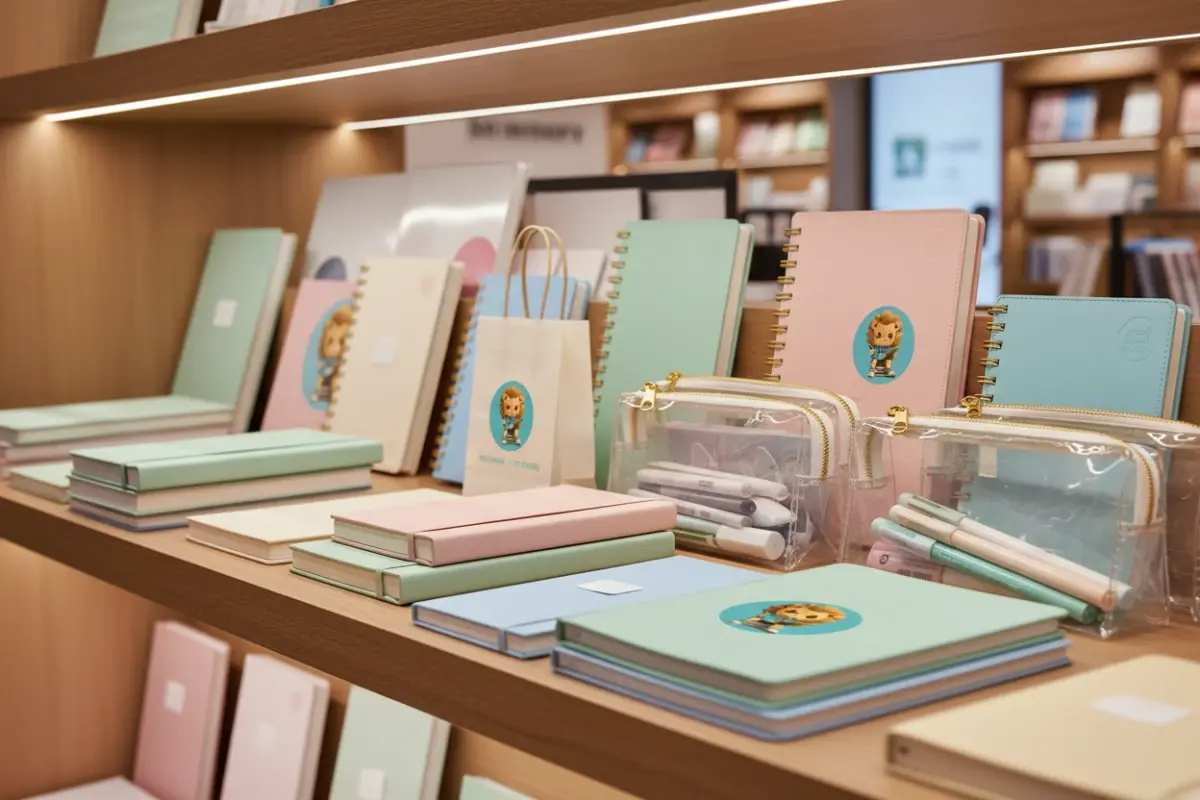
In the competitive retail stationery and lifestyle market, building cohesive product ecosystems is key to driving average order value (AOV) and brand loyalty. Incorporating retail-ready clear vinyl pencil pouch options and coordinating vinyl pencil cases into seasonal collections transforms standalone items into complete organizational solutions. Brands that pair notebooks, journals, and planners with matching stationery pouches wholesale find that consumers naturally bundle these items at the point of purchase.
From a merchandising perspective, transparent and semi-transparent storage solutions offer unique visual utility. Customers appreciate being able to identify contents instantly, making these products popular among students, creative professionals, and bullet-journaling enthusiasts. Additionally, the materials used in bulk vinyl pencil pouches are inherently water-resistant, stain-resistant, and easy to sanitize, presenting a high-durability value proposition compared to traditional canvas or cotton pouches.
For procurement managers, custom pvc pencil cases represent high-margin SKUs with flexible design potential. They can be manufactured in a wide array of formats, including flat envelope styles, gusseted stand-up pouches, or multi-compartment organizers. When designed as part of a coordinated seasonal launch, they act as the visual anchor of a retail display, housing colorful pens, sticky notes, and aesthetic accessories that drive impulse purchases.
How do material choices like phthalate-free PVC and eco-friendly TPU compare for custom vinyl cases?
Selecting the correct polymer is critical for compliance, durability, and tactile premium appeal. The two dominant choices for clear and semi-transparent stationery pouches are Polyvinyl Chloride (PVC) and Thermoplastic Polyurethane (TPU). Each material offers distinct physical properties and regulatory profiles that buyers must evaluate against their target market requirements.
Traditional PVC is highly cost-effective and structurally stable, but standard formulations often utilize ortho-phthalate plasticizers to achieve flexibility. For consumer products destined for North America and Europe—especially those targeting school-aged demographics—manufacturers must specify phthalate-free PVC. This specialized formulation replaces restricted plasticizers with non-toxic alternatives, ensuring compliance with strict CPSIA and REACH guidelines.
TPU serves as the premium, highly sustainable alternative to PVC. It is naturally flexible without the addition of plasticizers, remains completely odorless, and offers exceptional resistance to yellowing from UV exposure. Furthermore, TPU exhibits superior cold-crack resistance, meaning it will not become brittle or fracture in low-temperature shipping and retail environments.
Below is a technical comparison of the two materials to assist in product development:
Performance Metric | Phthalate-Free PVC | Eco-Friendly TPU |
|---|---|---|
:--- | :--- | :--- |
Material Cost | Economical / Baseline | Premium (Approx. 30-50% higher material cost) |
Transparency & Clarity | High optical clarity, slight blue/yellow tint | Exceptional optical clarity, crystal-clear |
Flexibility & Tactility | Soft to semi-rigid, temperature-dependent | Highly elastic, rubbery, premium hand-feel |
UV Resistance | Moderate (Requires stabilizers to prevent yellowing) | High natural resistance to yellowing and oxidation |
Cold-Crack Resistance | Moderate (Can stiffen in freezing conditions) | Excellent (Maintains flexibility down to -30°C) |
Regulatory Compliance | Complies when formulated with safe plasticizers | Inherently compliant with REACH, CPSIA, and California Prop 65 |

What construction techniques determine the durability and safety of high-volume stationery pouches?
When sourcing bulk vinyl pencil pouches, structural engineering directly dictates the lifespan of the product and, by extension, brand reputation. The two primary methods of assembling vinyl panels are high-frequency (RF) welding and traditional mechanical stitching. Understanding the mechanical differences between these methods is essential for quality control.
High-frequency welding utilizes electromagnetic energy to agitate the polymer molecules within the overlapping vinyl sheets. This molecular excitation generates localized heat, melting the interfaces and fusing them into a single, continuous layer under pressure. This process creates a hermetically sealed, tear-proof bond that is stronger than the parent material itself. It completely eliminates the need for sewing threads, which can fray, rot, or collect dirt over time. For a sleek, modern aesthetic, RF welding is the industry-standard choice for clean-edged clear vinyl pencil pouch designs.
Stitched construction is employed when vinyl panels are joined to non-vinyl materials, such as canvas borders, woven zipper tapes, or fabric linings. While stitching offers a classic, textured aesthetic, it introduces puncture holes that can act as stress-concentrating tear points in PVC sheets. To mitigate this risk, structural reinforcement is required:
Stitch-Density Optimization: Maintaining 7 to 8 stitches per inch; tighter spacing acts as a perforation line, while wider spacing reduces seam strength.
Reinforced Bindings: Using nylon or polyester webbing to wrap raw edges before stitching, distributing tension away from the vinyl surface.
Heavy-Duty Threading: Specifying bonded nylon or lubricated polyester threads to resist tension and friction during daily zipper use.
Zipper integration is another critical failure point. In high-quality stationery pouches wholesale, zipper tapes are either heat-welded directly to the vinyl body using specialized TPU-coated zipper tape, or stitched with double-reinforced lockstitches. The pullers must withstand standard pull-force tests (typically 80-100 Newtons) to prevent choking hazards and ensure smooth, long-term operation on busy student desks.
Which printing and decoration techniques perform best on clear vinyl surfaces?
Applying brand artwork, patterns, or logos to vinyl requires ink formulations that form a permanent chemical bond with the non-porous polymer surface. Standard offset paper inks cannot dry or adhere to vinyl; instead, specialized decorating techniques must be utilized.
Screen Printing (Silkscreen)
Silkscreening remains the gold standard for solid-color graphics, bold logos, and high-opacity patterns on custom pvc pencil cases. It utilizes solvent-based or UV-curable inks that slightly etch the vinyl surface during curing, resulting in high mechanical adhesion and scratch resistance. For clear pouches, screen printing allows for vibrant, opaque undercoats, ensuring that light-colored graphics stand out clearly against transparent backdrops.
UV Digital Printing
For complex, multi-colored designs, gradient artwork, or small-batch custom collections, UV digital printing offers unmatched flexibility. This technology deposits micro-droplets of ink that are instantly cured by high-intensity ultraviolet lamps mounted on the print head. The instant curing prevents the ink from spreading or bleeding, yielding photo-realistic resolution directly on clear vinyl pencil pouch panels. It is highly efficient for prototyping and short-run custom projects as it requires no physical screens or setup plates.
Heat-Transfer Printing
For full-surface, highly intricate patterned graphics, heat-transfer films are pre-printed and then fused onto the vinyl body using thermal rollers. While highly detailed, the print parameters must be tightly controlled: excess heat can warp or thin the underlying vinyl sheet, while insufficient heat leads to premature peeling and flaking of the transfer film along high-flex points.
How can brands coordinate clear vinyl pencil pouches with custom notebooks for seasonal collections?
To maximize retail impact, professional buyers often coordinate vinyl pencil cases with their flagship paper products, such as spiral notebooks, daily planners, and creative journals. Achieving cross-category design cohesion requires an integrated manufacturing partner capable of harmonizing colors, raw materials, and graphic treatments across vastly different substrates.
When developing a seasonal collection, the concept of "Scenario Fit" guides the integration. For instance, a feminine-forward journaling set might pair a wire-bound pastel notebook with a matching clear vinyl pencil pouch that features matching gold foil branding and a matching floral print pattern. This requires precise color calibration—ensuring that the CMYK values printed on the uncoated paper of the planner match the pantone values screen-printed on the transparent TPU body of the pouch.
Furthermore, the physical construction can be engineered to interact directly. Some modern planner designs feature integrated slide-on custom pvc pencil cases that attach via elastic bands, snap buttons, or custom-molded plastic slider tracks. This design-to-manufacturing integration ensures that the combined kit is secure, compact, and optimized for retail shelves or lifestyle-focused e-commerce photography.
What supply chain logistics and manufacturing compliance standards must wholesale vinyl pouch buyers address?
Managing global compliance and logistics for bulk vinyl pencil pouches requires meticulous planning, from initial chemical auditing to ocean freight container configuration. Brands must partner with manufacturers that maintain comprehensive international certifications and robust, dual-site supply chain models.
Dual-Site Supply Chain Advantages
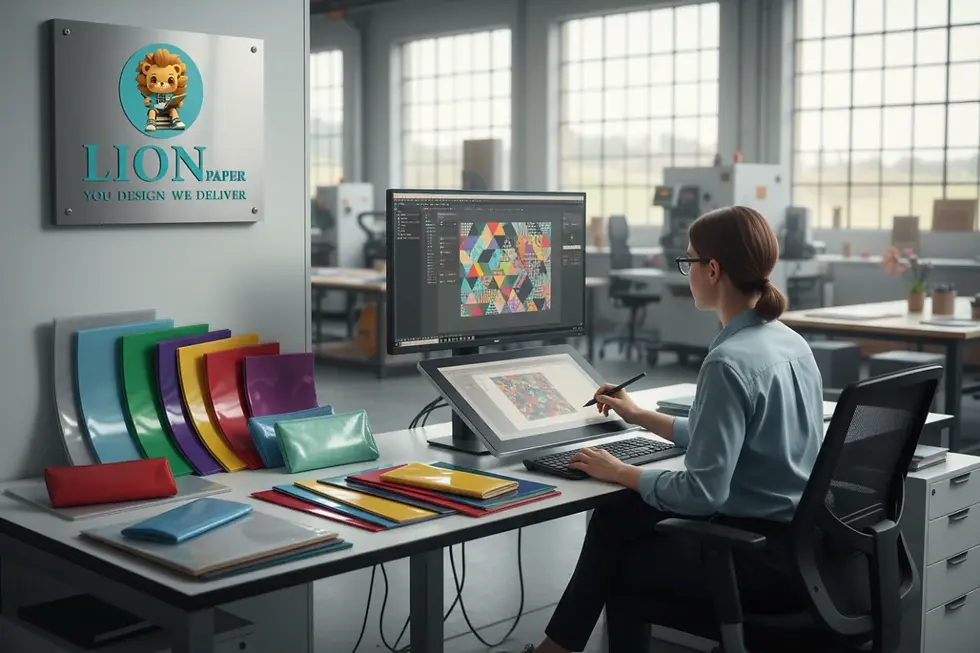
Utilizing a dual-site production model provides unparalleled flexibility and cost optimization. Prototyping, rapid CAD sampling, material sourcing, and specialized printing are handled in advanced hubs like Jiaxing, China, which occupies a 3,000-square-meter facility dedicated to design and fast-turnaround sampling. Once designs are approved, high-volume production can be seamlessly transitioned to larger facilities, such as a 10,000-square-meter mass-production plant in Cambodia. This Cambodia footprint offers significant tariff and duty advantages (such as GSP eligibility for major Western markets) while utilizing automated heat-sealing lines and standardized SOPs to maintain consistent yield and competitive pricing.
Essential Compliance Certifications
Retail-bound stationery pouches wholesale must meet stringent safety, ethical, and quality benchmarks. Buyers should verify that their manufacturing partners hold and actively maintain the following audits and certifications:
ISO 9001: Standardizes quality management systems, assuring batch-to-batch consistency.
SMETA / WCA: Audits labor practices, health and safety standards, and environmental responsibility within the manufacturing facilities.
FAMA (Facility and Merchandise Authorization): Vital for brands producing licensed merchandise under strict global brand guidelines.
CPSIA & REACH Compliance: Verifies that all raw PVC, TPU, metal pullers, and inks are tested in accredited third-party laboratories to prove they are free of lead, cadmium, heavy metals, and restricted phthalates.
How do you set the standard retail specification matrix for bulk vinyl pencil pouches?
To streamline the RFQ process and minimize development cycles, brands should establish a highly structured technical specification sheet. Clear communication of dimensions, material weights, and closure hardware ensures accurate pricing and eliminates structural misunderstandings during the prototyping phase.
The following matrix outlines typical retail-grade specifications for high-volume stationery pouches wholesale:
Feature | Entry-Level Promotional | Mid-Range Retail Standard | Premium Lifestyle Grade |
|---|---|---|---|
:--- | :--- | :--- | :--- |
Material | Standard Phthalate-free PVC | High-clarity Phthalate-free PVC | Premium Optical-Grade TPU |
Thickness | 0.20 mm - 0.25 mm | 0.30 mm - 0.40 mm | 0.40 mm - 0.50 mm |
Construction | Heat-welded seams, basic raw edges | Reinforced heat-welded seams or bound stitched seams | High-frequency welded seams with fabric-bound interior margins |
Zipper Specification | #3 Nylon coil zipper with plastic slider | #5 Nylon coil zipper with custom molded zinc-alloy slider | Waterproof-sealed reverse-coil zipper with brand-engraved metal puller |
Decoration Method | 1-color Silkscreen | Multi-color Silkscreen or UV Digital Printing | Direct UV digital printing + Metallic Foil hot-stamping |
Retail Packaging | Bulk pack with individual polybags | Direct-to-retail carded hanger with barcode stickers | Biodegradable frosted bag with premium cardboard insert drawer |
What key questions should brands ask before initiating a vinyl stationery pouch RFQ?
To protect your brand and avoid costly supply chain delays, ensure your engineering and product development teams ask potential manufacturing partners these targeted technical questions:
What specific plasticizers are used in your PVC sheets, and can you provide certified test reports showing zero restricted phthalate content? (This ensures smooth entry through customs and compliant listing on major retail shelves).
What is your tolerance for cold-crack resistance, and have your materials been tested under simulated winter shipping conditions? (Crucial if your products are shipped during colder months to avoid cracking in unheated containers).
How do you prevent sticking or blocking of clear vinyl panels during storage in high-humidity shipping transit? (A high-quality manufacturer will apply food-grade anti-blocking powder or integrate anti-stick additives into the polymer film extrusion process).
Are your high-frequency welding dies custom-made in-house, and what is your turnaround time for custom-shaped prototypes? (In-house tooling capabilities indicate a higher degree of technical agility and significantly reduce the time required to move from first sketch to approved pre-production sample).
By addressing these material, structural, and compliance details, retail brands can confidently launch custom vinyl collections that deliver high aesthetic value and flawless functional durability to consumers worldwide.
To explore how clear or custom-decorated vinyl elements can enhance your next product catalog, Send your target product, material, decoration and quantity; Lion Paper can propose a retail-ready construction and sampling route.
FAQ
Can clear vinyl pencil pouches meet strict retail safety standards for children's school supplies?
Yes. When sourcing clear vinyl pencil pouch options, they must be manufactured using specialized phthalate-free PVC or premium TPU. These materials are certified under CPSIA, REACH, and California Proposition 65 standards, ensuring they are entirely free of restricted heavy metals and toxic plasticizers, making them 100% safe for school and retail environments.
What is the minimum order quantity (MOQ) for custom pvc pencil cases, and how is it managed across dual manufacturing sites?
For custom pvc pencil cases, production MOQs typically range from 3,000 to 5,000 units per style, depending on material thickness and color customization. Through our dual-site network, our design and prototyping facility in Jiaxing, China, handles small-batch sampling and rapid proof-of-concept tests. Once approved, the design is transitioned to our larger Cambodia plant for mass assembly and cost-effective bulk shipping.
How do you prevent clear vinyl cases from yellowing or turning cloudy over time?
To ensure long-lasting clarity, we incorporate UV-inhibiting stabilizers into our raw PVC and TPU materials during extrusion. This formulation blocks ultraviolet radiation, preventing the molecular breakdown that causes traditional vinyl to turn yellow, brittle, or cloudy when exposed to sunlight on retail shelves or during consumer use.


Comments