


Seasonal Memo Pad Price Architecture: Engineering Formats, Sheet Counts, and Margins for Retail Stationery

A seasonal memo pad price architecture aligns format dimensions, sheet count, and material grades across entry, mid, and premium retail price tiers to balance perceived consumer gift value with rigorous gross manufacturing margins. By calibrating paper caliper, finishing embellishments, backing board thickness, and binding methods to precise price bands, stationery brands and retail buyers can maximize seasonal sell-through while preventing inventory write-downs.
How Do Frontline Workflows Shape Seasonal Pad Construction Planning?
Seasonal memo pads operate under distinct retail and consumer usage conditions compared to evergreen stationery. Whether designed as holiday impulse buys, back-to-school desk organizers, spring planning pads, or corporate year-end gifts, seasonal notepads must deliver immediate tactile appeal, clear functional utility, and shelf presence within compressed selling windows. Engineering the product begins by understanding the end-user workflow and how functional layout dictates physical pad construction.
In custom seasonal notepad manufacturing, workflow design directly influences trim size, sheet orientation, and substrate choices:
Daily Checklist and Task Tracking: Vertical rectangular formats (such as 4" x 8" or 3.5" x 8.5") prioritize single-column checklists. These pads require standard glue-top tear-off binding with a rigid backing board (1.5 mm to 2.0 mm greyboard or chipboard) so users can write comfortably while standing or holding the pad in one hand.
Weekly Desktop Planning: Landscape formats (such as 10" x 7" or 11" x 8.5") serve as keyboard-adjacent desktop organizers. These require heavier base substrates (typically 100 to 120 gsm wood-free paper) to resist curling over seven days of desk exposure, paired with reinforced head tape or adhesive edge binding along the top or side to prevent premature page separation.
Quick Capture and Message Notes: Compact square formats (such as 4" x 4" or 5" x 5") serve high-frequency message jotting near home entryways, kitchen counters, or office desks. These formats often integrate decorative edge printing, die-cut silhouettes, or magnetic backings to support retail display in gift baskets and impulse checkout lanes.
Multi-Segment Project and Habit Trackers: Oversized grid pads (such as A4 or 8.5" x 11") incorporate modular printed zones for prioritization matrices, habit trackers, and open note sections. Because users reference these pages over multi-week intervals, clean micro-perforations or residue-free padding adhesives are critical to keep underlying sheets pristine.
Planning seasonal programs requires product developers to reverse-engineer retail shelf dynamics. Unlike year-round core SKUs, seasonal collections must achieve peak conversion within a 6-to-12-week retail window. This compressed timeframe demands an exact alignment between visual merchandising, sheet longevity, and production cost structures.

Workflow requirements dictate notepad dimensions, binding placements, and structural backing board thickness.
What Defines the Memo Pad Sheet Count by Price Tier in Retail Stationery?
Establishing a robust stationery retail price architecture requires standardizing the memo pad sheet count by price tier to match perceived value with unit manufacturing costs. Retail buyers categorize seasonal paper goods into entry impulse, mid-tier core lifestyle, and premium gift collections. If a pad has too few sheets, the consumer perceives low value; if it has too many sheets, retail price points escalate, eroding seasonal velocity and inflating freight expenses.
The matrix below establishes the industry benchmarks for dimension, sheet count, substrate grammage, and finishing specifications across standard retail price tiers:
Price Tier | Retail Target (USD / EUR) | Target Sheet Count | Standard Dimensions | Recommended Substrate | Backing & Structural Specs | Key Finishing & Embellishments | Primary Retail & Merchandising Focus |
|---|---|---|---|---|---|---|---|
:--- | :--- | :--- | :--- | :--- | :--- | :--- | :--- |
Entry / Impulse | $2.99 – $4.99 / €2.50 – €4.50 | 40 – 50 sheets | 3.5" x 5.5", 4" x 6", or 4" x 8" | 70 – 80 gsm Uncoated Wood-free (Offset) | 0.8 mm – 1.0 mm Greyboard / White Cardboard | 1-to-2 color spot PMS printing, standard cold glue padding, polybag with hang hole | POS counter displays, impulse dump bins, stocking stuffers, multi-pack holiday bundles |
Mid-Tier Lifestyle | $6.99 – $9.99 / €6.00 – €9.00 | 60 – 80 sheets | 5" x 7", 6" x 9", or 8.5" x 11" | 100 – 120 gsm Premium Wood-free / FSC Offset | 1.5 mm – 2.0 mm Dense Rigid Chipboard | 4-color CMYK process, metallic hot foil stamping on header tape, rounded corners, magnetic back | Bookstores, specialty stationery displays, seasonal endcaps, back-to-school core lines |
Premium / Gift | $12.99 – $18.99 / €12.00 – €18.00 | 100 – 150+ sheets | 7" x 10", 8.5" x 11", or Custom Die-Cut Blocks | 120 – 140 gsm Archival / Heavy Text Stock | 2.5 mm Fabric/Leatherette wrapped base or wooden tray base | Gilded/foil painted edges, debossed cloth binding, heavy specialty cover flap, shrink-wrapped gift box | Luxury department stores, holiday gift programs, corporate executive gifting, designer collections |
In the entry tier ($2.99 to $4.99), material efficiency is the governing principle. Standardizing on 80 gsm offset paper allows high-speed roll-fed or sheet-fed printing and gang-run binding. This configuration maintains healthy retailer margins (typically 55% to 65%) while accommodating competitive retail price points.
For the mid-tier ($6.99 to $9.99), perceived thickness and tactile luxury become primary conversion drivers. Upgrading the substrate to 100 gsm or 120 gsm gives the pad a substantial hand-feel and ensures clean tear-offs without edge crinkling. Incorporating structural elements like 1.8 mm chipboard bases and foil-accented cloth binding heads bridges the gap between everyday functional stationery and giftable design.
At the premium tier ($12.99 to $18.99), the product transitions from an ephemeral desktop consumable into an architectural desk accessory. High page counts (100 to 150+ sheets) on 120 gsm or heavier paper stock, combined with painted or gilded page edges, fabric-wrapped rigid bases, and custom slipcase packaging, justify higher retail price points and deliver the margins necessary for upscale specialty boutiques and direct-to-consumer (DTC) brands.
What Preprinted Field Layouts and Writing Performance Criteria Are Essential?
Seasonal memo pads must satisfy rigorous aesthetic standards while maintaining flawless everyday writing performance. When developing custom seasonal notepad manufacturing programs, product development teams must balance visual print density with functional writing space, ensuring ink compatibility across common writing instruments.
Functional field architecture requires deliberate layout planning:
Grid Line Weight and Ink Opacity: Ruling lines, dot grids, and checkbox borders should be printed in soft neutral tones (such as Cool Grey 3C to 5C or muted pastel hues) using screens between 15% and 30% tint. Heavy, dark black printing interferes with user notes and reduces perceived visual sophistication.
Header and Margin Allocation: The top header zone containing seasonal artwork, typography, or calendar indicators should consume no more than 15% to 20% of the total page height. Overly dominant graphics compromise usable writing surface, leading to negative consumer reviews.
Edge Margin Bleed and Trimming: Custom tear off memo pad specifications must incorporate a minimum safety margin of 4 mm to 5 mm from all cut edges and binding lines. This prevents critical layout elements, checkboxes, or functional text from being trimmed off during mass guillotining and edge-sanding processes.
Writing performance criteria depend fundamentally on paper chemistry, fiber sizing, and surface finish. Consumers use diverse writing tools, ranging from ballpoint pens and gel inks to rollerballs, brush markers, and fountain pens. The core paper criteria necessary to prevent common writing defects in commercial stationery production include:
Feathering Resistance: Uncoated offset sheets must feature adequate internal and surface sizing (such as alkyl ketene dimer / AKD sizing agents) to prevent ink droplets from spreading laterally along surface fibers.
Ghosting and Show-Through: Ghosting is controlled by sheet opacity, which must exceed 90% for 80 gsm sheets and 94% for 100+ gsm sheets. High opacity ensures that high-contrast black gel pens or felt markers do not visually bleed through to the reverse side or distract when sheets are displayed on clipboards.
Bleed-Through Prevention: For pads intended for multi-pen use, incorporating smooth-milled 100 to 120 gsm wood-free paper prevents liquid inks from penetrating through to the subsequent sheet in the pad.
Ink Dry Time Balance: A semi-absorbent, uncoated matte calendered surface ensures quick ink absorption (under 3 to 5 seconds for standard gel pens) while avoiding surface smearing when users immediately rest their palms on freshly written text.
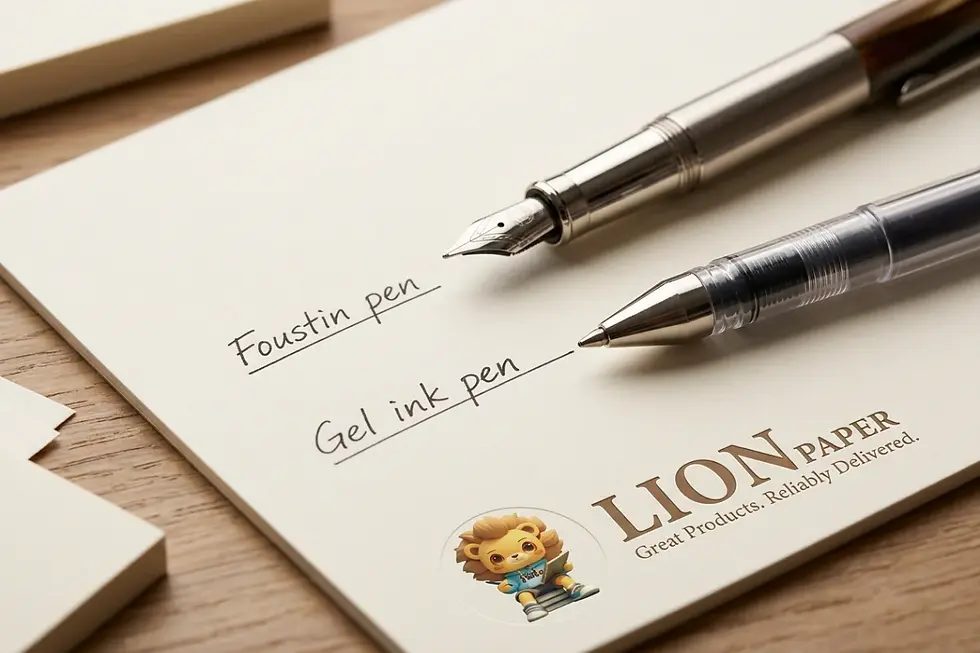
Sizing quality and paper grammage prevent ink feathering and ghosting across diverse writing instruments.
What Structural and Quality Assurance Checkpoints Govern Tear-Off Binding?
The functional integrity of a memo pad centers on its binding. A seasonal pad fails in the market if sheets detach prematurely during shipping, or conversely, if tearing a sheet rips the paper header and leaves messy glue residue. Achieving clean tear-off characteristics requires strict structural tolerances and quality control protocols.
Key manufacturing methods dictate the pad's mechanical performance:
Cold Emulsion Padding Glue: Traditional water-based padding adhesive applied along the top edge of clamped paper blocks. Ideal for standard tear-off pads. Formulation flexibility ensures that individual sheets pull away smoothly without fracturing the adhesive spine or pulling adjacent sheets loose.
Hot Melt PUR Padding: Polyurethane reactive hot melt provides superior adhesion for high-density, high-sheet-count desktop blocks (100+ sheets) or heavier 120 gsm stock. PUR provides high tensile flexibility, preventing block splitting in cold winter shipping environments.
Micro-Perforation with Stitched or Glued Header Flaps: Sheets are perforated 10 mm to 15 mm below the top edge and secured with wire side-stitching or header tape. Perforation blade pitch (typically 17 to 25 teeth per inch) must be calibrated to ensure a crisp, tear-resistant hold during page turning, yet tear cleanly with gentle downward pressure without tearing into the note area.
Magnetic Backing Integration: For magnetic refrigerator or filing cabinet pads, flexible anisotropic magnetic strips (0.5 mm to 0.8 mm thick) are adhered to the back chipboard. The adhesive shear strength must withstand repeated peeling forces and the full weight of an unconsumed 60-to-80 sheet pad without sliding or delaminating.
Comprehensive quality assurance checkpoints must be executed throughout the production lifecycle to verify structural integrity:
Peel Force Testing: Inspecting individual sheet removal to confirm that sheets release at a uniform pull force (0.8 N to 1.5 N) without fiber tearing, edge curling, or block splitting.
Block Adhesion and Drop Resilience: Clamped pads undergo 1.2-meter drop tests onto corners and flat edges to ensure that shock does not cause the spine adhesive to shatter or separate from the backing chipboard.
Backing Board Warp Resistance: Evaluating composite chipboards under controlled humidity chambers (50% to 85% RH) to verify that rigid backings remain flat and resist bowing over extended retail display cycles.
Adhesive Aging and Non-Yellowing Analysis: Exposing adhesive spines to accelerated thermal testing (60°C for 72 hours) to verify that padding compound does not turn brittle, discolor, or lose adhesion during international ocean container transit.
How Do You Construct a Sample Memo Pad RFQ Specification Template?
To secure accurate, competitive OEM manufacturing quotations without costly engineering revisions, procurement managers and stationery buyers must submit comprehensive Request for Quotation (RFQ) packages. Providing complete custom tear off memo pad specifications eliminates ambiguity regarding paper caliper, binding mechanics, finishing treatments, and shipping standards.
The standardized engineering breakdown below illustrates how to structure a technical memo pad specification for factory estimating and sampling:
Project Scope and Commercials: Collection Name (Holiday Seasonal Desk Notepad Collection); Target Retail Tier (Mid-Tier Specialty at $7.99 MSRP); Order Volume (10,000 units total across 4 distinct artwork designs at 2,500 units per design).
Dimensional and Page Parameters: Finished Trim Dimensions (5.0" Width x 7.0" Height / 127 mm x 178 mm); Sheet Count (75 printed sheets per pad block); Total Pad Caliper (approximately 8.5 mm block thickness including backing chipboard).
Substrate and Print Specifications: Interior Sheet Stock (100 gsm FSC-Certified Premium Uncoated Wood-free Paper); Printing Method (Sheet-fed Offset Lithography, 4/0 CMYK full-color process on front side only); Bleed and Margin Geometry (3.0 mm bleed on all four outer perimeters with a 5.0 mm internal safe margin zone).
Binding and Structural Construction: Spine Edge Padding (Top-edge cold-emulsion padding glue formulated for clean sheet release); Header Reinforcement (15.0 mm wrapped black buckram book-cloth tape); Header Embellishment (1-color metallic gold hot foil stamping applied across header cloth); Backing Board Substrate (1.8 mm high-density rigid unbleached greyboard with die-cut rounded bottom corners).
Packaging and Compliance Specifications: Individual Unit Packaging (Clear polypropylene shrink-wrap with retail UPC barcode sticker applied to back); Master Case Configuration (10 units per inner poly-bundle, 60 units per double-wall export carton rated at ECT 44); Compliance and Certification Mandates (FSC Chain of Custody certification, CPSIA lead and phthalate testing pass, California Prop 65 compliance).
Submitting clear structural parameters ensures that estimating engineers can calculate sheet yields, optimize press impositions, evaluate automated binding line compatibility, and deliver precise unit pricing and sampling timelines on the first pass.

Rigorous quality assurance checks verify padding adhesive release force, drop resilience, and backing board flatness.
How Does Lion Paper’s Dual-Site Supply Chain Optimize Seasonal Pad Programs?
Executing high-volume seasonal stationery campaigns requires balancing creative agility with mass manufacturing scale and competitive landed costs. Founded in 2015 with headquarters in Jiaxing, Zhejiang, Lion Paper Products (Jiaxing) Co., Ltd. has established an integrated dual-site, multi-node supply chain designed specifically to resolve these operational trade-offs for global brands, mass retailers, and e-commerce enterprises.
Lion Paper operates a coordinated manufacturing model connecting China and Cambodia:
Jiaxing Design & Prototyping Hub (3,000 sq meters): Our China facility focuses on early-stage concept development, structural engineering, rapid sampling, material sourcing, and specialized high-embellishment finishes. This base enables brand founders, product managers, and retail buyers to turn creative briefs into physical, production-ready prototypes within short development windows.
Cambodia Scaled Mass Manufacturing Facility (10,000 sq meters): Equipped with high-speed automated production lines and standardized operating procedures (SOPs), our Cambodia plant delivers high-volume production, favorable tariff economics, and cost-efficient ocean logistics for global retail replenishment.
Large-Scale Output Capacity: With an annual notebook and paper stationery capacity exceeding 5 million units, Lion Paper provides stable, high-yield manufacturing capable of supporting compressed seasonal delivery windows across North America, Europe, Australia, the Middle East, and Southeast Asia.
Our engineering teams support clients across our eight integrated product categories—including Eco Paper Products, Notebooks & Journals, Planners & Calendars, Stationery & Office, Bags & Organizers, Accessories, Gift & Packaging, and Home & Living. By leveraging FSC-certified and recycled stocks, low-impact soy inks, and plastic-free packaging, we help brand partners meet corporate ESG criteria without compromising structural quality.
Lion Paper maintains robust international compliance, operating under audited systems including ISO 9001, FSC, SMETA, WCA, GSV, FAMA, and CPSIA. By bridging the entire product lifecycle from first sketch to first shipment, Lion Paper optimizes seasonal memo pad price architecture—ensuring on-time retail launch, tight cost containment, and consistent batch-to-batch quality across global retail networks.
To build your next seasonal notepad collection or optimize retail price margins, send us your intended workflow, pad size, sheet count, artwork, and order quantity to discuss custom OEM notepad layouts, physical sample verification, and bulk manufacturing pricing.
Frequently Asked Questions
What is the most cost-effective binding method for high-volume seasonal memo pads?
Top-edge cold glue padding remains the most cost-effective binding method for mass-production seasonal memo pads. It requires minimal machine setup time, allows high-speed automated clamping and adhesive application, and accommodates gang-run trimming. For collections targeting lower retail price tiers ($2.99 to $4.99), cold glue combined with a standard 1.0 mm greyboard backing provides clean sheet release while keeping unit manufacturing costs low.
How does paper grammage impact shipping weight and ocean freight costs for seasonal programs?
Paper weight directly influences total shipment mass, container cube utilization, and landed unit costs. For example, upgrading a 60-sheet 5" x 7" pad from 80 gsm to 120 gsm increases the net paper weight by 50% per unit. Across a 50,000-unit retail order, this adds roughly 3.3 metric tons of freight weight. Retail buyers must evaluate the retail price tier to ensure higher retail pricing absorbs the increased international shipping and domestic distribution expenses.
Can magnetic backings be applied automatically during mass production?
Yes. In automated stationery converting lines, flexible magnetic strips are continuously laminated onto the master greyboard roll or applied via high-speed pick-and-place adhesive units before pad assembly. Specifying standardized magnetic strip widths (such as 0.5" or 1.0") and uniform placements ensures compatibility with high-speed machinery, avoiding manual assembly surcharges during large-scale manufacturing runs.
What minimum order quantity (MOQ) is typically required for custom-printed seasonal memo pads?
For fully custom seasonal memo pad production, MOQs typically range from 1,000 to 3,000 units per artwork SKU for China-based fast-track production, and 5,000 to 10,000+ units per SKU for mass production runs in our Cambodia facility. Lower MOQs are viable when multiple seasonal designs share identical trim dimensions, paper stocks, and sheet counts, allowing multi-design gang-run offset printing.
FAQ
What is the most cost-effective binding method for high-volume seasonal memo pads?
Top-edge cold glue padding is the most cost-effective binding method for high-volume seasonal memo pads. It requires minimal tooling, supports high-speed automated production, and allows clean sheet removal without costly secondary mechanical assembly.
How does paper grammage impact shipping weight and ocean freight costs for seasonal programs?
Increasing paper grammage from 80 gsm to 120 gsm increases pad weight by up to 50%, significantly elevating container tonnage and freight costs. Product developers must ensure the higher retail price tier justifies the additional logistics expense.
Can magnetic backings be applied automatically during mass production?
Yes. Automated finishing lines apply flexible magnetic strips directly to backing chipboards at high speeds, minimizing labor costs on runs exceeding 5,000 to 10,000 units.
What minimum order quantity (MOQ) is typically required for custom-printed seasonal memo pads?
Standard MOQs range from 1,000 to 3,000 units for China rapid sampling and flexible pilot runs, and 5,000 to 10,000+ units for large-scale production runs at Cambodia facilities, with gang-run printing options available for multi-SKU collections.


Comments