


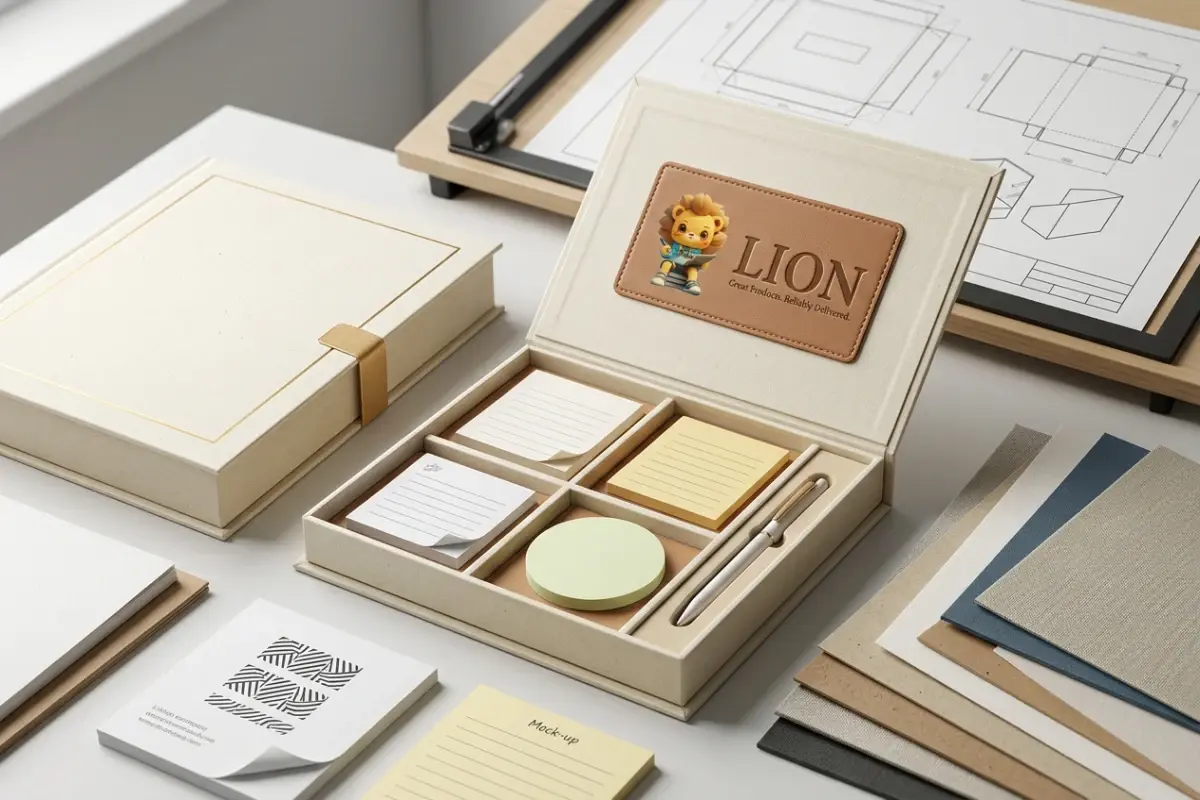
Engineering Guide to Reusable Sticky Note Packaging: Structures, Materials, and Retail Performance

Reusable sticky note packaging engineering requires functional barrier materials to prevent adhesive contamination, durable structural formats for retail display and long-term user storage, and sustainable paper compliance to align with eco-conscious consumer expectations. Effective designs combine dust-resistant closures, custom accessory compartments for markers and cleaning cloths, and FSC-certified paperboard substrates that protect specialized repositionable synthetic surfaces from humidity, ultraviolet exposure, and pressure-induced micro-warping.
What Are the Core Engineering Requirements for Reusable Sticky Note Packaging?
Unlike traditional single-use paper pads, reusable sticky notes utilize specialized substrates—such as electrostatic polypropylene, synthetic stone paper, dry-erase laminated boards, or silicone-backed composite films. These advanced surfaces require specialized reusable sticky note packaging to maintain their functionality throughout the distribution cycle and the consumer lifecycle.
The primary technical challenge in reusable note packaging design is surface and adhesive preservation. Reusable memo pads rely on clean static cling, micro-suction nano-foam, or washable low-tack polymer adhesives. Exposure to airborne particulates, ambient dust, humidity fluctuations, or migrating oils from substandard paperboard degrades these adhesive properties before the consumer even opens the product.
To safeguard product integrity, commercial packaging must meet four engineering criteria:
Atmospheric and Particulate Barrier Protection: Incorporating dust-flap tucks, sealed sleeve enclosures, or recyclable barrier wraps prevents airborne particulate accumulation on dry-erase coatings and nano-suction backing layers.
Pressure Distribution and Warp Prevention: Reusable synthetic sheets are prone to edge curling under uneven vertical pressure. Rigid or reinforced paperboard structures distribute stack weight evenly during palletization and transit.
Long-Term Desktop Storage Functionality: Because consumers retain reusable notes for months or years, the retail packaging often doubles as a permanent desktop organizer. The structural design must withstand repeated opening, extraction, and re-insertion cycles.
Multi-Component Accessory Retention: Reusable note sets typically ship as complete functional kits that include wet-erase pens, magnetic clips, and microfiber wiping cloths. Packaging cavities must secure mixed-material accessories without causing surface abrasion.

Precision-engineered dust flaps provide structural barrier protection for sensitive repositionable adhesives.
How Does Material Selection Balance Sustainability and Adhesive Barrier Protection?
Selecting substrates for eco-friendly stationery packaging requires balancing sustainable procurement against functional barrier performance. Brands must avoid unrecyclable multi-layer plastics while ensuring that natural paper fibers do not shed dust or leach chemical plasticizers into sensitive reusable adhesives.
Traditional packaging often relies on heavy plastic clamshells to showcase stationery sets. However, modern sustainable packaging utilizes high-density virgin or post-consumer recycled (PCR) paperboards combined with water-based coatings to achieve identical structural rigidity and visual appeal with significantly lower carbon impact.
Substrate Category | Typical Caliper / Weight | Structural Benefits | Barrier & Surface Characteristics | Environmental Profile |
|---|---|---|---|---|
:--- | :--- | :--- | :--- | :--- |
FSC-Certified C1S Solid Bleached Sulfate (SBS) | 14 pt – 24 pt (300–450 gsm) | Superior fold strength, clean die-cutting, high tear resistance | Ultra-smooth coated exterior; low-dust uncoated interior prevents surface scratching | Virgin fiber with 100% chain-of-custody FSC traceability |
Coated Recycled Board (CRB / CCNB) | 16 pt – 28 pt (350–500 gsm) | High density, excellent compressive strength, cost-effective | Coated clay exterior; requires barrier lining on interior to prevent fiber shedding | 80%–100% post-consumer recycled content, fully recyclable |
Unbleached Kraft Folding Boxboard | 18 pt – 26 pt (320–420 gsm) | Exceptional burst strength, natural organic aesthetic | High-density fiber matrix; natural tactile surface requires precise ink calibration | Biodegradable, compostable, chlorine-free processing |
Rigid Greyboard with Laminated Wrap | 1.5 mm – 2.5 mm core (1000–1800 gsm) | Maximum crush resistance, luxury gift-grade permanence | Wrapped in printed FSC art paper or specialty textured paper | Reusable desktop storage profile, extended lifecycle |
Plant-Derived Barrier Liners (Glassine / PLA) | 40 gsm – 65 gsm | Translucent protective interleaving and wrapping | Grease-resistant, dust-impermeable, non-reactive with synthetic adhesives | Industrial compostable or curb-side recyclable with paper stream |
When engineering sustainable packaging for adhesive stationery, Lion Paper prioritizes soy-based or vegetable-oil-based inks and aqueous protective coatings. These chemistry choices eliminate volatile organic compound (VOC) off-gassing inside sealed packages, ensuring chemical fumes do not weaken repositionable silicone or polyurethane nano-adhesives during prolonged ocean freight.
Which Structural Box Formats Work Best for Repositionable Sticky Note Retail Boxes?
Choosing the right structural footprint depends on retail display environments, shelf footprints, and whether the product is sold as a standalone pad or a comprehensive desktop kit. Repositionable sticky note retail boxes must deliver strong visual branding on retail shelves while protecting internal components from tampering.
1. Reverse Tuck-End (RTE) Boxes with Integrated Hanging Tabs
For mass-market retail and supermarket pegboards, lightweight folding cartons with reinforced J-hook or Euro-slot hanging tabs provide an efficient solution. Engineering a double-ply top flap prevents tab tearing when consumers handle heavier multi-pad packs. Dust flaps should be extended to overlap fully, eliminating gaps where airborne debris might enter.
2. Book-Style Magnetic Folding Boxes
For premium stationery brands and direct-to-consumer (DTC) gift sets, a rigid book-style box with a concealed magnetic closure delivers an elevated unboxing experience. The outer rigid spine opens like a journal to reveal custom die-cut compartments. This format encourages customers to keep the box on their work desk as a permanent filing tray, extending brand exposure.
3. Drawer and Sleeve Slide-Out Cartons
A two-piece matchbox-style sleeve and tray structure provides exceptional crush resistance for online fulfillment and retail stacking. The inner tray glides out smoothly using a ribbon pull or thumb notch, presenting the pads cleanly without requiring destructive peeling of seals.
4. Self-Standing Easel Packs
An innovative structural format combines the packaging and the desktop holder into a single convertible unit. The back panel features pre-creased score lines that fold into an angled easel stand. Users place the packaging directly on their desk, allowing individual notes to be peeled away while the remaining inventory stays organized and dust-free.

Diverse retail box styles support different merchandising formats, from hanging pegboards to luxury desktop sets.
How Can Brands Package Multi-Tool Bundles Combining Reusable Notes, Pens, and Cleaning Cloths?
Modern reusable stationery products are rarely sold in isolation; they function as systems that include fine-tip dry-erase pens, specialized solvent spray bottles, microfiber cloths, and magnetic backing plates. Packaging multi-tool bundles requires custom paper packaging engineering to immobilize disparate items within a unified structural footprint.
Plastic thermoformed blister trays have historically held multi-component kits in place, but they undermine eco-friendly brand messaging. Today, paper converting specialists replace plastic inserts with precision-engineered paper pulp trays or folded paperboard inserts.
To achieve precise accessory fitment without plastic components, packaging engineers apply specific structural rules:
Die-Cut Fluted Paper Inserts: Utilizing 250–350 gsm corrugated or folding board with custom friction-fit apertures holds cylindrical markers firmly, preventing ink leakage caused by transit vibrations.
Sub-Cavity Separation Walls: Isolating wet-erase markers from synthetic note surfaces prevents chemical marker solvents or cap friction from scuffing the dry-erase surfaces during shipment.
Microfiber Compression Compartments: Microfiber cleaning cloths tend to expand and push open box lids. Designing an enclosed bottom sub-tier or elasticized paper strap secures the cloth flat beneath the note pad.
Integrated Instruction Printing: Instead of inserting loose paper manuals that consumers discard, engineers print usage, cleaning, and surface-compatibility guides directly onto the interior lid panels, reducing material consumption.
What Quality Control Protocols Ensure Adhesive Longevity and Drop-Test Stability?
Packaging for reusable stationery must withstand environmental stress, automated distribution, and handling tests without structural failure or product contamination. High-performance paper converting requires rigorous quality assurance testing before mass production.
Lion Paper applies comprehensive ISO 9001 and AQL quality inspection workflows across its production facilities, utilizing standardized testing protocols tailored for adhesive products:
Drop and Impact Testing (ISTA 1A/2A Standards): Packaged sets undergo rotational edge and flat drop tests from heights of 76 to 100 cm onto concrete surfaces to verify that internal paper inserts hold heavy markers and note pads securely without corner splitting.
Environmental Conditioning and Accelerated Aging: Test samples are placed in environmental chambers maintained at 40°C with 80% relative humidity for 72 hours. This ensures that aqueous barrier coatings prevent moisture penetration that could warp synthetic notes or cause mold growth on paperboard.
Adhesive Migration and Chemical Transfer Verification: Reusable notes are stored under compression within the packaging board for 14 days to confirm that no oils, sizing chemicals, or inks from the packaging migrate onto the repositionable adhesive layer.
Hinge and Closure Fatigue Testing: Magnetic closures, tuck flaps, and slide drawers undergo over 500 manual open-and-close cycles to ensure structural score lines do not crack along grain directions.

Rigorous drop and humidity testing ensures packaging stability throughout global logistics channels.
How Does Lion Paper’s Dual-Site Model Optimize Custom Paper Packaging Engineering?
Sourcing custom retail packaging for global stationery lines requires balancing creative design agility, rapid physical prototyping, and cost-effective mass production. Lion Paper Products (Jiaxing) Co., Ltd., founded in 2015, provides an integrated supply-chain bridge from concept development to global retail delivery.
Our manufacturing network leverages dual-site synergy between our design and production hubs:
Jiaxing, China R&D Hub (3,000 m²): Dedicated to structural engineering, sustainable material sourcing, artwork optimization, rapid physical sampling, and technical customer support. Our engineering team refines die-lines, tests paper calipers, and provides functional prototypes within short lead times.
Cambodia Mass Production Facility (10,000 m²): Engineered for high-volume automated converting, rigid box fabrication, automated die-cutting, assembly, and global container shipping. This site delivers stable quality, tariff efficiency for major international markets, and scalable output.
With annual notebook and paper product output exceeding 5 million units, Lion Paper serves brands, major supermarket chains, e-commerce sellers, and stationery publishers across North America, Europe, Australia, the Middle East, and Southeast Asia. Our compliance framework is verified through ISO 9001, FSC, SMETA, WCA, GSV, FAMA, and CPSIA audits, ensuring every custom packaging solution meets international consumer safety and environmental standards.
What Key Specifications Should Brands Include in an RFQ for Reusable Note Packaging?
When preparing a Request for Quotation (RFQ) for custom reusable sticky note packaging, providing precise technical parameters streamlines the engineering evaluation and accelerates sample development.
To ensure rapid quote turnaround and accurate dieline development, provide your manufacturing partner with the following specification checklist:
Exact Dimensional Footprint (L × W × D): Provide net measurements for all bundled elements, including pad dimensions, marker lengths and diameters, and folded cloth thicknesses.
Target Retail Channel and Shelf Orientation: Specify whether the package will be merchandised on pegboard hooks, retail shelf PDQ trays, endcap display shippers, or shipped through DTC e-commerce channels.
Material and Certification Mandates: State required paper certifications (e.g., FSC 100%, FSC Mix, Recycled Post-Consumer Waste percentage) and specific plastic-free requirements.
Target Storage Lifecycle: Define whether the packaging is single-use retail disposal packaging or a permanent rigid desktop storage solution.
Surface Finishes and Embellishments: Outline decorative requirements, such as soft-touch aqueous coating, anti-scratch matte lamination, spot UV, blind embossing, or foil stamping.
Logistics and Shipping Destinations: Specify whether shipments will be dispatched via FOB China, FOB Cambodia, or delivered directly to regional distribution centers.
Frequently Asked Questions
How does packaging prevent synthetic reusable sticky notes from warping during transit?
Synthetic substrates such as polypropylene, stone paper, or composite films react to temperature swings and vertical stacking pressure. To prevent edge warping, packaging engineers utilize rigid paperboard covers (1.5–2.0 mm greyboard) or high-caliper C1S folding carton boxes (350+ gsm) with internal corner supports. This structure distributes compressive container weight across the outer box perimeter rather than concentrating pressure on the note pad stack.
Can reusable sticky note packaging be 100% plastic-free while maintaining a clear product view?
Yes. Brands can achieve a fully plastic-free design while displaying internal notes by utilizing open die-cut display windows paired with dust-protective paper sleeves, or by replacing standard petroleum-based PET window film with biodegradable, wood-pulp-derived cellulose films (such as NatureFlex) or translucent FSC glassine paper. These paper-based windows offer clear visibility, allow curb-side recycling, and protect against dust.
What coatings are recommended to protect the exterior of reusable note retail boxes?
Water-based (aqueous) soft-touch or anti-scratch matte coatings are recommended for eco-friendly stationery packaging. They provide a premium tactile feel, resist scuffing during transit, and do not hinder the paperboard's curb-side repulpability or recyclability. For maximum durability on long-term desktop storage boxes, water-based varnishes combined with soy-ink printing deliver long-lasting color fidelity.
How do dual-site manufacturing capabilities benefit global stationery brands?
Dual-site manufacturing combines regional engineering expertise with cost-effective volume manufacturing. Brands benefit from rapid concept ideation, technical structural refinement, and fast prototyping at our Jiaxing design center, followed by scalable mass production, automated assembly, and optimized tariff routing from our Cambodia facility.
To begin developing your custom packaging solution, share your target display requirements, note dimensions, target surface applications, and complete accessory bundling concepts with our technical team. Please contact our engineering team at Lion Paper to request a structural paper-converting review and formal quotation.
FAQ
How does packaging prevent synthetic reusable sticky notes from warping during transit?
Synthetic substrates react to temperature swings and vertical stacking pressure. Packaging engineers use rigid paperboard covers (1.5–2.0 mm greyboard) or high-caliper folding cartons (350+ gsm) with internal corner supports to distribute compressive weight across the perimeter rather than directly on the note pad.
Can reusable sticky note packaging be 100% plastic-free while maintaining a clear product view?
Yes. Brands can replace standard petroleum-based plastic window patches with biodegradable, wood-pulp-derived cellulose films or translucent FSC glassine paper, or use open die-cut display windows paired with dust-protective paper sleeves for 100% curb-side recyclable packaging.
What coatings are recommended to protect the exterior of reusable note retail boxes?
Water-based (aqueous) soft-touch or anti-scratch matte varnishes are recommended. They provide a premium tactile feel, resist scuffing during transit, maintain paperboard repulpability, and eliminate VOC off-gassing that could degrade repositionable adhesives.
How do dual-site manufacturing capabilities benefit global stationery brands?
Dual-site manufacturing allows brands to leverage fast structural engineering, design optimization, and rapid prototyping in China, followed by scalable mass production, automated assembly, and tariff-optimized global shipping from Cambodia.


Comments