


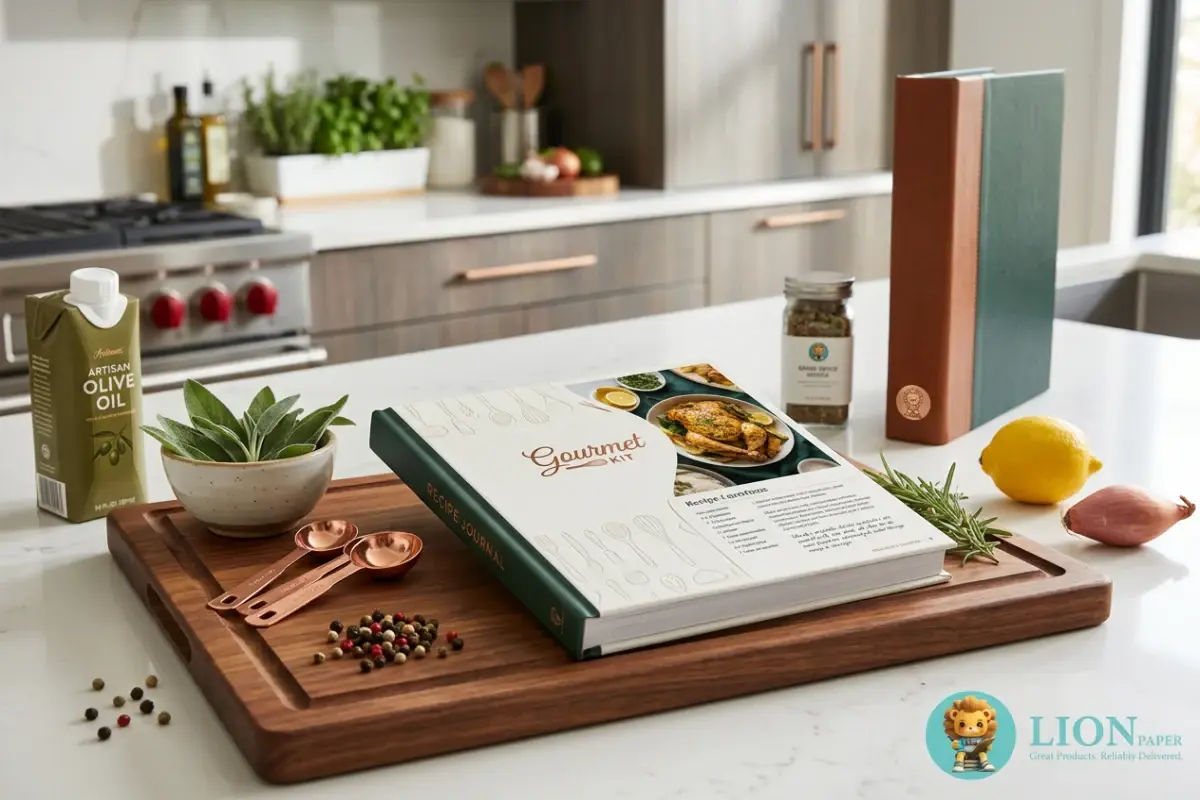
Recipe Journals for Meal Kit Brands: Custom Binders, Manufacturing, and Retention Strategies
While in-box printed cards serve immediate step-by-step cooking needs, custom hardcover or wire-bound recipe journals act as reusable brand archives that increase customer retention, elevate perceived subscription value, and create new direct-to-consumer retail revenue streams. By transitioning from loose-leaf inserts to structured, kitchen-proof stationery, food subscription brands provide tangible keepsakes that keep their culinary identity inside customer homes for years.
Why Are Leading Meal Kit Brands Shifting from Single-Use Cards to Reusable Recipe Journals?
Meal kit companies operate in a competitive subscription landscape where customer acquisition costs continue to climb. Loose recipe cards often end up discarded, stained, or lost after cooking. In contrast, incorporating custom recipe journals for meal kit brands transforms everyday culinary preparation into a curated home cooking journey.
Direct-to-consumer food brands use subscription box branded journals for several strategic reasons:
Subscriber Retention Milestones: Gifting an archival binder or journal upon a customer's third or fifth box milestone creates a sense of achievement and reduces cancellation rates.
Brand Presence in the Kitchen: A branded hardback journal or binder stays permanently on countertop book stands or kitchen shelves, offering persistent visual impressions long after dinner is served.
E-Commerce Upselling and Add-On Revenue: High-quality culinary notebooks serve as standalone retail merchandise on brand webstores, gift sets, and seasonal holiday packages.
Organized Recipe Curation: Home cooks want a single organizer to file weekly meal cards, jot down flavor adjustments, and collect family favorite dishes.

Ring binders allow subscribers to organize weekly recipe cards into categorized culinary archives.
How Do Custom Meal Kit Recipe Binders and Organizers Elevate Subscriber Loyalty?
Customer loyalty in the meal kit sector depends on building sustained cooking habits. When subscribers receive a custom meal kit recipe binder or lay-flat culinary notebook, the perceived value of the subscription immediately rises. It moves the brand relationship from a transactional food delivery service to a trusted culinary lifestyle partner.
Retention Strategy | Traditional Loose Insert Approach | Custom Recipe Journal Solution |
|---|---|---|
:--- | :--- | :--- |
Perceived Value | Low; often treated as disposable packaging collateral | High; treated as a premium lifestyle book or gift |
Subscriber Engagement | Single-use cooking session | Long-term indexing, personal rating, and meal planning |
Physical Durability | Prone to grease splatters, tearing, and water damage | Wipeable covers, laminated pocket dividers, and sturdy binding |
Brand Longevity | Recycled or discarded within days | Kept on kitchen counters and bookshelves for years |
Monetization Potential | Zero secondary market value | Viable as a paid DTC add-on, holiday bundle, or VIP incentive |
By designing branded organizers with custom-tabbed dividers—such as Quick 20-Minute Dinners, Plant-Based Mains, Chef Special Occasions, and Kid-Friendly Favorites—brands guide users into structured meal planning routines that encourage consistent weekly box orders.
What Engineering and Material Standards Are Essential for Kitchen Recipe Journal Manufacturing?
Kitchen environments present severe physical challenges for standard paper goods. High humidity, steam, cooking oil, liquid spills, and greasy fingers require specialized kitchen recipe journal manufacturing techniques. A standard retail notebook will quickly warp and stain when exposed to everyday countertop conditions.
To ensure durability, manufacturers implement specific functional treatments and material structures:
Water-Resistant and Grease-Resistant Covers: Matte or soft-touch anti-scratch BOPP lamination, water-resistant bookcloth, vegan PU leather, or wipeable aqueous-coated heavy paperboards protect the exterior from spills.
High-Opacity, Bleed-Resistant Interior Paper: 100 gsm to 140 gsm woodfree offset paper or FSC-certified uncoated paper prevents oil seepage, ghosting, and ink bleed-through when home cooks write with ballpoint, gel, or fountain pens.
Reinforced Index Dividers: 250 gsm to 350 gsm coated artboard tabs with film lamination ensure dividers withstand repeated page turning during food prep.
Protective Corner Hardware: Optional brass or stainless-steel corner protectors reinforce the spine and edges against drops and countertop impacts.
Integrated Storage Pockets: Gusseted back pockets or double-sided transparent poly slip-pockets allow users to safely store printed subscription recipe cards, ingredient notes, and grocery clippings.

Specialized laminations, grease-resistant paper, and wire-o bindings withstand demanding kitchen environments.
Which Binding Formats Work Best for Culinary and Meal Planning Notebooks?
Choosing the right binding format is critical to the usability of kitchen journals. When preparing ingredients, home chefs need journals that remain completely open without requiring weighted objects to hold the pages down.
1. Hardcover Concealed Wire-O and Spiral Binding
Concealed wire-o bindings combine the aesthetic elegance of a hardcover book spine with the practical benefit of true 360-degree flat-lay rotation. This format occupies minimal countertop real estate and stays open to the selected recipe while cooking.
2. Multi-Ring Custom Binders (3-Ring and 6-Ring Mechanisms)
A custom meal kit recipe binder equipped with metal O-ring or D-ring mechanisms allows subscribers to insert weekly standard pre-punched recipe cards directly into the binder. Brands can supply pre-punched cards with every weekly shipment, turning the binder into an evolving home cookbook.
3. Thread-Sewn Lay-Flat Hardcover Binding (Flexi-Bound or Casebound)
Utilizing Smyth-sewn book blocks with open-spine or Swiss-binding engineering allows the book to lay completely 180 degrees flat across kitchen islands. Thread sewing ensures that pages never detach even under regular, heavy handling.
4. Hybrid Notebooks with Clear PVC/PP Protective Sleeves
Incorporating top-loading clear polypropylene sleeves safeguards existing cards from sauce splashes while keeping text completely visible during active kitchen prep.
How Can Food Brands Optimize Production Costs with Dual-Site Supply Chains?
Launching a reusable recipe organizer wholesale program requires balancing initial prototyping agility with large-scale unit economics. Partnering with a supply-chain provider operating dual manufacturing sites across China and Cambodia allows meal kit brands to optimize total landed costs while meeting strict launch schedules.
Rapid Prototyping and Engineering in China: Specialized development facilities in Jiaxing handle structural packaging engineering, material sourcing, foil stamping tests, and rapid sample turnarounds within 3 to 7 business days.
Cost-Efficient Mass Production in Cambodia: Automated assembly lines and scalable labor structures in Cambodia execute large-volume production runs with tariff advantages and competitive landed costs for North American and European delivery.
Sustainable Sourcing Compliance: Dual-site operations maintain ISO 9001, FSC chain-of-custody, SMETA, WCA, and CPSIA compliance standards, ensuring all food-adjacent paper products meet international non-toxic safety and environmental standards.
Material Consolidation: Large-scale purchasing of FSC-certified papers, recycled greyboard, non-toxic soy inks, and recyclable metal hardware lowers the bill of materials across seasonal runs.
What Packaging and Fulfillment Formats Protect Recipe Journals in Meal Kit Boxes?
Integrating stationery products into chilled meal kit delivery networks introduces logistical challenges. Cold packs, moist condensation, and heavy fresh produce can crush or soak standard paper products if packaging is not properly engineered.
To ensure flawless out-of-box presentation, brands utilize specialized fulfillment packaging:
Hermetically Sealed Biodegradable Polybags: Recyclable PE or compostable PLA protective wrap shields paper edges and fabric covers from moisture condensation inside insulated cooler boxes.
Custom E-Commerce Kraft Mailer Boxes: For standalone welcome boxes or paid webstore orders, corrugated tuck-top mailer boxes printed with water-based flexographic inks deliver a cohesive unboxing aesthetic.
Belly Bands and Shrink Wrap: Minimalist printed belly bands made from recycled kraft paper secure the book closed during transit while displaying product barcodes and nutritional messaging.
Flat-Pack Shipments for Assembled Binders: Ring binder mechanisms and outer covers can be flat-packed or pre-assembled based on regional fulfillment center capabilities, minimizing ocean freight cubic volume.

Moisture-resistant protective packaging ensures recipe journals arrive pristine inside chilled subscription boxes.
Buyer Checklist: Sourcing Custom Recipe Journals from Prototype to Delivery
When developing a custom recipe journal line for a subscription brand, procurement and product teams should follow a structured evaluation checklist:
Define Functional Use Scenario: Will the journal hold pre-printed meal cards (requiring ring binders or poly sleeves), or is it designed for handwritten notes and ratings (requiring lined journal pages and conversion charts)?
Select Spill-Resistant Exterior Materials: Choose between matte-laminated art paper, wipeable bookcloth, PU leather, or recycled structural board.
Specify Safe, High-Grade Paper Stocks: Opt for 120+ gsm FSC-certified uncoated paper to avoid ink ghosting and support brand sustainability goals.
Determine Structural Lay-Flat Performance: Specify concealed wire-o, Smyth-sewn casebound, or ring-binder mechanisms to guarantee hands-free countertop utility.
Incorporate Kitchen-Specific Accessories: Add ribbon page markers, elastic closure bands, measurement conversion charts on endpapers, and tabbed section dividers.
Verify Social and Environmental Audits: Ensure your manufacturing partner holds verified FSC, SMETA/Sedex, ISO 9001, and CPSIA certifications for global consumer safety.
Optimize Carton and Pallet Loading: Ensure master cartons comply with drop-test standards and pallet configurations match automated fulfillment center intake parameters.
To begin developing your brand's custom culinary stationery, share your end-user occasion, interior layout concept, cover design, target price tier, and order quantity for a custom journal product review.
FAQ
What is the recommended minimum order quantity (MOQ) for custom meal kit recipe journals?
Standard production runs typically begin at 1,000 to 3,000 units for fully customized cover materials, bespoke printed interiors, and custom-tabbed dividers. Smaller pilot testing runs may be supported depending on material availability and binding specifications.
How do you make paper recipe journals resistant to kitchen water and oil spills?
Exterior covers use anti-scratch matte BOPP film lamination, water-repellent bookcloth, or wipeable PU leather. Interior dividers feature film-laminated tabs, while interior pages utilize heavy 120 to 140 gsm woodfree paper that resists oil bleed-through and ink smudges.
Can recipe binders be manufactured to match standard subscription card sizes?
Yes. Custom meal kit recipe binders are tailored to your exact recipe card dimensions, whether standard A5, 5x7 inches, 8.5x11 inches, or custom die-cut dimensions, with matching ring spacings and clear insert sleeves.
Are the materials used in recipe journal manufacturing food-safe and eco-friendly?
Yes. Journals utilize FSC-certified papers, non-toxic soy-based printing inks, and recyclable boards that meet CPSIA, REACH, and RoHS environmental and consumer safety standards.