


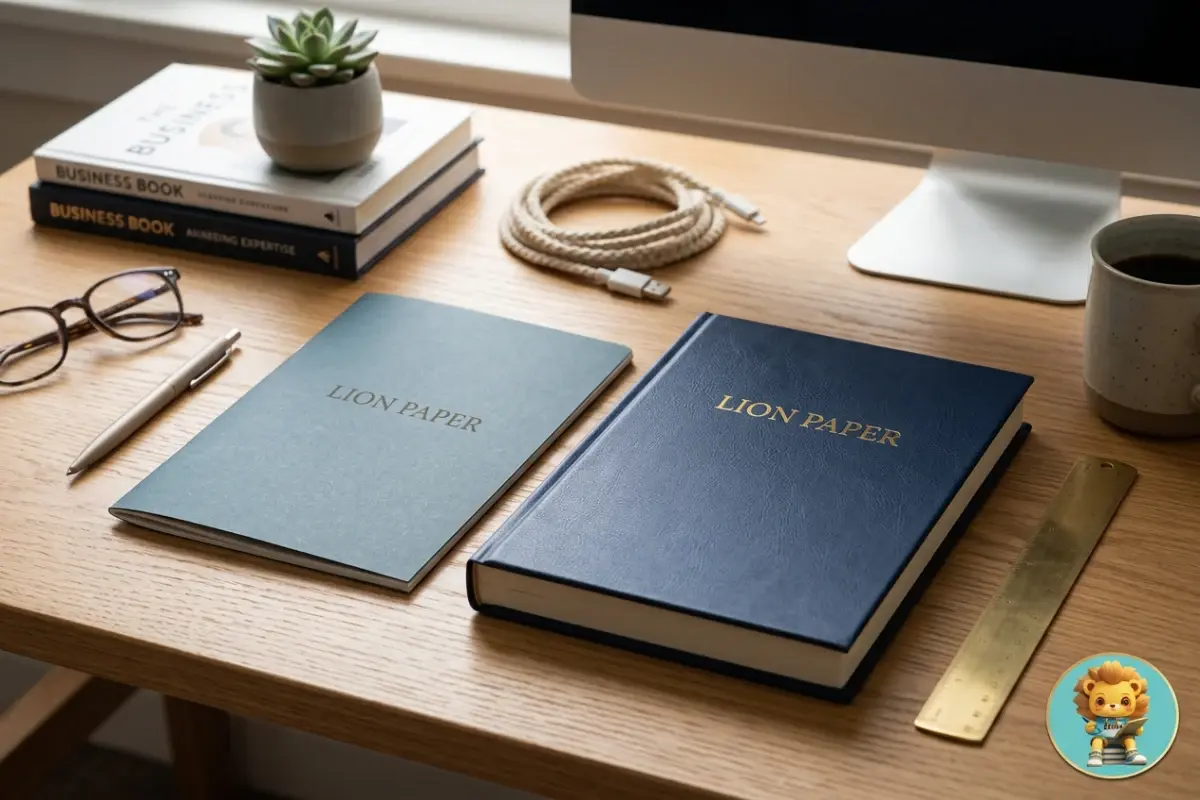
Promotional Notebook vs Premium Branded Journal: Complete Sourcing Comparison

While promotional notebooks prioritize cost-effective mass distribution for high-volume outreach, premium branded journals utilize durable covers, high-grade interior paper, and refined finishing to maximize long-term brand equity and executive perceived value. The strategic choice between a promotional notebook vs premium branded journal depends on campaign lifespan, target recipient seniority, functional use cases, and total landed budget constraints.
What Are the Core Differences Between Promotional Notebooks and Premium Branded Journals?
Understanding the distinction between entry-level promotional notebooks and executive-tier journals requires evaluating three core dimensions: product lifecycle, recipient engagement, and manufacturing complexity.
Promotional notebooks are engineered for immediate, high-volume dissemination. Commonly distributed at trade shows, conferences, campus orientations, or public events, these items prioritize low unit production cost to maximize distribution reach. They typically feature lightweight paperboard or flexible polypropylene covers, standard saddle-stitch or spiral binding, and basic offset or screen-printed logos. Because their primary function is short-term brand exposure, their expected active lifespan spans weeks to a few months.
In contrast, premium branded journals function as long-term brand assets and daily executive tools. Targeted at corporate gifting, employee onboarding, VIP clientele, retail merchandise, or paid subscription boxes, these products utilize rigid bookbinding boards, supple vegan PU leathers, fabric bookcloths, and heavy interior writing paper. They feature structural refinements such as debossed metallic foil logos, ribbon page markers, expandable inner back pockets, elastic band closures, and Smyth-sewn lay-flat bindings. Their operational lifespan ranges from one to three years of daily desk and meeting usage.
Primary Purpose: Promotional notebooks maximize top-of-funnel reach; premium journals build sustained brand equity and high touchpoint value.
Recipient Perception: Promotional stationery is perceived as functional consumable swag; premium journals are perceived as valuable gifts or retail merchandise.
Design Focus: Promotional models emphasize graphic visibility; premium journals prioritize tactile luxury, durability, and paper performance.
Distribution Volume: Promotional stationery manufacturing typically involves runs of 2,000 to 50,000+ units, whereas premium branded journals bulk programs often range from 500 to 10,000 units per batch.

Material comparison showing blind debossing on high-grade PU cover material versus printed cardstock.
How Do Material Specifications and Binding Differ Between Formats?
Custom notebook specifications directly determine both production feasibility and recipient experience. Selecting the right combination of cover substrates, paper weights, and spine constructions ensures the finished piece matches its functional context.
Specification Parameter | Promotional Notebook Standard | Premium Branded Journal Standard |
|---|---|---|
:--- | :--- | :--- |
Cover Material | 250–350 gsm Art Card, Kraft Paper, or 0.5 mm Polypropylene (PP) | 1.8–3.0 mm Greyboard with PU Leather, Bonded Leather, Bookcloth, or Hardcover Lamination |
Interior Paper Stock | 60–80 gsm Woodfree Offset Paper | 100–120 gsm Acid-Free Woodfree or FSC-Certified Premium Uncoated Paper |
Binding Style | Saddle Stitch (Stapled), Single/Double Wire-O, Spiral Binding | Smyth Sewn (Thread-Sewn Casebound), Casebound Perfect Bound, Lay-Flat Hardcover |
Page Count | 32–64 Pages (16–32 Sheets) | 160–240 Pages (80–120 Sheets) |
Edge Finishing | Standard Square Flush-Cut Edges | Rounded Corners, Gilded / Colored Foil Edges, or Edge-Painted Color Matching |
Functional Accessories | None, or basic clear plastic pen loop | Elastic band closure (10–15 mm), 1–2 woven satin ribbon markers, gusseted rear storage pocket |
Branding Techniques | 1–4 Color Pad Printing, Silk Screen, Surface CMYK Digital Print | Blind Debossing, Precision Hot Foil Stamping, Spot UV, Custom Printed Endsheets, Laser Engraving |
Cover Structure and Durability
In promotional notebook fabrication, lightweight 300 gsm cardstock provides a rapid, printable substrate that minimizes ocean freight weight. However, it offers limited resistance to corner creasing and moisture. Premium journals utilize multi-layer casebound boards encased in thermo-reactive PU leather or natural fabric. This structure resists perimeter wear, maintains rigid corner geometry, and accepts deep blind debossing that creates a tactile, permanent mark without cracking the material.
Interior Paper Density and Fountain Pen Compatibility
Interior paper selection defines the tactile writing experience. Promotional stationery manufacturing predominantly employs 70 gsm or 80 gsm offset paper. While adequate for standard dry ballpoint pens and pencils, these lighter sheets often experience ink strike-through (bleed-through) and paper feathering when exposed to wet rollerballs, gel pens, or fountain pen ink.
Premium journals specify 100 gsm to 120 gsm high-density, acid-free woodfree paper. These sheets feature calibrated surface sizing that limits ink absorption depth, preventing ghosting on reverse pages while delivering a smooth, drag-free pen stroke. For environmentally aligned brands, FSC-certified or post-consumer recycled paper grades deliver sustainable compliance without sacrificing opacity or tactile smoothness.
Binding Integrity and Lay-Flat Usability
Binding methodology governs how easily a user interacts with the notebook. Saddle-stitched promotional booklets are inexpensive but become bulky beyond 64 pages. Spiral and wire-bound notebooks fold flat 360 degrees, making them practical for quick field notes, though their external coils can snag during transport.
For high-value custom corporate notebooks, true Smyth-sewn casebinding is the industry benchmark. Signature sections (gatherings of folded sheets) are individually sewn with high-tensile thread before being mounted to the spine with reinforced gauze. This engineering allows the journal to open to a full 180-degree flat profile on desks, enabling seamless two-page writing without spine cracking or page detachment over years of active handling.
How Do Unit Costs Compare Against Long-Term Brand ROI?
Procurement decisions balance upfront landed unit costs against downstream marketing impact and brand equity. Evaluating promotional notebooks against premium journals requires calculating cost per impression (CPI) and retention duration alongside baseline factory bill-of-materials (BOM).
| Landed Unit Cost Drivers | | | | Promotional Notebooks: $0.60 – $2.50 / unit | | Lightweight Raw Materials + Automated Saddle/Wire Lines + Low Packaging Overhead | | | | Premium Branded Journals: $3.50 – $9.00 / unit | | Heavy FSC Board & PU + Hand-Assembled Accessories + Gift Packaging & Palletization |
Promotional Notebook Cost Structure
The per-unit manufacturing cost for basic promotional notebooks typically ranges from $0.60 to $2.50 per unit in production runs exceeding 5,000 units. The direct cost drivers include high-speed rotary printing, standardized paper weights, automated folding/stapling lines, and bulk corrugated master carton packaging.
Landed Cost Efficiency: High container packing density reduces ocean freight expense per item.
Usage Lifecycle: Average active retention is 2 to 8 weeks, with high disposal rates once notes are completed.
Brand Function: Mass awareness generation, event registration kit filler, or short-term training workshop companion.
Procurement Risk: Low financial exposure per piece, but low retention diminishes cumulative brand impressions.
Premium Branded Journal Cost Structure
Procuring premium branded journals bulk orders typically ranges between $3.50 and $9.00 per unit, scaling according to cover materials, page count, custom tooling, and bespoke packaging. The cost breakdown reflects intensive multi-step assembly: hand-glued back pockets, custom-dyed ribbon insertion, spine reinforcing cloth application, and rigorous manual finishing.
Long-Term Impression Value: High-quality journals are retained for 12 to 24 months. Users carry them into executive meetings, client presentations, and daily planning sessions.
Perceived Value: A journal costing $5.00 to manufacture carries an estimated consumer perceived retail value of $18.00 to $32.00, elevating the standing of the gifting corporation.
Brand Reinforcement: Every page turn and closure elastic interaction reinforces brand quality, creating sustained engagement that amortizes the initial unit cost over hundreds of business interactions.

Smyth-sewn binding ensures 180-degree lay-flat writing usability and superior leaf retention.
What Manufacturing Capabilities and Quality Standards Are Required?
Producing consistent custom corporate notebooks across multi-thousand unit runs requires verified manufacturing infrastructure, certified social compliance, and disciplined quality control protocols.
Dual-Site Supply Chain Integration
Modern paper product supply chains increasingly utilize dual-site production networks to balance creative development with cost efficiency. For example, Lion Paper Products (Jiaxing) Co., Ltd., established in 2015, pairs a 3,000-square-meter facility in Jiaxing, China—focusing on concept design, structural engineering, rapid sampling, and domestic component sourcing—with a 10,000-square-meter manufacturing facility in Cambodia tailored for high-volume automated mass production and stable global delivery.
This integrated infrastructure allows global brands to validate complex cover materials, custom tooling, and foil stamping during the prototyping phase before scaling into cost-effective bulk production that produces over 5 million notebooks annually for North America, Europe, Australia, the Middle East, and Southeast Asia.
Factory Compliance and International Standards
Global buyers must verify that paper manufacturing partners operate under recognized social and quality compliance frameworks. Key factory audits and standard certifications include:
Quality Management: ISO 9001 systems that standardize standard operating procedures (SOPs) across paper cutting, signature folding, case assembly, and drying.
Ethical Labor & Security: SMETA (Sedex Members Ethical Trade Audit), WCA (Workplace Conditions Assessment), and GSV (Global Security Verification) to safeguard fair wages, worker safety, and supply-chain logistics security.
Retail & Brand Audits: FAMA (Facility and Merchandise Authorization) and CPSIA compliance for consumer paper products entering major retail environments.
Traceable Forestry: FSC (Forest Stewardship Council) chain-of-custody tracking ensuring all timber fibers originate from responsibly managed forests.
Standard Quality Control and Defect Prevention
To maintain batch consistency across custom corporate notebooks, production lines enforce standardized Acceptable Quality Limit (AQL) 2.5/4.0 inspection standards. Quality assurance checkpoints focus on:
Binding Spine Adhesion: Pull-force testing on individual interior leaves to ensure thread and hot-melt glue bonds withstand repeated opening cycles without page fallout.
Cover Registration and Deboss Depth: Calibrated thermal debossing controls that maintain uniform pressure and temperature, preventing burnishing, material tearing, or shallow logo definition.
Paper Moisture Equilibration: Regulating warehouse humidity (45–55% RH) to prevent interior page waviness, paper curling, or cover board warping post-lamination.
Finishing Alignment: Checking ribbon placement squareness, corner rounding radius consistency, and flush elastic band tensioning across production runs.
How Should Buyers Choose the Right Format for Their Campaign?
Choosing between promotional paper items and executive journals requires aligning your campaign goals, audience expectations, and operational timelines.
                              - +
                              |       Define Primary Objective        |
                              - +
                                                  |
                   - +------------------------------+
                   |                                                             |
     [Mass Distribution / Low Cost]                                [High Value / Brand Equity]
                   |                                                             |
                   v                                                             v
+---------------------------------------------+
| Promotional Notebook | | Premium Branded Journal | | • 250-350 gsm Cardstock or Polypropylene | | • 1.8-3.0 mm Rigid Board + PU Leather/Cloth | | • 60-80 gsm Interior Paper | | • 100-120 gsm Acid-Free / FSC Paper | | • Saddle Stitch or Wire-O Binding | | • Smyth-Sewn Lay-Flat Casebinding | | • Screen Print / Surface Offset | | • Blind Deboss / Foil Stamp / Ribbon / Band | | • Budget: $0.60 - $2.50 / unit | | • Budget: $3.50 - $9.00 / unit |
+---------------------------------------------+ | | - +------------------------------+ | v - + | Confirm Manufacturing Criteria: | | • Lead Time (3-6 wks vs 6-10 wks) | | • Target Recipient Seniority | | • FSC & Social Compliance Audits | | • Packaging & Palletization Standards | - +
Evaluate Recipient Seniority and Scenario Context
Match the product tier to the end user's role and the distribution venue:
Select Promotional Notebooks for: Trade exhibition attendee bags, large-scale educational workshops, promotional brand collateral, retail gift-with-purchase (GWP) incentives, and broad community campaigns where volume and low unit cost are essential.
Select Premium Branded Journals for: C-suite client appreciation gifts, executive leadership summits, employee welcome kits, university alumni milestone gifts, paid private-label lifestyle merchandise, and high-tier annual corporate planning sessions.
Establish Realistic Production and Shipping Timelines
Procurement schedules vary significantly between the two product classes:
Promotional Formats: Prototyping typically takes 3 to 5 business days, with mass production completing in 15 to 25 days. Standard lightweight packaging facilitates rapid air freight or standard consolidated ocean delivery.
Premium Custom Formats: Custom material sourcing (e.g., custom-dyed PU, bespoke ribbon pantone matching, custom-printed endsheets) requires 7 to 10 days for pre-production physical sampling. Mass production, incorporating drying and glue stabilization cycles, requires 30 to 45 days. Protective retail packaging—such as individual shrink-wrapping, tissue wrapping, or custom two-piece gift boxes—must be accounted for in shipping dimensions.

Automated production and standardized quality control ensure consistent specifications across volume orders.
Total Environmental Footprint
Both formats can be aligned with corporate ESG criteria. For promotional notebooks, selecting unbleached kraft card covers and 100% post-consumer recycled interior text pages delivers a clear ecological message. For premium journals, specifying FSC-traceable boards, water-based vegan PU coverings, soy-based offset inks, and plastic-free paper belly bands ensures executive presentation remains compliant with modern environmental directives.
Send your campaign purpose, target quantity, branding requirements, and delivery deadline to request a comprehensive sourcing review from our engineering team.
Frequently Asked Questions
What is the minimum order quantity (MOQ) for custom corporate notebooks versus promotional notebooks?
Promotional notebooks utilizing standard in-stock cardstock and standard spiral or saddle binding typically carry minimum order quantities starting between 1,000 and 2,500 units. For premium branded journals bulk programs involving custom-dyed PU covers, bespoke ribbon pantones, debossed logos, and thread-sewn bindings, standard production MOQs generally start at 1,000 units per design to optimize material yield and machine setup costs.
Can premium branded journals achieve a 180-degree lay-flat opening without pages falling out?
Yes. Achieving a stable lay-flat structure requires a thread-sewn Smyth-bound block attached to a rigid case spine with flexible adhesive back lining. Unlike standard adhesive-only (perfect bound) notebooks that snap shut when opened flat, Smyth-sewn signatures allow the journal to rest completely flat on a desk while maintaining a pull strength exceeding 3.5 kg per sheet, ensuring long-term structural integrity.
What custom notebook specifications are most critical for fountain pen compatibility?
To prevent ink feathering, bleeding, and ghosting, specify interior paper with a minimum basis weight of 100 gsm to 120 gsm, manufactured with high woodfree content, surface sizing, and balanced paper porosity. Acid-free, smooth uncoated paper allows fountain pen ink to sit evenly on the surface without penetrating through to the reverse side of the page.
How does dual-site manufacturing benefit custom paper product procurement?
A dual-site operational model, such as combining an R&D and rapid sampling facility in China with an automated mass manufacturing hub in Cambodia, provides buyers with design agility and supply chain security. Buyers benefit from fast turnaround prototyping, custom mold development, and material sourcing in the initial phase, followed by cost-effective, high-volume production and diversified export logistics for final delivery.
FAQ
What is the minimum order quantity (MOQ) for custom corporate notebooks versus promotional notebooks?
Promotional notebooks utilizing standard in-stock cardstock and standard spiral or saddle binding typically carry minimum order quantities starting between 1,000 and 2,500 units. For premium branded journals bulk programs involving custom-dyed PU covers, bespoke ribbon pantones, debossed logos, and thread-sewn bindings, standard production MOQs generally start at 1,000 units per design to optimize material yield and machine setup costs.
Can premium branded journals achieve a 180-degree lay-flat opening without pages falling out?
Yes. Achieving a stable lay-flat structure requires a thread-sewn Smyth-bound block attached to a rigid case spine with flexible adhesive back lining. Unlike standard adhesive-only (perfect bound) notebooks that snap shut when opened flat, Smyth-sewn signatures allow the journal to rest completely flat on a desk while maintaining a pull strength exceeding 3.5 kg per sheet, ensuring long-term structural integrity.
What custom notebook specifications are most critical for fountain pen compatibility?
To prevent ink feathering, bleeding, and ghosting, specify interior paper with a minimum basis weight of 100 gsm to 120 gsm, manufactured with high woodfree content, surface sizing, and balanced paper porosity. Acid-free, smooth uncoated paper allows fountain pen ink to sit evenly on the surface without penetrating through to the reverse side of the page.
How does dual-site manufacturing benefit custom paper product procurement?
A dual-site operational model, such as combining an R&D and rapid sampling facility in China with an automated mass manufacturing hub in Cambodia, provides buyers with design agility and supply chain security. Buyers benefit from fast turnaround prototyping, custom mold development, and material sourcing in the initial phase, followed by cost-effective, high-volume production and diversified export logistics for final delivery.


Comments