


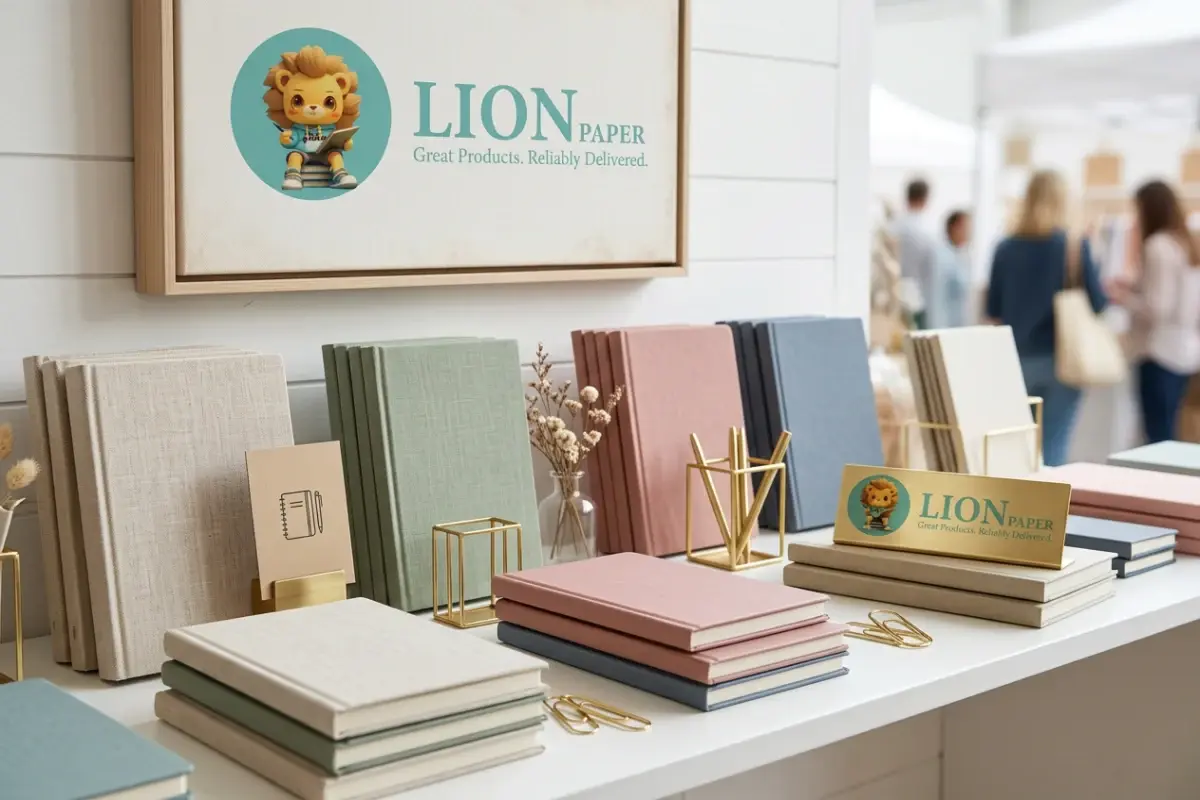
Private Label Notebooks for Pop-Up Shops: Sourcing, SKU Planning, and Retail Execution

To maximize revenue during short pop-up retail windows, curate a focused 3-to-5 SKU notebook assortment—balancing hero statement designs, everyday essentials, and giftable sets—combined with protective, barcode-ready retail packaging optimized for instant shelf display and post-event inventory repurposing. Sourcing through an integrated supply chain with rapid prototyping and flexible production allows brands to balance short lead times, controlled minimum order quantities, and premium retail margins.
Why Are Custom Notebooks for Temporary Retail Ideal for Driving Pop-Up Store Revenue?
Temporary retail environments thrive on impulse purchases, tactile engagement, and memorable brand storytelling. Notebooks and journals serve as versatile merchandise because they combine practical utility with high perceived gift value and generous gross margins. In a pop-up setting where customer dwell time is limited, stationery provides an immediate, accessible entry price point that converts casual foot traffic into paying customers.
Paper goods offer distinct operational advantages for temporary brick-and-mortar activations compared to apparel or complex hardgoods:
Universal Sizing and Low Return Rates: Unlike apparel, custom notebooks for temporary retail eliminate the need for size runs, fitting rooms, and sizing-related dead stock, streamlining both floor space and staffing requirements.
High Visual Density in Small Footprints: Notebooks can be displayed flat, angled on tiered risers, or stacked vertically in branded point-of-purchase (POP) countertop displays, maximizing revenue per square foot.
Tactile Brand Expression: Cover materials such as vegan leather, linen, soft-touch matte lamination, foil stamping, and debossing invite sensory exploration, turning a brief customer interaction into an emotional connection.
Compelling Margin Structure: Sourcing private label notebooks directly from an experienced manufacturer typically allows for landed product costs between $1.50 and $4.50 per unit, supporting retail price points of $14.00 to $28.00 and delivering gross margins above 70%.

Strategic SKU planning balances hero statement journals with functional everyday softcover notebooks.
How Should Brands Execute Pop-Up Shop Stationery SKU Planning for Maximum Sell-Through?
Successful pop-up shop stationery SKU planning requires tight assortment curation. Offering too many variations overwhelms shoppers and dilutes inventory turnover, while offering too few limits average order value (AOV). A balanced temporary retail stationery assortment should follow a structured tier system consisting of 3 to 5 core SKUs across distinct price and format brackets.
SKU Role | Target Allocation (%) | Format & Specs | Suggested Retail Price ($) | Strategic Objective |
|---|---|---|---|---|
:--- | :--- | :--- | :--- | :--- |
Hero / Showstopper | 20% - 25% | A5 Hardcover, Foil-Stamped Linen or Textured PU, Gilded Edges, 120gsm Wood-Free Paper | $24.00 - $32.00 | Visual anchor, brand centerpiece, social sharing driver |
Core Essential | 45% - 50% | A5 / B6 Flexi-Softcover, Lay-Flat Thread-Sewn Binding, 100gsm FSC Dot-Grid / Lined Paper | $14.00 - $18.00 | Volume driver, high-conversion daily driver for general shoppers |
Impulse / Pocket Pair | 15% - 20% | A6 / Pocket Slim, Saddle-Stitched or Singer-Sewn, 80gsm Recycled Paper (2-Pack) | $8.00 - $12.00 | Cash-wrap add-on, basket builder to lift transaction totals |
Curated Gift Set | 10% - 15% | Hardcover Journal + Matching Pen + Enamel Bookmark in Rigid Slide-Out Gift Box | $34.00 - $48.00 | High-AOV gift purchase for holidays, corporate visitors, and influencers |
When planning unit quantities for a 2-to-4-week temporary activation, allocate inventory based on foot traffic projections rather than warehouse batch sizes. For an activation expecting 300 to 500 daily visitors with a 3% stationery conversion rate, a brand needs roughly 270 to 450 total notebook units for the duration. Sourcing flexible batch volumes prevents overstock while ensuring display tables remain fully stocked throughout peak weekend trade.
What Retail-Ready Notebook Packaging Solutions Protect Merchandise in High-Touch Temporary Spaces?
Pop-up shops generate intense, high-density customer handling. Unprotected stationery quickly suffers corner dings, scuffed cover foils, finger oil marks, and torn spine corners. However, packaging must also allow shoppers to evaluate interior paper quality and page layouts without destroying the presentation. Implementing retail-ready notebook packaging protects goods, speeds up inventory handling, and maintains pristine aesthetics.
Effective protective and display packaging strategies include:
Printed Belly Bands (Obe-Bands) with Tactile Swatches: A branded kraft or art-card wrap band (120–180gsm) around the notebook exterior clearly displays page format (dotted, lined, blank), paper weight, page count, and retail barcode (UPC/EAN). This communicates product features immediately while leaving the cover textures partially visible.
Individual Resealable Poly Sleeves or Biodegradable Bio-Films: Crystal-clear OPP or PLA shrink wrap protects 90% of floor stock from dirt and shelf wear. Keep 1 or 2 unsealed "floor tester" units anchored to acrylic display stands so customers can write, test pen bleed, and feel page texture.
Point-of-Sale (POS) Integration: Pre-printed standard GS1-compliant barcodes on belly bands or removable stickers eliminate manual cashier entry errors, accelerating queue clearance during peak retail rushes.
Countertop Display Units (CDUs): Multi-tiered corrugated or rigid greyboard display trays ship pre-packed with notebooks, allowing retail staff to unbox, place on display counters, and begin selling within minutes of store opening.

Retail-ready packaging protects floor stock while keeping key product specifications visible to shoppers.
How Does an OEM Notebook Manufacturer for Pop-Up Stores Manage Lead Times, Batch Testing, and Quality Control?
Executing temporary retail requires rigorous supply chain timeline management. Pop-up leases are fixed, marketing dates are non-negotiable, and missing opening day due to manufacturing or shipping delays results in lost rent and brand equity. Working with an agile OEM notebook manufacturer for pop-up stores ensures coordinated development, prototyping, and dual-facility production workflows.
Lion Paper Products operates a China–Cambodia dual-site network tailored to these time-sensitive retail demands. The Jiaxing, China facility (3,000 square meters) specializes in product engineering, rapid digital and physical prototyping, custom tool making, and small-batch development. The Cambodia manufacturing facility (10,000 square meters) handles automated mass production, large-scale assembly, and cost-optimized global export. This dual-site synergy provides brands with design agility upfront and reliable volume delivery at scale.
A typical manufacturing timeline for pop-up notebook collections follows a synchronized phase structure:
Concept Review & Structural Engineering (Days 1–5): Finalize page grid layouts, cover debossing dies, ribbon markers, elastic band pantones, and paper stock weights based on target retail price and brand aesthetic.
Rapid Physical Sampling (Days 6–12): Produce full physical prototypes (digital cover proofs, bound blank paper blocks, and printed belly band mockups) at the Jiaxing facility to verify lay-flat functionality and tactile finishing.
Batch Production & Automated Assembly (Days 13–28): Execute printing, folding, gathering, thread-sewn binding, casing-in, and automated edge trimming under standardized SOP controls.
Standardized AQL Inspection (Days 29–31): Perform ISO 9001-aligned quality control using AQL 2.5/4.0 standards, checking binding pull strength, foil stamp registration, page count accuracy, and scuff-free lamination.
Packaging, Palletization, and Freight Handover (Days 32–45): Goods are packaged into double-walled master cartons with internal corner corner-guards, moisture-barrier polybags, and palletized to prevent freight compression.
How Can Brands Transition Unsold Pop-Up Inventory into E-Commerce and Wholesale Channels?
Even with disciplined forecasting, temporary retail campaigns frequently end with residual stock. Sourcing private label notebooks with universal, channel-agnostic specifications ensures that leftover pop-up inventory transitions directly into ongoing revenue streams without repackaging costs or write-downs.
To safeguard inventory liquidity across channels, structure your private-label development with these core strategies:
Universal Barcode and Compliance Labeling: Ensure all belly bands and outer packaging feature globally recognized UPC/EAN barcodes, FSC certified chain-of-custody marks, and standard consumer product safety disclosures (such as CPSIA compliance labeling for North American markets).
E-Commerce Drop-Test Packaging: Specify master carton packaging and individual unit protection that withstands standard parcel shipping (ISTA 1A/3A standards), allowing remaining stock to transfer directly into DTC fulfillment centers or Amazon FBA warehouses.
Modular Gifting Add-Ons: If selling seasonal or event-exclusive sets, design the outer belly band or promotional sticker as removable elements. Once the pop-up concludes, removing the event-specific band converts the product into evergreen inventory suitable for wholesale buyers and boutique stockists.
Cross-Category Merchandising Bundles: Pair remaining notebooks with related stationery accessories—such as canvas pencil pouches, brass bookmarks, or weekly planning pads—to create high-margin online bundles during post-event promotional sales.

Smyth-sewn lay-flat binding and premium paper stocks ensure durability and positive customer reviews.
What Material and Finishing Specifications Best Match Temporary Event Demands?
Choosing the right combination of materials, bindings, and decorative finishes determines how shoppers perceive your product value in a retail environment. Pop-up shoppers make buying decisions within seconds; subtle details such as paper thickness, binding durability, and tactile cover lamination directly justify premium price points.
1. Interior Paper Stock and Performance
Standard commercial notebooks often use 70gsm to 80gsm offset paper, which exhibits significant ink feathering and ghosting under fountain pens or rollerballs. For private label collections intended for boutique pop-up retail, specify 100gsm to 120gsm wood-free or FSC-certified uncoated paper. This provides an opaque, smooth writing surface compatible with gel pens, calligraphy markers, and light watercolor without show-through.
2. Binding Method and Lay-Flat Usability
Thread-Sewn Casebound (Hardcover): Features Smyth-sewn signatures glued into a rigid greyboard casing. It opens to a full 180-degree lay-flat angle, providing an unobstructed writing plane across the center gutter—a critical selling feature for journals and planners.
Flexi-Cover with Exposed Spine or Swiss Binding: Offers modern, architectural appeal popular among creative and design-oriented audiences, showcasing contrasting thread colors along the spine.
Twin-Wire / Spiral Binding: Best suited for functional desktop notebooks and project planners where pages need to fold completely back-to-back (360 degrees) on compact desks.
3. Cover Materials and Surface Finishes
Textured Bookcloth and Natural Linen: Delivers organic, tactile sophistication that performs exceptionally well in lifestyle and apparel pop-up environments.
Soft-Touch Matte Laminated Art Card (350–400gsm): Offers vivid, full-color CMYK graphic printing combined with a velvet-smooth tactile finish that resists fingerprint smudges.
Foil Stamping, Blind Debossing, and Edge Gilding: Metallic foil accents (gold, rose gold, matte silver, or holographic) and precision blind debossing create light reflection that catches overhead retail spotlights, elevating visual appeal on store displays.
Frequently Asked Questions (FAQ)
What is the recommended minimum order quantity (MOQ) for custom pop-up store notebooks?
Production MOQs depend on customization depth and cover materials. Standard custom softcover notebooks with full-color printed covers generally start at 500 to 1,000 units per design. Specialized hardcover formats featuring custom-dyed PU leather, custom dyed linen bookcloth, or complex gilded edges typically require 1,000 to 3,000 units. Working with a flexible OEM manufacturer capable of multi-SKU plate sharing allows brands to split production volume across 2 to 3 coordinating artwork styles.
How far in advance of a pop-up launch date should notebook development begin?
Brands should initiate product development 8 to 12 weeks before their planned retail opening date. This timeline allocates 1 to 2 weeks for concept approval and artwork proofing, 1 to 2 weeks for physical pre-production sampling, 3 to 4 weeks for mass manufacturing and quality inspection, and 2 to 4 weeks for ocean or air freight transit and local delivery.
Can notebooks be produced with certified sustainable and recycled materials?
Yes. Professional paper goods manufacturers support sustainable procurement with FSC-certified (Forest Stewardship Council) paper blocks, post-consumer recycled (PCR) waste covers, soy-based and vegetable-based inks, and plastic-free paper belly bands. Sourcing FSC-certified stationery helps eco-conscious lifestyle brands satisfy corporate ESG standards and appeal to environmentally focused consumers.
How do dual-site China and Cambodia production lines benefit retail stationery sourcing?
Dual-site production provides a strategic balance of rapid innovation and scalable cost efficiency. Fast prototyping, material sourcing, and specialized high-detail finishes are developed at advanced design hubs in China, while high-volume, automated production lines in Cambodia deliver competitive landed costs, diversified supply chain resilience, and stable delivery timelines for global retail distribution.
To build a cohesive stationery assortment tailored to your upcoming retail activation, contact our team for a private-label notebook development review by sharing your sales channel, artwork concepts, target unit volumes, retail price positioning, and packaging requirements.
FAQ
What is the recommended minimum order quantity (MOQ) for custom pop-up store notebooks?
Production MOQs depend on customization depth and cover materials. Standard custom softcover notebooks with full-color printed covers generally start at 500 to 1,000 units per design. Specialized hardcover formats featuring custom-dyed PU leather, custom dyed linen bookcloth, or complex gilded edges typically require 1,000 to 3,000 units. Working with a flexible OEM manufacturer capable of multi-SKU plate sharing allows brands to split production volume across 2 to 3 coordinating artwork styles.
How far in advance of a pop-up launch date should notebook development begin?
Brands should initiate product development 8 to 12 weeks before their planned retail opening date. This timeline allocates 1 to 2 weeks for concept approval and artwork proofing, 1 to 2 weeks for physical pre-production sampling, 3 to 4 weeks for mass manufacturing and quality inspection, and 2 to 4 weeks for ocean or air freight transit and local delivery.
Can notebooks be produced with certified sustainable and recycled materials?
Yes. Professional paper goods manufacturers support sustainable procurement with FSC-certified (Forest Stewardship Council) paper blocks, post-consumer recycled (PCR) waste covers, soy-based and vegetable-based inks, and plastic-free paper belly bands. Sourcing FSC-certified stationery helps eco-conscious lifestyle brands satisfy corporate ESG standards and appeal to environmentally focused consumers.
How do dual-site China and Cambodia production lines benefit retail stationery sourcing?
Dual-site production provides a strategic balance of rapid innovation and scalable cost efficiency. Fast prototyping, material sourcing, and specialized high-detail finishes are developed at advanced design hubs in China, while high-volume, automated production lines in Cambodia deliver competitive landed costs, diversified supply chain resilience, and stable delivery timelines for global retail distribution.


Comments