


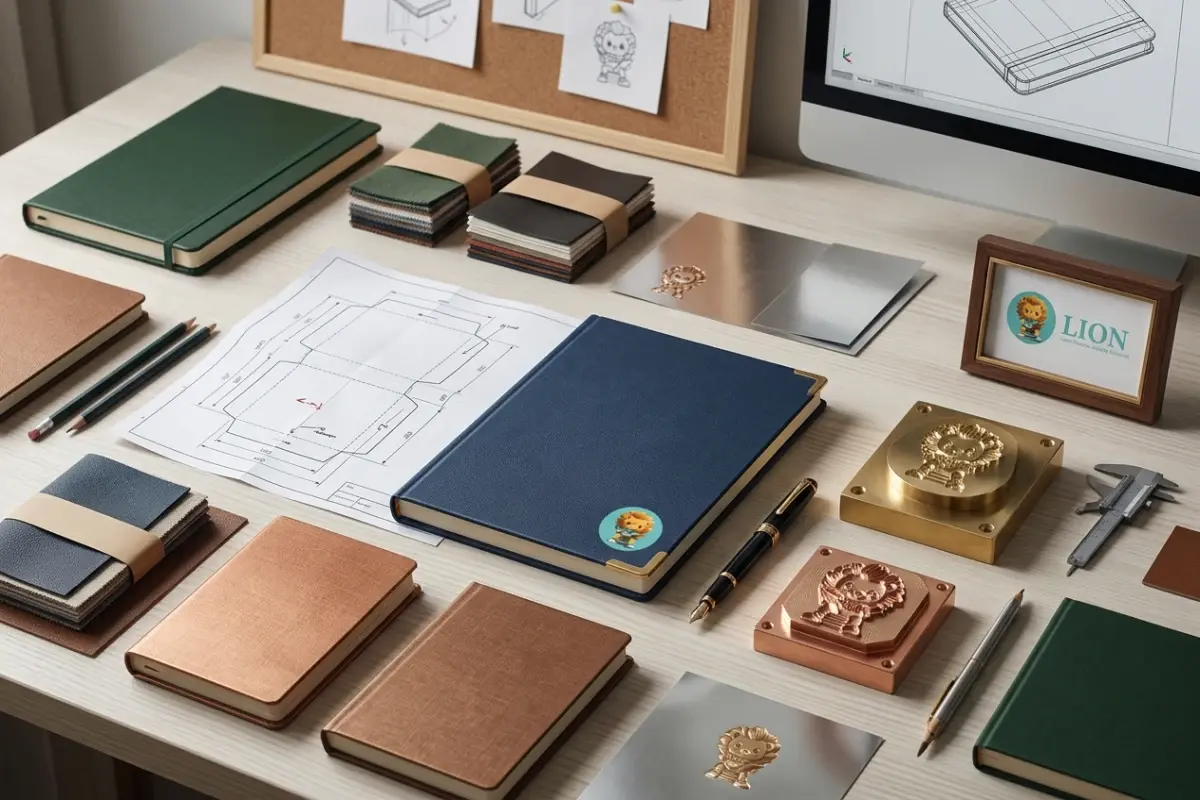
Private Label Notebook Artwork Ownership: Who Owns Dielines, Files, and Layouts?
In private label notebook projects, brands retain exclusive ownership of their original visual artwork, logos, and custom interior content, while ownership of structural dielines, physical tooling, and production print plates depends directly on your manufacturing contract terms and Non-Recurring Engineering (NRE) fee allocations. Establishing clear contractual boundaries before sampling prevents production lock-in and protects proprietary designs.
Who Owns Private Label Notebook Artwork and Visual Assets?
When a brand commissions private label notebook manufacturing, the fundamental rule of intellectual property dictates that the entity creating the graphic design owns the underlying copyright, unless explicitly assigned in writing. Private label stationery IP protection hinges on categorizing which party provides each layer of the finished product.
Brand-Supplied Assets (100% Brand Ownership): Surface cover illustrations, typography lockups, foil stamp vectors, debossing artwork, custom interior journal prompts, illustrated endpapers, and branded packaging graphics belong entirely to the brand.
Standard Factory Stock Elements (Manufacturer Ownership): Standard generic grid patterns, standard dot grids (such as generic 5mm spacing), standard lined page rules, and factory-standard bookmark ribbon attachments remain public domain or standard factory templates.
Collaborative Design Adaptations: When an original illustration is adapted to fit specific prepress color profiles (e.g., CMYK offset curves or specialty pantone separations), the underlying IP remains with the brand, while the technical output plate files belong to the production workflow.
To safeguard these assets, brands must ensure their manufacturing agreements contain an explicit "Work Made for Hire" or comprehensive IP assignment clause covering all custom graphic contributions.

Prepress dielines and source files require precise contractual classification prior to mass production.
What Governs Custom Notebook Dieline Ownership and Structural Files?
A custom notebook dieline defines the exact structural layout—including cut lines, crease scores, spine allowances, rounded corner radii, and expanding pocket dimensions. Custom notebook dieline ownership operates differently from graphic surface design.
Structural Component | Default Ownership Model | Key Consideration for Buyers |
|---|---|---|
:--- | :--- | :--- |
Standard Catalog Dielines | Manufacturer Property | Zero development cost, but competitor brands can use the same structural template. |
Custom Engineered Dielines (Unpaid) | Manufacturer Property | If the factory engineers a custom closure, tab system, or box mechanism without a fee, they retain the CAD/dieline file. |
Custom Dielines (Paid NRE / Tooling Fee) | Brand Property (Contract Dependent) | When the client pays for structural engineering, the resulting vector dieline and 2D/3D CAD files should be fully assignable. |
Proprietary Packaging Mechanics | Negotiated IP / Patentable | Unique multi-tier unboxing boxes, magnetic flaps, or specialized book slipcases require explicit non-disclosure protection. |
When working with integrated partners capable of Design-to-Manufacturing Integration, clarity on engineering files ensures brands can scale production smoothly across multiple nodes without structural inconsistencies.
How Do Tooling Fees and Molds Impact Source File Rights?
In notebook manufacturing source file rights, physical tooling—such as brass debossing dies, custom edge-gilding blocks, magnetic closure molds, and high-frequency cutting dies—is often confused with digital design files. Paying for physical molds does not automatically transfer editable native vector files unless explicitly defined in purchase orders.
Tooling Amortization vs. Direct Purchase: If a factory absorbs mold costs within the unit price, the factory maintains physical possession and proprietary control over the tool. If the brand pays a dedicated, itemized tooling invoice, the brand owns the physical mold.
Source Files vs. Prepress Production Files: Native vector files (.AI, .EPS, .CAD) created by the brand remain brand property. However, factories generate native RIP (Raster Image Processor) files, imposition files, and CTP (Computer-to-Plate) aluminum printing plates. These prepress plates are consumable production intermediate items, not perpetual brand assets.
Tooling Storage and Maintenance: Established manufacturers maintain dedicated mold registries, ensuring that custom embossing dies paid for by a brand are labeled, stored securely, and never applied to third-party OEM runs.
Clear procurement guidelines dictate that brands should itemize development charges, tooling costs, and digital deliverable fees on separate line items to maintain full legal control.

Itemized tooling fees ensure exclusive brand control over custom debossing dies and structural molds.
How Does OEM Journal Layout Intellectual Property Differ from White Labeling?
The distinction between Original Equipment Manufacturing (OEM) and Original Design Manufacturing (ODM / White Label) directly dictates interior layout IP:
OEM Journal Layout Intellectual Property: In true OEM projects, the brand provides custom guided prompts, undated calendar structures, productivity frameworks, habit trackers, and unique typography. The brand retains 100% OEM journal layout intellectual property. The manufacturer cannot reproduce, license, or sell these interior layouts to other clients.
ODM / White-Label Journal Layouts: In white-label scenarios, the manufacturer provides pre-developed planner layouts, standard daily logs, or wellness templates from their open-access library. The brand simply places its logo on the cover or title page. The factory retains ownership of the interior graphic layout, allowing other buyers to utilize the same interior pages.
Hybrid Development Models: When brands utilize agile manufacturing to co-develop products, they often merge standard paper selections and binding structures with custom bespoke page systems. IP ownership must be divided cleanly between the physical vehicle (the binding and standard paper specifications) and the printed editorial content.
Dual-site manufacturing operations—such as China-based technical development and sampling paired with Southeast Asian mass production facilities—frequently utilize standardized SOPs to ensure complex custom layouts transition smoothly from pre-flight proofing to high-speed web or sheet-fed offset printing without IP leakage.
What Contractual Clauses Protect Private Label Stationery IP Before Sampling?
To establish ironclad private label stationery IP protection, brands must secure legal safeguards prior to sharing vector artwork, technical packs, or custom planner page files with overseas or domestic manufacturing partners.
Bilingual Non-Disclosure and Non-Use Agreement (NNN): Standard western NDAs are often insufficient in global supply chains. A tailored Non-Disclosure, Non-Use, and Non-Circumvention (NNN) agreement prevents manufacturers from using proprietary designs for their own commercial benefit or disclosing them to sub-tier vendors.
Source File Release Stipulations: Contracts should state that upon final settlement of sampling or tooling invoices, all modified vector dielines, packaging layout templates, and technical specifications must be released to the buyer in editable formats (.AI, .PDF, .DWG).
Exclusivity on Custom Structural Innovations: If your product features an innovative custom pen holder, specialized elastic band channel, or multi-functional pocket layout, include an exclusivity clause that prevents the factory from listing that structural shape in their public catalog.
Confidential Sample Showroom Exclusions: Ensure the factory contract explicitly forbids displaying your branded pre-launch samples in trade show booths, public factory showrooms, or digital social media channels without prior written authorization.

Rigorous quality controls ensure proprietary journal layouts are produced strictly to brand specifications.
What Is the Essential Buyer Checklist for Notebook IP and File Ownership?
Before issuing a purchase order or sending high-resolution artwork to your supply-chain partner, review this operational checklist to ensure complete ownership security:
Signed NNN Agreement: Completed before sending full print-ready PDFs or unlocked vector art.
Itemized Tooling Invoices: Clear documentation showing explicit payment for custom debossing dies, silk-screen mesh frames, or specialized cutting molds.
Dieline Modification Rights: Written confirmation that custom-adjusted spine or pocket dielines belong to the brand.
Raw File Archival Terms: Agreement that the manufacturer retains backup prepress files exclusively for repeat production runs and cannot transfer them.
Third-Party Subcontractor Protection: Assurance that specialty embellishers (e.g., edge-gilding, foil-stamping, box-making subcontractors) operate under identical confidentiality and IP restrictions.
Post-Production Tooling Return/Destruction Policy: Defined protocol for either returning custom dies to the buyer or safely decommissioning them after product retirement.
Partnering with a reliable supply-chain provider that integrates end-to-end design development, rapid prototyping, and automated multi-site manufacturing provides the structural transparency needed to protect your brand's valuable design equity from sketch to final shipment.
Ready to develop your next custom paper line with full design protection? Discuss your project requirements and request a white-label sourcing evaluation with our team.
FAQ
Does my manufacturer own my custom journal interior layout if they set the print plates?
No. Generating intermediate prepress files and aluminum CTP (Computer-to-Plate) printing plates does not transfer your intellectual property. Your original editorial content, planner structures, prompts, and typography remain your exclusive property under standard OEM manufacturing terms.
What happens to custom debossing dies if I switch notebook manufacturers?
If you paid for the debossing die as a separate, itemized tooling fee on your initial invoice, you are the legal owner of that physical die. You can formally request its return or instruct the factory to destroy it upon contract termination. If the tooling was amortized into unit costs, factory ownership may apply unless negotiated otherwise.
Can a factory sell my custom notebook dieline to other private label clients?
Standard catalog dielines remain open for general use. However, if you engineered a proprietary structural dieline—such as a unique expanding pocket, custom magnetic enclosure, or novel accordion tab system—and paid non-recurring engineering (NRE) fees, the factory is legally prohibited from sharing or selling that structure under an effective NNN agreement.