


Resolving Pencil Core Bonding Failures in High-Volume Stationery Sourcing

Pencil core bonding failures occur when the adhesive bond between the lead and the wooden slats is weak or uneven, leading to internal lead slippage and breakage during sharpening. This risk can be mitigated through standardized shear-strength testing at the sample stage, rigorous timber moisture controls, and integrated category quality audits.
Why Does Pencil Core Bonding Fail in Mass Production?
In the world of wood-cased writing instruments, the durability of a pencil depends almost entirely on the integrity of its core adhesive seal. When a customer sharpens a brand-new pencil only to find the graphite tip repeatedly fracturing and falling out of the wood casing, the culprit is rarely a defective lead formulation. Instead, it is almost always a failure in the pencil core bonding process.
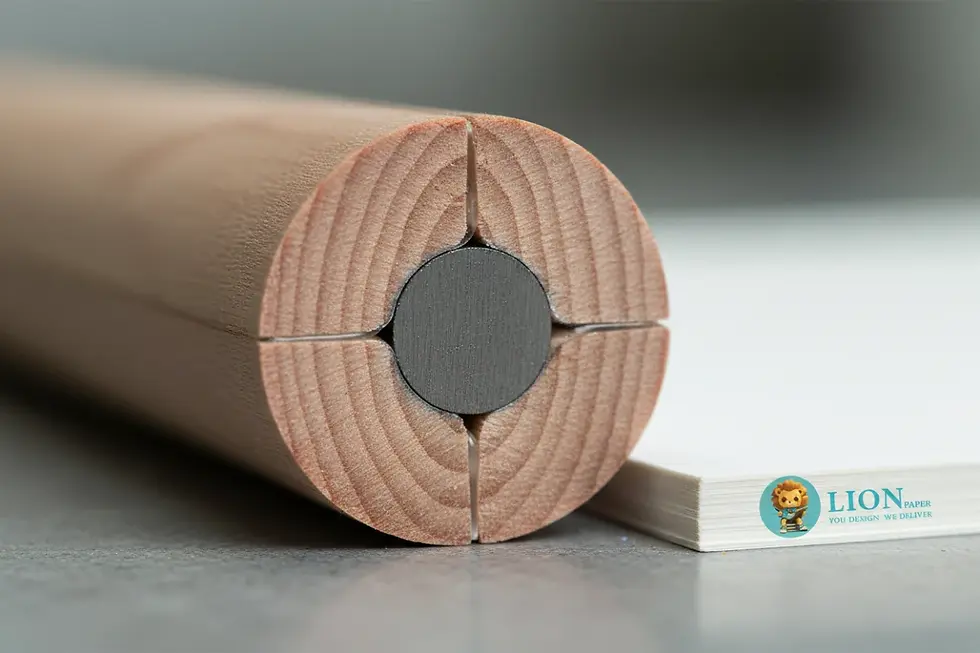
During high-volume manufacturing, wood-cased pencils are constructed by sandwiching graphite or colored cores between two grooved wooden slats, which are glued together under high pressure. If the adhesive layer between the core and the wood is thin, incomplete, or fails to cure correctly, the core remains loose inside its wooden channel. When external pressure is applied—such as dropping the pencil or sharpening it—the core shifts, experiences localized stress, and snaps internally.
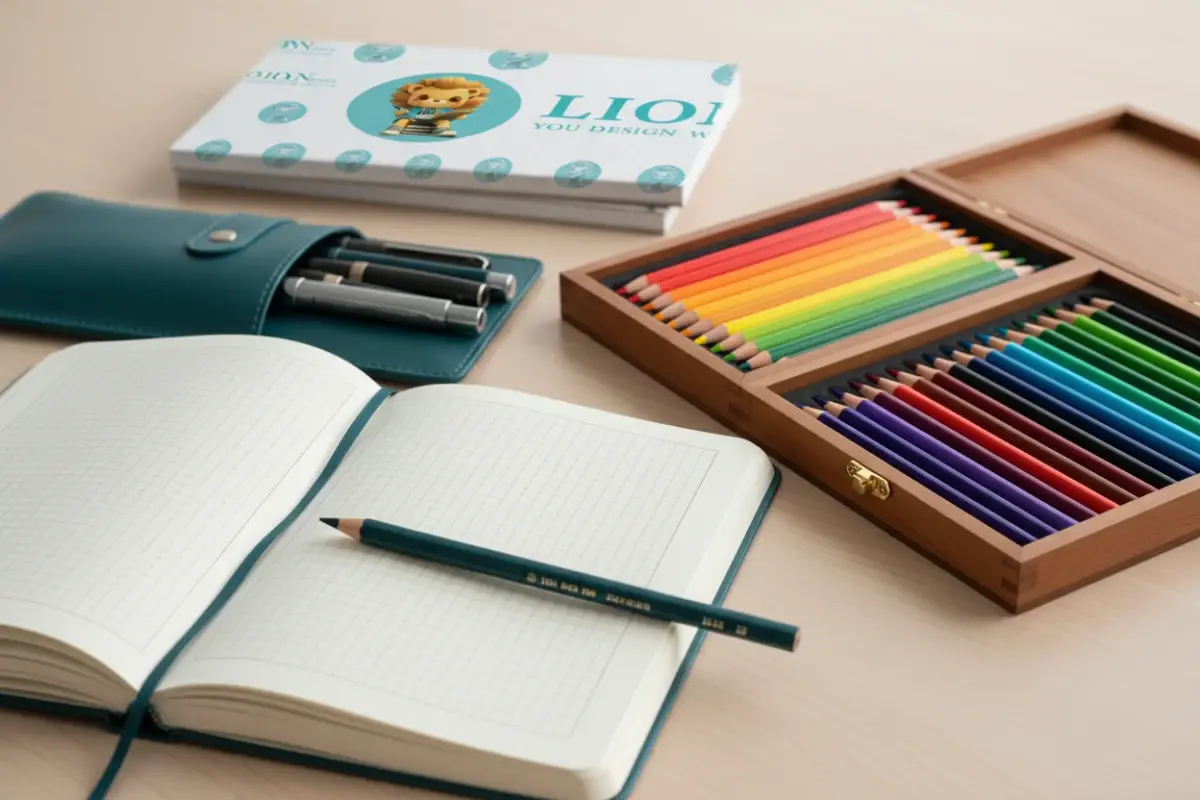
For global retail brands, educational distributors, and e-commerce platforms, these wood cased pencil sourcing defects can quickly translate into soaring return rates and negative consumer reviews. Ensuring a robust bond is not merely an aesthetic consideration; it is a fundamental pillar of consumer satisfaction. When pencils are bundled with notebooks, planners, or sketchbooks as part of a lifestyle collection, a single brittle pencil can compromise the perceived value of the entire retail kit, underscoring the vital importance of stationery category integration QA across the entire supply chain.
What Are the Technical Root Causes Behind Lead Bonding Defects?
To prevent bonding failures, brands must understand the underlying technical variables that factories must control. The interface between the porous wood surface, the water-based adhesive, and the smooth, low-surface-energy graphite or wax-filled colored core is highly sensitive to environmental and mechanical changes.
Several physical and chemical factors directly impact the success of the bond:
Timber Moisture Content: Wood is hygroscopic. If the wooden slats have a moisture content higher than 10%, they will gradually shrink during storage or transit. This structural shrinkage warps the core channel, tearing the cured adhesive layer away from either the wood or the graphite core.
Adhesive Viscosity and Formula: Standard polyvinyl acetate (PVA) or specialized starch-based adhesives must maintain a precise solids-to-water ratio. If the glue is too watery, it absorbs too quickly into the wood, leaving an starved joint. If it is too viscous, it cannot form a uniform micro-film around the core.
Groove Depth and Alignment Precision: The radius of the grooved channels in the top and bottom slats must perfectly match the diameter of the lead core. Off-center grooving or depth deviations create microscopic gaps where the core is left entirely unsupported by glue.
Clamping Pressure and Curing Time: Once the "sandwich" is assembled, the block must be clamped with uniform force. Insufficient pressure prevents the glue from penetrating the wood fibers, while premature release of clamping pressure before full curing creates micro-fissures in the adhesive.
Critical Process Variable | Target Range / Specification | Risk of Deviation |
|---|---|---|
:--- | :--- | :--- |
Timber Moisture Content | 6.0% to 9.0% | >10% causes wood shrinkage and bond shearing; <5% causes wood splitting. |
Glue Application Weight | 12g to 15g per square meter | Low weight leads to starved joints; excess weight causes core contamination. |
Clamping Pressure | 8 to 12 kg/cm² | Low pressure creates voids; high pressure crushes fragile colored cores. |
Groove Tolerance | ±0.02 mm | Loose tolerances lead to loose cores and internal shifting. |
How Can Brands Test and Validate Lead Breakage Prevention Before Shipment?
Relying on a factory's self-reporting is a significant risk when sourcing at scale. Importers must implement objective, standardized testing protocols during the product development and pre-shipment inspection phases to guarantee pencil lead breakage prevention.
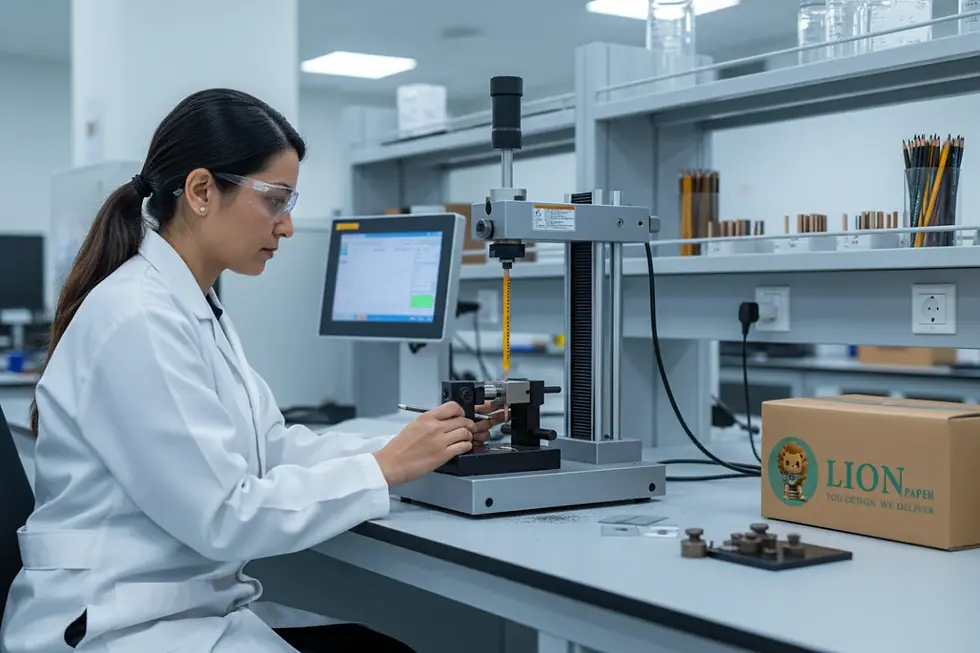
The industry standard for verifying bond integrity is the Core-to-Wood Shear Strength Test (often referred to as the Lead Pull-Out or Push-Out Test). In a laboratory setting, a section of the pencil is placed in a mechanical testing rig. A plunger applies axial force directly to the end of the core while holding the wooden casing firmly in place. The force required to dislodge the core from the wood is measured in Newtons (N) or Kilopond (kp):
Excellent Bond: >150 N (The wood fibers themselves shear and tear before the glue joint separates).
Acceptable Bond: 100 N to 150 N (Adequate for standard domestic and school environments).
Defective Bond: <80 N (High risk of lead slippage, core drop-out, and frequent sharpening breakage).
In addition to quantitative lab tests, quality inspectors should perform a practical Sharpening and Torture Test. This involves selecting 50 random samples from a production batch and sharpening them three times consecutively using both manual hand-held sharpeners and heavy-duty rotary electric sharpeners. If the core fractures at the wood interface or if the tip detaches during normal rotation, the batch should be flagged for deeper physical analysis.
What In-line Quality Control Safeguards Protect Pencil Structural Integrity?
To eliminate defects before they reach the packaging line, factories must embed rigorous checkpoints into their pencil manufacturing quality control SOPs. Quality cannot be inspected into a finished product; it must be built systematically step-by-step.
First, raw wood slats must undergo automated moisture screening using inline electromagnetic sensor bars. Any slat with moisture exceeding 10% is automatically rejected and returned to the drying kilns.
Second, the adhesive applicator must utilize continuous-circulation glue systems with viscosity monitoring. By checking the fluid dynamics of the glue every hour, technicians can adjust water or solids content to counteract ambient temperature fluctuations.
Third, post-clamping block inspection is essential. Before the combined wood blocks are sliced into individual hexagonal or round pencils, inspectors cut thin cross-sections from the ends of the blocks. These cross-sections are viewed under magnification to verify that the glue line is continuous and that the core sits exactly in the center of the wooden cylinder. A misaligned core (eccentricity) forces one side of the wood casing to be dangerously thin, rendering the pencil highly susceptible to breakage when sharpened.
How Should Buyers Structure a Corrective Action Plan for Bonding Failures?
If pre-shipment inspections reveal high failure rates, working with the manufacturer on a structured Corrective and Preventive Action (CAPA) plan is critical. Rushing to reproduce the order without identifying the root cause will often yield the same defect.
Buyers should direct their quality assurance engineers to focus on the following corrective protocol:
Isolate and Quarantine: Immediately secure the affected production lots. Verify if the failure is isolated to a specific timber species (e.g., Poplar vs. Lindenwood) or a specific production shift.
Check the Lead Composition: Sometimes, colored pencil cores contain excess surface wax or oil from the extrusion process, which acts as a release agent against water-based glues. If this is the case, the factory must introduce a pre-treatment step (such as surface washing or changing the glue formula to include bonding agents) to ensure adhesion.
Audit the Clamping Duration: If the factory is rushing to meet a delivery deadline, they may shorten the clamping time. Mandate a minimum of 4 hours under hydraulic pressure, followed by a 24-hour stabilization period in a temperature-controlled room before shaping.
Standardize the QC Frequency: Require the factory to log shear-strength testing results every 2,000 units produced and submit these records with the final shipping documents.
How Does Category Integration Manage Quality Risks Across Bundled Stationery Sets?
For brands launching comprehensive stationery collections—where notebooks, pencil pouches, planners, and colored pencils are packaged together—sourcing from multiple uncoordinated factories introduces massive quality risks. A stunning leather journal packaged with a low-grade, easily breakable pencil damages the overall credibility of the brand.
This is where an integrated supply-chain partner becomes invaluable. Managing these risks requires a unified approach to quality, ensuring that the performance standards of writing instruments match the physical qualities of paper and packaging. By applying strict stationery category integration QA systems, a centralized partner can oversee raw material selection, matching the wood properties of the pencils with the elastic, structural properties of pen loops, customized packaging trays, and notebook bindings.

Lion Paper Products (Jiaxing) Co., Ltd., founded in 2015, specializes in resolving these complex supply-chain challenges. Operating from a highly agile 3,000-square-meter design, prototyping, and development center in Jiaxing, Zhejiang, alongside a massive 10,000-square-meter mass production facility in Cambodia, Lion Paper provides a robust, dual-site supply network. By integrating design-to-manufacturing processes, we ensure that every component in a multi-category gift or retail set is designed, manufactured, and inspected under a single unified standard. This dual-site synergy allows brands to benefit from China-based rapid prototyping and high-end design while taking advantage of cost-effective, tariff-optimized, and reliable mass manufacturing in Cambodia.
Are you looking to launch a seamless, high-quality, and retail-ready stationery collection? Share your target school/art user, pencil grade or core, barrel design, color count and packaging; Lion Paper can help structure the sourcing and category-integration brief.
Frequently Asked Questions
Why does my pencil lead slide completely out of the wooden casing?
This is a classic symptom of total adhesive failure. It occurs when the wood slat moisture was too high during gluing, causing the wood to shrink and detach from the glue film, or when the graphite core had excess surface wax that prevented the adhesive from binding to its surface.
Does the wood type affect pencil core bonding strength?
Yes. Softwoods like Incense Cedar and high-quality Lindenwood (basswood) have uniform wood grain and optimal porosity, allowing adhesives to penetrate deeply and form a stronger bond. Cheaper, fast-growing poplars can have irregular densities, which sometimes result in uneven glue absorption and weaker bonding joints.
What is the difference between bonded and unbonded pencils?
Bonded pencils have their lead cores glued continuously along the entire length of the wood casing, which reinforces the core and prevents internal shattering. Unbonded or poorly bonded pencils do not have a secure adhesive layer, leaving the core loose inside the channel, which leads to frequent breakage during sharpening.
FAQ
Why does my pencil lead slide completely out of the wooden casing?
This is a classic symptom of total adhesive failure. It occurs when the wood slat moisture was too high during gluing, causing the wood to shrink and detach from the glue film, or when the graphite core had excess surface wax that prevented the adhesive from binding to its surface.
Does the wood type affect pencil core bonding strength?
Yes. Softwoods like Incense Cedar and high-quality Lindenwood (basswood) have uniform wood grain and optimal porosity, allowing adhesives to penetrate deeply and form a stronger bond. Cheaper, fast-growing poplars can have irregular densities, which sometimes result in uneven glue absorption and weaker bonding joints.
What is the difference between bonded and unbonded pencils?
Bonded pencils have their lead cores glued continuously along the entire length of the wood casing, which reinforces the core and prevents internal shattering. Unbonded or poorly bonded pencils do not have a secure adhesive layer, leaving the core loose inside the channel, which leads to frequent breakage during sharpening.


Comments