


A Sourcing Guide to Pencil Case Materials: Specifications, Cost, and Retail Durability

Selecting the ideal pencil case materials depends on finding the right balance between cost-efficiency, retail appeal, and long-term durability. Standard raw materials such as heavy-duty canvas, polyester nylon, vegan PU leather, and eco-friendly rPET directly influence your production costs, MOQ thresholds, and branding potential. Understanding these technical specifications helps sourcing managers optimize production with a professional custom pencil pouch manufacturer to deliver high-margin, shelf-ready stationery collections.
What are the primary pencil case materials and how do they balance cost and performance?
When sourcing stationery accessories, material selection dictates both the physical structure of the pouch and the retail price point. Different market segments—ranging from budget back-to-school items to high-end corporate gifts—require specific material properties.
Canvas and Cotton Fabrics
Canvas is an industry-standard choice, particularly for lifestyle, creator-led, and academic brands. It is prized for its natural texture, durability, and classic aesthetic. Standard bulk canvas pencil case production typically utilizes cotton canvas or poly-cotton blends.
Durability: High resistance to abrasion, punctures, and tearing.
Aesthetics: Provides a soft, matte finish that feels premium and organic.
Printing Compatibility: Excellent for screen printing, direct-to-garment (DTG) printing, and heavy embroidery.
Synthetic Polyesters and Nondurables (Nylon)
Nylon and polyester are the workhorses of the utility stationery market. Offered in varying densities, these synthetic fibers provide structural integrity at a highly competitive unit cost.
Water Resistance: Excellent, especially when coated with polyurethane (PU) or polyvinyl chloride (PVC) backing.
Cleanability: Smooth surfaces make them easy to wipe down, preventing graphite and ink stains from soaking through.
Colorfastness: Highly resistant to fading under UV light, keeping custom colors bright throughout the school year.
Polyurethane (PU) and Vegan Leathers
For premium stationery lines, retail-ready gift sets, and corporate office collections, PU leather offers a sophisticated, high-end look without the prohibitive cost of genuine leather.
Premium Touch: Soft hand-feel with variable grain textures (e.g., pebble grain, saffiano, smooth matte).
Rigidity: PU leather provides natural structural rigidity, helping the pouch maintain its shape even when empty.
Decoration: Ideally suited for hot-foil stamping, debossing, and metal logo plate attachments.
Transparent and Semi-Rigid Plastics (PVC & TPU)
Thermoplastic polyurethane (TPU) and polyvinyl chloride (PVC) are popular for transparent "see-through" pencil cases, widely mandated by schools for exam compliance and highly favored in trendy lifestyle organizer pouches.
Visibility: Quick visual identification of contents.
TPU vs. PVC: TPU is the superior choice for high-end markets as it is eco-friendly, highly flexible in cold weather, and resistant to yellowing over time, unlike cheaper PVC options.

How do canvas, PU, and nylon compare under technical material specifications?
To build a highly accurate RFQ (Request for Quote) or tech pack, sourcing managers must understand the precise pencil case material specification definitions used by factories. The table below outlines the core technical metrics for the most common fabrics used in high-volume production.
Material Type | Technical Specification / Grade | Average Weight (GSM / Thickness) | Water Resistance Level | Primary Customization Method | Relative Cost Index | Best Market Placement |
|---|---|---|---|---|---|---|
:--- | :--- | :--- | :--- | :--- | :--- | :--- |
Cotton Canvas | 10oz, 12oz, 14oz, 16oz | 340 - 450 GSM | Low (requires coating) | Screen Printing / Embroidery | Medium | Lifestyle & Creator Brands |
Polyester (Dacron) | 300D, 600D, 900D, 1680D | 180 - 350 GSM | High (with PU Backing) | Dye Sublimation / Heat Transfer | Low | Back-to-School / Mass Retail |
Nylon (Ripstop) | 210T, 420D | 70 - 150 GSM | High | Screen Printing | Medium | Lightweight Travel / Utility |
PU Leather | Premium Synthetic | 0.8mm - 1.2mm thickness | High | Debossing / Foil Stamping | High | Executive / Boutique Gift |
TPU | Biodegradable Polymer | 0.3mm - 0.5mm thickness | Waterproof | UV Flatbed / Silk Screen | Medium-High | Exam-Safe / Cosmetics & Travel |
When evaluating a bulk canvas pencil case, specifying the "ounce" weight is critical. A 12oz canvas provides a robust, self-standing wall structure, whereas an 8oz canvas is thin and requires an internal lining to prevent a limp, unstructured appearance on retail shelves.
For synthetic polymers, the "Denier" (D) rating denotes the linear mass density of the fibers. A 600D polyester with a water-resistant internal coating represents the sweet spot for durable, cost-effective stationery pouch wholesale programs.
What hardware, linings, and internal construction elements should be specified?
The longevity and overall quality perception of a stationery pouch depend heavily on the secondary components. Even the toughest outer shell will fail if the zipper splits or the internal seams fray under pressure.
Zipper and Puller Choices
Zippers are the most active point of failure in any pencil pouch. Specifying high-quality hardware is non-negotiable for retail brands.
Nylon Coil Zippers (#3 and #5): These are the most popular because of their smooth operation and flexibility. A #5 zipper is thicker and highly recommended for main compartments, while #3 is suitable for internal pocket dividers.
Metal Zippers: Offer a classic, high-end retro look but are heavier and can catch on delicate fabrics. They work best on structured PU leather or heavyweight canvas casings.
Custom Pullers: Molded zinc alloy pullers with debossed logos, rubber/PVC zipper pull tabs, or knotted paracord add significant perceived brand value at a minimal incremental unit cost.
Linings and Interlining Structures
Unless a minimalistic, single-layer canvas construction is desired, incorporating an interior lining elevates the pouch's internal aesthetics and protection level.
210D Polyester Lining: Standard lining material that resists ink stains, prevents tear-through from sharp pencils, and is highly cost-effective.
TC (Tetron Cotton) Lining: Often used inside high-end canvas pouches to maintain a soft, natural, cotton-rich texture.
EVA Foam Interlining: Placing a thin layer of 2mm EVA foam between the outer fabric and inner lining provides a padded, impact-resistant protective barrier for high-end items, colored pencils, and small electronic accessories.

How can a custom pencil pouch manufacturer implement durable branding and decorations?
Converting a plain textile container into a brand-defining lifestyle accessory requires choosing the correct decoration technology. Not all branding methods work seamlessly on every fabric type.
Silk Screen Printing and Rotary Screen Printing
Best suited for bold, solid-color graphic designs. It is highly durable and cost-effective for large-volume production runs. Screen printing works exceptionally well on cotton canvas, nylon, and smooth polyester surfaces.
Sublimation and Digital All-Over Printing (AOP)
Perfect for detailed, photographic, multi-colored designs. By utilizing heat-activated inks that bond directly with polyester fibers, sublimation printing ensures that designs will not crack, peel, or fade over time. It is highly recommended for trendy back-to-school collections featuring custom characters or intricate patterns.
Debossing and Hot Foil Stamping
These mechanical pressure-based techniques are tailored for PU and genuine leathers. Debossing presses a brand logo directly into the material, creating a subtle, elegant three-dimensional depth. Adding a gold, silver, or rose gold foil layer elevates the product to high-end executive and retail gifting standards.
Embroidery and Appliqués
Embroidery offers an authentic, tactile texture that pairs beautifully with heavyweight canvas pouches. For younger audiences, chenille or rubber patch appliqués sewn directly onto the exterior panel can create highly collectible, high-margin items.
How can brands coordinate pencil cases with notebooks and planners for cohesive retail collections?
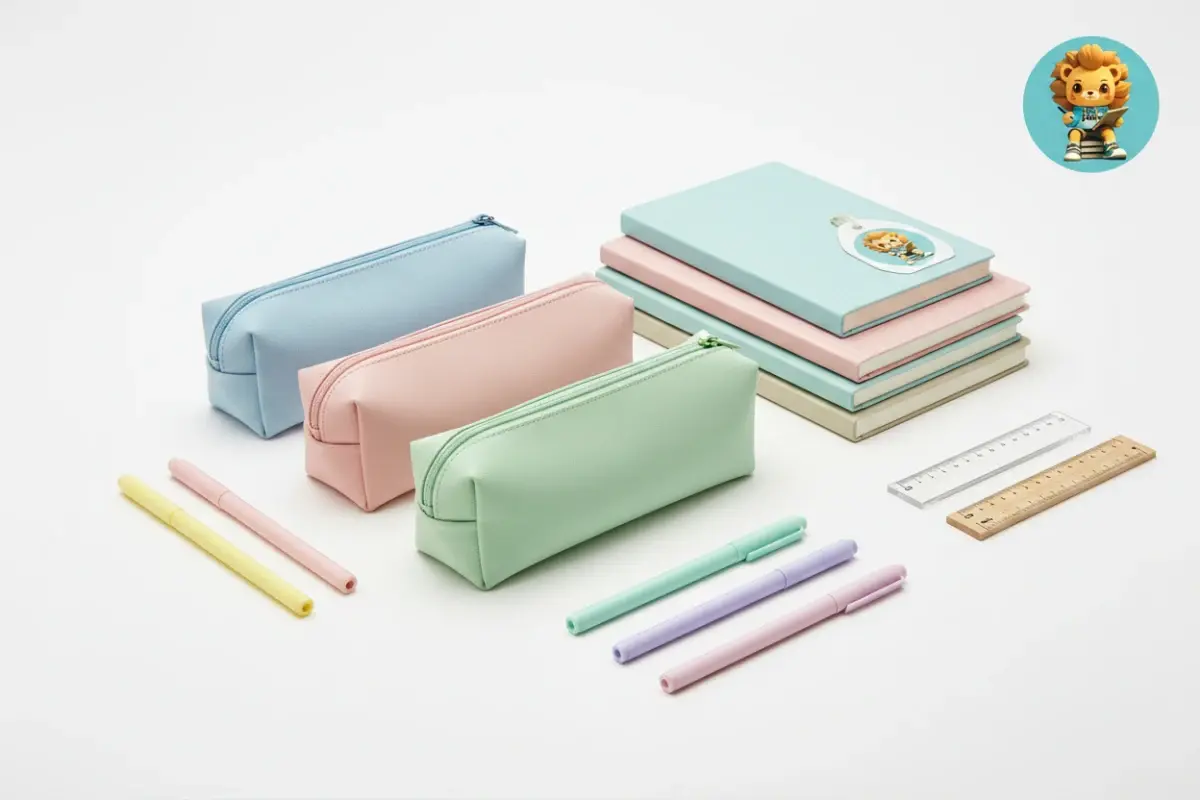
Many retail-ready brands do not sell pencil cases as standalone items. Instead, they position them as part of cohesive stationery collections, coordinating them with custom notebooks, wire-bound journals, desk organizers, and planners. Matching color palettes, patterns, and design accents across these categories increases basket sizes and average order values.
Material Matching: Pair an FSC-certified linen-cover journal with a complementary 12oz natural cotton canvas pencil pouch, using matching cream-toned cotton webbings and gold-toned metal accents.
Pattern Synchronization: Print matching floral patterns across both hardcover planner covers and water-resistant polyester pouches, creating a beautiful desktop set.
Attachment Elastic Bands: Design your custom pencil cases with flat elastic bands on the back panel, allowing users to slip the pouch directly over the cover of their A5 notebook or diary for convenient hands-free carry.
What is the sourcing manager's checklist for choosing a custom pencil pouch manufacturer?
To ensure consistent quality, stable lead times, and smooth customs clearance, sourcing managers must ask the right technical questions during the RFQ process. Use this targeted checklist when evaluating potential manufacturing partners:
Compliance and Certification: Do they hold active audits and safety standards required for key target markets? Look for ISO 9001 quality management systems, SMETA/WCA social compliance audits, FSC material tracking (for wood-pulp paper and sustainable options), and CPSIA compliance for children's school products.
Dual-Site Flexibility: Can they offer dual-site manufacturing flexibility? For instance, having design, rapid sampling, and domestic coordination in an innovation hub like Jiaxing, China, paired with large-scale, tariff-efficient mass assembly in Cambodia, allows brands to manage fluctuating customs tariffs while optimizing overall landed costs.
Design-to-Manufacturing Integration: Do they have in-house structural engineers to help optimize pattern efficiency? A manufacturer that understands how to lay out patterns on a fabric roll can reduce raw material wastage by up to 15%, passing those direct cost savings back to your brand.
Testing Equipment: Does the facility conduct in-house tensile strength testing for zippers, salt spray testing for metallic hardware (to prevent rust), and colorfastness crocking tests for dyed fabrics?
Frequently Asked Questions about Pencil Case Materials
Q1: Which pencil case material is easiest to clean and maintain for long-term school use?
Polyester (especially 600D with a water-resistant PU interior coating) and TPU are the easiest materials to clean. Graphite dust, ink smudges, and dirt can be easily wiped away with a damp cloth and mild soap. Canvas, while durable, absorbs liquids quickly and requires gentle hand washing and air drying to prevent shrinkage.
Q2: What is the most eco-friendly fabric option for sustainable stationery pouch wholesale programs?
Recycled polyester (rPET) made from post-consumer plastic bottles is currently the most popular sustainable synthetic material. For organic lines, GOTS-certified organic cotton canvas or sustainably harvested cork material offers an organic, biodegradable finish that matches consumer demand for eco-conscious products.
Q3: How do child safety regulations affect the choice of pencil case materials?
Products aimed at children under 12 must comply with strict national safety standards such as CPSIA in the USA and REACH in Europe. Sourcing managers must ensure that synthetic materials (like PVC, PU, and polyester backings) are certified free of heavy metals (like lead) and harmful plasticizers (like phthalates). Always ask your factory for updated third-party lab test certificates before authorizing mass production.
Partner with a Global Custom Manufacturing Expert
Ready to transform your creative concept into a shelf-ready, high-demand product? Send your target product, material, decoration and quantity; Lion Paper can propose a retail-ready construction and sampling route.
FAQ
Which pencil case material is easiest to clean and maintain for long-term school use?
Polyester (especially 600D with a water-resistant PU interior coating) and TPU are the easiest materials to clean. Graphite dust, ink smudges, and dirt can be easily wiped away with a damp cloth and mild soap. Canvas, while durable, absorbs liquids quickly and requires gentle hand washing and air drying to prevent shrinkage.
What is the most eco-friendly fabric option for sustainable stationery pouch wholesale programs?
Recycled polyester (rPET) made from post-consumer plastic bottles is currently the most popular sustainable synthetic material. For organic lines, GOTS-certified organic cotton canvas or sustainably harvested cork material offers an organic, biodegradable finish that matches consumer demand for eco-conscious products.
How do child safety regulations affect the choice of pencil case materials?
Products aimed at children under 12 must comply with strict national safety standards such as CPSIA in the USA and REACH in Europe. Sourcing managers must ensure that synthetic materials (like PVC, PU, and polyester backings) are certified free of heavy metals (like lead) and harmful plasticizers (like phthalates). Always ask your factory for updated third-party lab test certificates before authorizing mass production.


Comments