


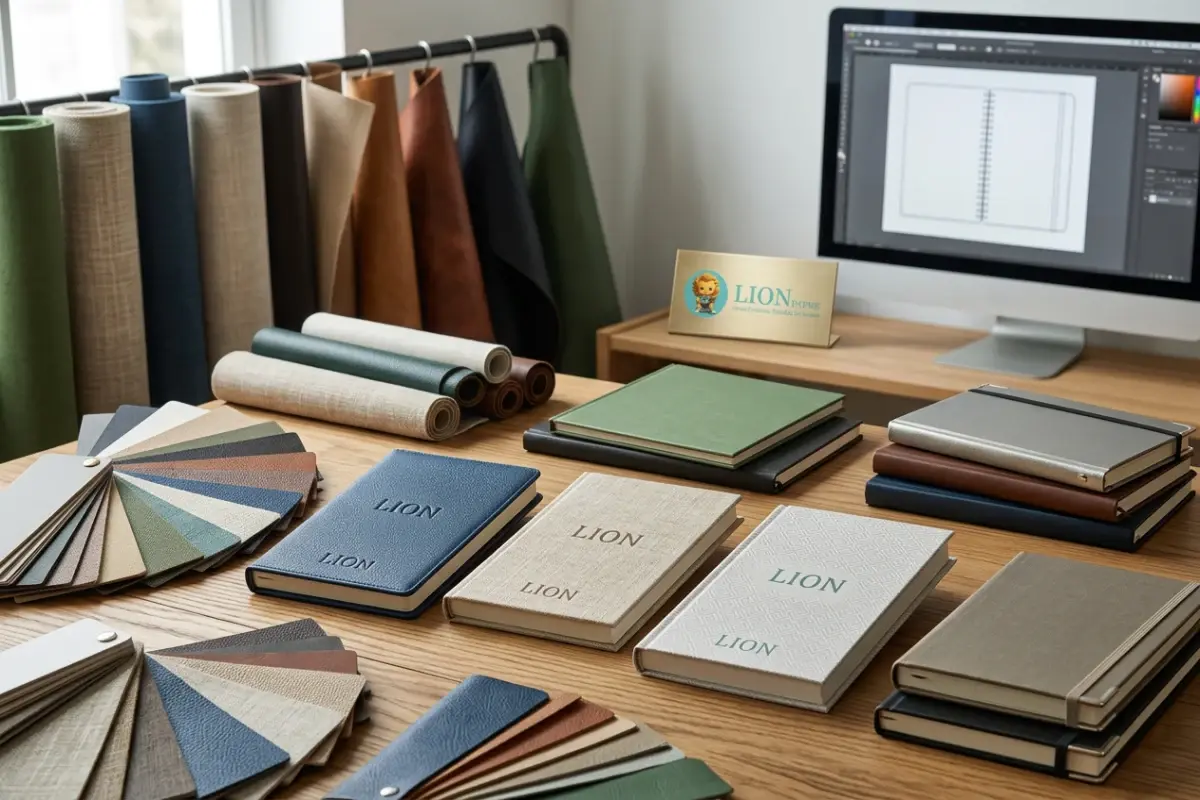
Notebook Cover Material Brand Perception: Strategic Sourcing and Material Guide

Notebook cover materials directly shape consumer brand perception by signaling product tier, tactile luxury, and sustainability values—with PU leather establishing executive prestige, fabric conveying artisan lifestyle warmth, and coated paper enabling versatile, cost-effective graphic storytelling. The tactile weight, surface texture, and structural rigidity of cover substrates establish immediate price expectations on retail shelves and unboxing moments before users turn a single page.
How Does Notebook Cover Material Selection Shape Brand Perception?
Cover materials serve as the primary sensory interface between a stationery brand and the end user. When a shopper picks up a journal in a retail store or unboxes an online order, haptic feedback triggers immediate cognitive associations regarding quality, durability, and commercial value. Notebook cover material brand perception is determined by four foundational sensory and structural pillars: tactile warmth, visual reflectivity, mass density, and flexural rigidity.
Tactile Warmth and Texture: Smooth, cold synthetic coatings often signal utility or tech accessories, whereas open-weave bookcloth, textured linen, and thermo-reactive PU leather convey artisanal craftsmanship and premium design intent. The physical touch of a cover sets up expectations for the writing experience inside.
Flexural Rigidity and Core Weight: Hardcover books wrapped over 1200 to 1800 GSM greyboard communicate permanence, executive authority, and archival durability. Conversely, flexible softcover journals using 250 to 400 GSM art cardstock or flexible bonded leather suggest portability, casual drafting, agile note-taking, and daily personal utility.
Edge Finishing and Assembly Precision: Edge treatments—such as turned-edge casemaking, round cornering, edge painting, and gilded or sprayed book blocks—directly reflect manufacturing tolerances. Tight, unwrinkled corner folds immediately elevate brand positioning above mass-market commodities.
Acoustic and Olfactory Cues: The audible snap of an elastic enclosure band against a rigid board, the soft friction of opening a textured fabric cover, and the absence of synthetic chemical odors establish sensory cues associated with high-end lifestyle goods.
Stationery product developers evaluate custom notebook cover materials not just as protective envelopes, but as strategic positioning assets that align product lines with targeted price tiers, distribution channels, and target consumer demographics. In high-end corporate gifting, consumer retail, and creator-led stationery lines, cover choice often constitutes over forty percent of total perceived product value.

Tactile surface textures directly influence consumer value perception and perceived retail tier.
What Is the Brand Positioning Matrix for PU Leather, Coated Paper, and Fabric Covers?
Choosing stationery brand positioning materials requires aligning substrate characteristics with consumer expectations across commercial, corporate, and boutique lifestyle markets. Each material category delivers distinct advantages in aesthetics, cost efficiency, and perceived value.
Cover Substrate Type | Typical Target Audience | Perceived Brand Tier | Primary Strengths | Standard Production MOQ Range |
|---|---|---|---|---|
:--- | :--- | :--- | :--- | :--- |
Thermo-PU Leather | Corporate gifting, executive stationery, tech professionals | Premium to Luxury ($18.00–$35.00+ retail) | Rich debossing color changes, water resistance, soft touch | 500 – 1,000 units |
Natural Linen & Bookcloth | Creative professionals, boutique gift shops, lifestyle journals | Premium Artisan ($16.00–$30.00 retail) | Organic texture, high tactile warmth, elegant aesthetic | 1,000 – 2,000 units |
Coated Art Paper (157 GSM over board) | Mass-market retail, licensed IP, educational publishers | Entry to Mid-Tier ($6.00–$15.00 retail) | Unlimited full-color graphic fidelity, low unit cost | 1,000 – 3,000 units |
Uncoated Kraft / Recycled Board | Eco-conscious brands, minimalist design studios | Sustainable Mid-Tier ($8.00–$18.00 retail) | Raw tactile appeal, authentic ESG narrative, recyclable | 1,000 – 2,000 units |
Softcover Flex PU / Bonded Leather | Travelers, everyday carry (EDC), productivity planners | Mid to High Tier ($12.00–$24.00 retail) | Lightweight, flexible, durable pocket resistance | 1,000 – 2,000 units |
PU Leather vs Fabric Journal Cover: Strategic Comparison
When evaluating a PU leather vs fabric journal cover, brand managers must consider how these materials project identity in retail environments:
PU Leather (Polyurethane & Thermo-PU): Polyurethane leather delivers clean lines, water resistance, and executive prestige. Thermo-PU features specialized heat-reactive resins that darken under heat and pressure, producing sharp, two-tone debossed logos without foil. It suits corporate gifting, tech accessories, and classic bullet planners.
Woven Fabric and Bookcloth: Cotton, linen, and woven rayon bookcloth deliver an inviting, organic feel. These substrates communicate wellness, mindfulness, and design-led authenticity. While less resistant to liquid stains than PU, fabric covers foster personal emotional connection, making them ideal for guided gratitude journals, wedding planners, and art sketchbooks.
Coated Paper and Laminated Board: Laminated paper casewrap allows complete CMYK process printing, intricate foil stamping, and spot UV accents. It is the premier choice for illustration-led brands, licensed entertainment IP, and vibrant seasonal retail collections requiring complex graphics.
Selecting between these materials requires balancing aesthetic goals with practical manufacturing realities. For example, while natural linen offers high perceived value in boutique retail environments, it requires careful adhesive selection during the casing-in process to prevent glue strike-through. In contrast, synthetic PU leather provides predictable lamination behavior and uniform tension across automated casemaking machinery, ensuring high yields across large volume runs.
How Does Notebook Cover Finish Compatibility Impact Decorative Branding?
Surface engineering and notebook cover finish compatibility dictate which decorative techniques can be reliably executed on mass production lines without blistering, flaking, or substrate degradation. Misaligning decoration methods with cover materials risks elevated defect rates during large manufacturing runs.
Blind Debossing and Thermo-Reactive Tooling:
Best Substrates: Thermo-PU leather, heavy weight uncoated board, bonded leather.
Technical Parameters: Requires precision brass dies heated to 110°C–140°C with controlled dwell times (1.5 to 3 seconds) to activate chemical color transformation without scorching substrate backing.
Perception Impact: Subdued, understated luxury favored by executive and professional stationery lines.
Metallic and Matte Foil Stamping (Hot Stamping):
Best Substrates: Coated art paper, fine-weave bookcloth, smooth PU leather, kraft board.
Technical Parameters: Demands substrate-specific foil sizing agents (polyester carriers formulated for synthetic polymers versus porous natural fibers) to prevent edge tearing or incomplete adhesion.
Perception Impact: High visual contrast, festive gift appeal, and elevated retail shelf pop.
Silkscreen and Screen-Printed Textures:
Best Substrates: Coarse linen, open-weave bookcloth, textured PU, buckram.
Technical Parameters: Requires solvent-based or UV-curable inks with precise mesh tensioning (120T–150T) to deposit uniform ink films over uneven textile surfaces without bleeding into weave channels.
Perception Impact: Bold graphical contrast with durable tactile paint build-up.
Spot UV Varnish and Soft-Touch Film Lamination:
Best Substrates: Coated art paper over greyboard (157 GSM printed casewrap).
Technical Parameters: Thermal or wet lamination using BOPP soft-touch film followed by digital or screen-applied glossy UV lacquer creates dual-sheen tactile contrast.
Perception Impact: Modern, high-end consumer retail aesthetic with scratch resistance.
Understanding finish compatibility prevents common manufacturing failures such as foil flaking on textured surfaces or incomplete thermo-discoloration due to improper temperature control. When engineering luxury stationery collections, combining multiple finishes—such as a deep blind deboss paired with subtle micro-foil stamping—can create layered visual and tactile interest that reinforces high-tier market positioning.

Substrate-finish compatibility ensures sharp logo debossing and foil adhesion across volume production.
How Do Material Verification, ESG Documentation, and Global Retail Compliance Impact Sourcing?
Global retail channels, department stores, and international distributors require rigorous physical testing, ethical supply chain verification, and environmental provenance documentation. Selecting compliant cover substrates protects brands from customs rejections, retailer penalties, and reputational risk.
FSC Chain of Custody (FSC-C123456): Guarantees that paper casewraps, greyboard cores, and inner text paper originate from responsibly managed forests, controlled wood sources, or reclaimed post-consumer materials. FSC-certified paper materials provide verifiable ESG claims necessary for North American and European retail compliance.
Chemical Safety and Hazardous Substance Screening:
CPSIA & California Prop 65: Demands total lead content below 100 ppm, strict cadmium limits, and compliance with eight regulated phthalate esters (DBP, BBP, DEHP, DINP, DIBP, DPENP, DHEXP, DCHP) across all synthetic PU, vinyl coatings, and printing inks.
EU REACH Regulation (EC No 1907/2006): Substrates must be certified free of Substances of Very High Concern (SVHC) exceeding 0.1% by weight, including restricted azo dyes and dimethyl fumarate (DMFu).
Physical Durability and Accelerated Aging Standards:
Flexural Fatigue (Vamp Flex / Bally Flexometer): PU leather covers must endure a minimum of 20,000 to 50,000 flex cycles at room temperature without micro-cracking along hinge lines.
Crocking and Color Fastness (AATCC 8 / ISO 105-X12): Fabric and dyed PU surfaces must achieve Grade 4.0 or higher dry rub fastness and Grade 3.5+ wet rub fastness to prevent dye transfer onto apparel, hands, or desktop surfaces.
Hinged Cover Adhesion Pull Tests: Casing-in adhesive bonds between the book block endpapers and cover board must withstand a minimum pull force of 4.5 N/cm to prevent structural separation over product lifespans.
Lion Paper Products supports global brand partners by combining agile sample development and structural design at its Jiaxing facility with scalable, audited mass manufacturing in Cambodia. This dual-site network operates under unified SOPs, AQL 1.0/2.5 inspection thresholds, and compliance frameworks encompassing ISO 9001, FSC, SMETA, WCA, GSV, FAMA, and CPSIA audits, protecting product consistency across large production volumes.
What Is the Step-by-Step Cover Material Selection Checklist for Sourcing Teams?
To ensure an efficient transition from creative concept to container-load production, brand developers and procurement managers can follow this structured decision workflow:
Define Brand Tier and Target Retail Price:
Determine target MSRP and working landed COGS target (typically 18% to 25% of retail price).
Select substrate family: PU leather for executive lines, bookcloth for lifestyle lines, or printed paper for graphic and volume retail lines.
Establish Functional Use Case and Durability Needs:
Identify usage environments: Desktop studio use, backpack travel, high-humidity climates, or office boardroom meetings.
Specify board calipers: 1.5 mm (1000 GSM) for lightweight notebooks; 2.0 mm (1400 GSM) to 2.5 mm (1750 GSM) for premium hardcovers.
Validate Decoration Compatibility:
Pair artwork complexity with substrate: Fine micro-lettering requires smooth PU foil stamping or offset paper printing; minimalist logos suit deep thermo-debossing on faux leather.
Verify Regulatory and ESG Requirements:
Confirm target market regulations (CPSIA, Prop 65, REACH, FSC, UKCA/CE).
Audit supplier test reports and chain-of-custody documentation before tooling and mold opening.
Pilot Prototyping and Fast Sampling:
Commission pre-production physical prototypes to evaluate corner tuck neatness, hinge groove alignment, foil crispness, and open-flat binding flexibility.
Conduct pre-shipment drop tests, temperature cycling (-10°C to +45°C), and humidity checks prior to mass container dispatch.

Thorough compliance testing for FSC, CPSIA, and REACH guarantees retail readiness across international markets.
Ready to elevate your product line with precision-engineered cover materials? Share your preferred cover substrate, decorative finishes, target retail price tier, and production quantities to request a comprehensive material review and custom quotation with our engineering team.
FAQ
What is the difference between standard PU leather and thermo-PU for notebook covers?
Standard PU leather consists of a polyurethane coating over a fabric or non-woven backing that retains a uniform color when heated. Thermo-PU contains specialized heat-sensitive resins that darken under heat and pressure (110°C–140°C), producing a rich, contrasting two-tone debossed logo without requiring metallic foil or color pigments.
How does bookcloth cover durability compare to PU leather in everyday use?
PU leather offers superior water resistance, wipe-clean maintenance, and edge-scuff protection, making it well-suited for everyday carry and corporate office environments. Woven bookcloth and linen provide higher tactile warmth and an artisanal aesthetic, but can be susceptible to liquid staining and edge fraying unless treated with water-repellent coatings.
What core greyboard thickness is recommended for premium hardcover notebooks?
For standard consumer journals, a 1.5 mm to 1.8 mm (1000 to 1250 GSM) greyboard core provides adequate rigidity at a lightweight profile. For luxury, archival, or large-format desk journals, a 2.0 mm to 2.5 mm (1400 to 1750 GSM) high-density greyboard is recommended to prevent warping and deliver an executive hand feel.


Comments