


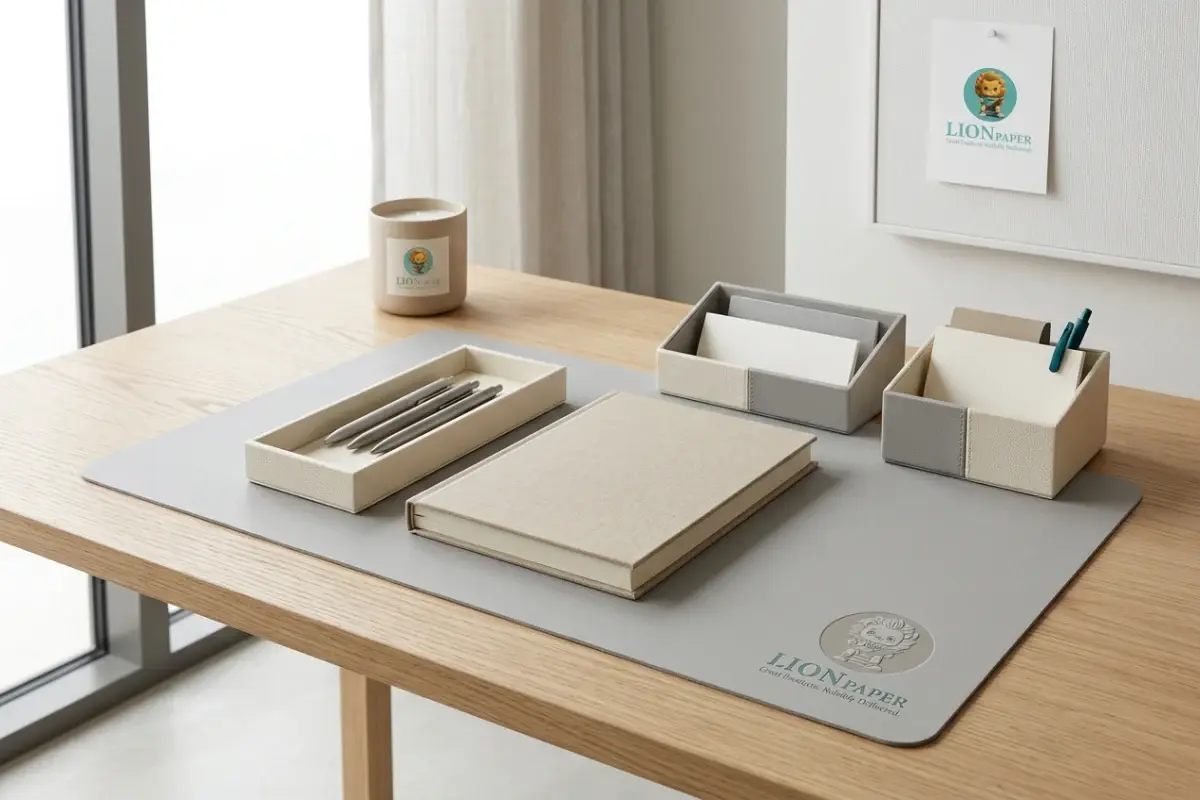
Minimalist Desk Organization: Designing and Manufacturing Modern Workspace Collections

Minimalist desk organization focuses on functional, clutter-free workspace tools crafted with clean lines, neutral aesthetics, and sustainable materials tailored for lifestyle retail collections. By removing superfluous ornamentation and prioritizing modular utility, minimal workspace products create focused environments for modern professionals, remote workers, and creative teams while delivering substantial margin and cross-merchandising potential for retail brands.
Why is minimalist desk organization becoming a dominant trend in global retail?
The global shift toward minimalist desk organization is driven by evolving work models, hybrid office arrangements, and a heightened consumer focus on intentional, clutter-free lifestyles. Modern professionals and remote teams no longer view desktop accessories merely as utilitarian storage; they treat them as lifestyle extensions that impact productivity, mental clarity, and personal interior aesthetics. As residential living and dedicated home workspaces blend, consumers seek desktop items that integrate seamlessly with warm, contemporary home interiors.
Retailers and direct-to-consumer (DTC) brands are capitalizing on this demand by curating coordinated desktop collections rather than selling fragmented individual SKUs. A cohesive minimalist aesthetic creates strong merchandising opportunities, encouraging multi-item basket building across complementary categories such as desk pads, structured pencil holders, modular filing trays, and tactile daily planners. Furthermore, corporate gifting and enterprise procurement programs are shifting away from traditional branded plastic novelties in favor of refined, understated desktop items that reflect sophisticated corporate values and modern corporate responsibility initiatives.

Clean profiles and cohesive neutral color palettes define modern minimal workspace products.
What are the core design principles of minimal workspace products?
Developing successful minimal workspace products requires balancing pure aesthetic restraint with everyday ergonomic utility. When unnecessary embellishments are stripped away, every subtle detail—from edge chamfers and structural rigidity to tactile surface textures—becomes a defining element of the product's perceived value.
To develop a commercially viable minimalist collection, product development teams adhere to several foundational design tenets:
Monochromatic and Muted Palettes: Predominant use of warm neutrals, soft off-whites, architectural grays, earthy taupes, and muted sage tones that minimize visual friction in professional work settings.
Architectural Simplicity and Proportion: Structural profiles prioritize geometric clarity, clean radii, flush joints, and balanced proportions that maintain elegance across varying desktop footprints.
Modular Multi-Functionality: Tiered nesting capabilities, stackable trays, magnetic side-docking components, and reversible orientations allow users to customize their desk setups dynamically.
Tactile and Sensory Balance: Combining smooth, matte finishes with textured linen, vegan leather, or structured recycled board to evoke understated luxury without loud graphics or heavy branding.
Subtle Brand Integration: Blind debossing, tone-on-tone foil accents, discreet internal woven labels, and understated laser engraving replace prominent contrasting logos.
Design Attribute | Traditional Office Stationery | Minimalist Lifestyle Workspace Products |
|---|---|---|
:--- | :--- | :--- |
Color Scheme | High-contrast, bright primary, commercial black | Muted neutrals, warm earth tones, monochromatic palettes |
Material Selection | High-gloss virgin plastics, basic wire mesh | FSC-certified paperboard, textured vegan leather, linen, cork |
Branding Placement | High-visibility screen print on front surfaces | Blind debossed, tone-on-tone, discreet edge-tagging |
Product Utility | Single-function, standalone utilitarian storage | Modular, stackable, cross-category desktop integration |
Visual Impact | High-density visual clutter and utility focus | Open, calming, architectural, and spatial harmony |
Which product categories are essential for a curated minimalist office stationery line?
A comprehensive minimalist office stationery collection spans multiple complementary touchpoints across the user's daily workflow. By developing coordinated sets that cover analog note-taking, active desktop storage, document management, and lifestyle accessories, stationery brands can elevate average order values and secure dedicated retail shelf space.
A complete minimalist desktop program typically encompasses eight foundational categories:
Structured Notebooks & Guided Journals: Hardcover and softcover notebooks featuring lay-flat binding, thread-stitched spines, ribbon page markers, and smooth 100 to 120 GSM FSC-certified text paper printed with subtle dot-grid or rule layouts.
Daily & Weekly Planning Tools: Wire-bound desktop flip pads, undated habit trackers, open-format meeting pads, and architectural desk calendars engineered for immediate accessibility.
Modular Desktop Filing & Trays: Heavyweight rigid paperboard document trays, magazine files, and multi-tier letter sorters wrapped in textured specialty papers or tactile bookcloth.
Writing Instrument Storage: Cylindrical and rectangular pen pots, structured pencil trays, and collapsible desktop brush holders that keep core tools accessible yet organized.
Desk Pads & Writing Mats: Extended faux leather, felt, or washable paper desk blotters that define the workspace boundary while protecting desktop surfaces.
Cable & Tech Organizers: Compact desktop wire catches, magnetic cable wraps, and fold-out tech accessory pouches made from durable twill or coated canvas.
Analog Organizational Accessories: Minimalist magnetic bookmarks, brass-finished paper clips, neutral sticky note tabs, and architectural memo blocks.
Protective Carrying Cases: Complementary laptop sleeves, document portfolios, and slim stationery pouches that enable seamless transitions between home and office.

FSC-certified paperboards and tactile linen coverings deliver structural durability and refined aesthetics.
What sustainable materials and finishes elevate aesthetic desk organizers OEM manufacturing?
Material authenticity is central to the success of aesthetic desk organizers OEM projects. Discerning retail consumers and enterprise procurement teams expect minimalist workspace goods to align with circular design values and responsible sourcing standards. Selecting the appropriate substrate not only reinforces sustainable brand commitments but also directly enhances the structural durability and tactile quality of the finished collection.
OEM and ODM manufacturing programs leverage several premium, eco-aligned material categories:
FSC-Certified and Post-Consumer Recycled Paperboards: Dense greyboard cores (ranging from 1200 to 2400 GSM) made from 100% recycled fibers provide structural integrity for desk trays and organizers, wrapped with FSC-certified specialty papers.
Textured Bookcloth and Natural Linens: Woven cotton, recycled polyester canvas, and linen coverings lend natural warmth and durability to storage boxes, file folders, and desktop organizers.
Water-Based PU and Microfiber Vegan Leathers: Scratch-resistant, cruelty-free synthetic leathers formulated with water-based coatings create sleek, spill-resistant surfaces for desk blotters, pencil cups, and tech organizers.
Low-Impact Mineral and Plant-Based Inks: Soy-based and vegetable-oil inks combined with non-toxic, water-based adhesives ensure the entire product remains safe, low-VOC, and fully compliant with international chemical regulations.
Specialty Uncoated Cover Stocks: Colored-through uncoated papers featuring subtle fiber inclusions and stone textures eliminate the need for synthetic film lamination while resisting everyday scuffs.
To preserve the minimalist aesthetic, surface finishes focus on understated tactile enhancement rather than heavy embellishment. Blind debossing creates clean, tactile indentations for logos and typography. Matte anti-scratch finishes ensure dark paperboards maintain a pristine appearance throughout retail handling, while subtle tone-on-tone foil stamping introduces refined light reflection without overpowering the product's understated silhouette.
How does Lion Paper deliver custom lifestyle desktop organization through China-Cambodia dual-site synergy?
Translating minimalist design concepts into high-volume commercial production requires a manufacturing partner with deep structural engineering expertise, flexible production lines, and an agile supply chain. Founded in 2015 and headquartered in Jiaxing, Zhejiang, Lion Paper Products (Jiaxing) Co., Ltd. operates as an integrated supply-chain partner for customized paper goods and creative lifestyle products.
Lion Paper’s operational model bridges design refinement and cost-effective mass production through a specialized China–Cambodia dual-site synergy:
Jiaxing Facility (3,000 m²): Dedicated to product development, concept planning, rapid prototyping, structural paper engineering, material testing, and strategic client support. The Jiaxing engineering team transforms conceptual brand sketches into production-ready CAD drawings and functional samples within days.
Cambodia Facility (10,000 m²): Dedicated to large-scale automated manufacturing, assembly, high-volume order fulfillment, and international export delivery. This facility provides stable capacity, cost efficiency, and favorable tariff structures for major retail distribution.
| LION PAPER DUAL-SITE OPERATIONAL NETWORK |
| JIAXING HUB (3,000 m²) | CAMBODIA PRODUCTION FACILITY (10,000 m²) | | • Creative Concepts & Structural Design | • Scaled Mass Manufacturing (5M+ units/yr) | | • Rapid Prototyping & Material Sourcing | • Automated Box Making & Assembly Lines | | • Pilot Runs & Small-Batch Testing | • Multi-Tier Quality Control SOPs | | • Direct Account Engineering Support | • Global Export Logistics & Palletization |
│ Direct Fulfillment ▼
| GLOBAL DISTRIBUTION: Retailers, DTC Lifestyle Brands, Corporate & E-Commerce Partners |
With an annual notebook and paper product output exceeding 5 million units, Lion Paper combines automated rigid-box production lines, precision die-cutting machinery, and standardized SOPs. Product consistency across large-scale runs is maintained through strict ISO 9001-aligned controls, comprehensive AQL sampling, calibrated defect charts, and rigorous in-line quality inspections.
Furthermore, Lion Paper supports international brand compliance across North America, Europe, Australia, the Middle East, and Southeast Asia. The company maintains an established audit foundation encompassing ISO 9001, FSC, SMETA, WCA, GSV, FAMA, and CPSIA compliance, ensuring that materials, production environments, and labor standards satisfy the rigorous vendor requirements of tier-one global retailers.

Plastic-free packaging and flat-pack engineering protect product integrity while optimizing logistics costs.
How can brands optimize packaging and supply chain compliance for minimalist workspace collections?
Minimalist aesthetics must extend seamlessly into product packaging and shipping execution. For DTC e-commerce brands and multi-door brick-and-mortar retailers, packaging must protect structural edges, prevent transit scuffs, and maintain an unboxing experience that mirrors the elegance of the product inside, all while keeping freight volume and carbon impact strictly controlled.
Key packaging and logistical strategies for custom lifestyle desktop organization lines include:
Flat-Pack and Collapsible Rigid Structures: Designing folding document boxes and collapsible desk organizers with hidden magnetic closures significantly reduces ocean freight volume and domestic warehousing costs.
Molded Pulp and Paper-Based Inserts: Replacing traditional plastic blister packs and foam inserts with precision-molded sugarcane bagasse or die-cut kraft trays to achieve 100% plastic-free packaging.
Plastic-Free Retail Sleeves and Belly Bands: Using heavy kraft or textured paper belly bands with clear barcode labeling to keep retail shelf footprints compact while highlighting product tactile qualities.
Drop-Test Certified E-Commerce Shipper Boxes: Custom-fit, single-wall corrugated mailers with internal corner buffers designed to pass ISTA drop-testing standards, preventing corner crush during parcel delivery.
Optimized Master Carton and Palletization Plans: Custom carton dimensions engineered to maximize container fill rates and pallet stability, mitigating in-transit crushing and minimizing dimensional weight surcharges.
By leveraging Lion Paper’s comprehensive design-to-manufacturing capabilities, lifestyle brands, stationery publishers, and retail buyers can seamlessly develop distinctive, compliant, and cost-efficient minimalist desktop collections from initial sketch to final container delivery.
To develop your brand's next minimalist stationery line or explore bespoke OEM/ODM manufacturing solutions, connect with the engineering and supply chain specialists at Lion Paper.
FAQ
What is the typical minimum order quantity (MOQ) for custom minimalist desk organization collections?
MOQs typically range from 1,000 to 3,000 units per style depending on material selections, custom tooling requirements, and structural specifications. Lion Paper supports agile sampling and flexible pilot runs to help brands test new concepts before transitioning to volume mass production.
How does Lion Paper ensure consistent color and material matching across multi-category desktop sets?
Lion Paper uses standardized color management SOPs, digital spectrophotometer readings, and tight supplier material batch controls. By coordinating raw material purchasing and dye lots across notebooks, desk trays, and accessory lines from our Jiaxing hub, we ensure unified color harmony across your entire collection.
What certifications and factory audits does Lion Paper support for international retail compliance?
Lion Paper's operations support major global compliance standards, including ISO 9001 quality management, FSC chain-of-custody paper traceability, SMETA and WCA social compliance audits, GSV security audits, FAMA authorization, and CPSIA chemical/physical testing requirements.


Comments