


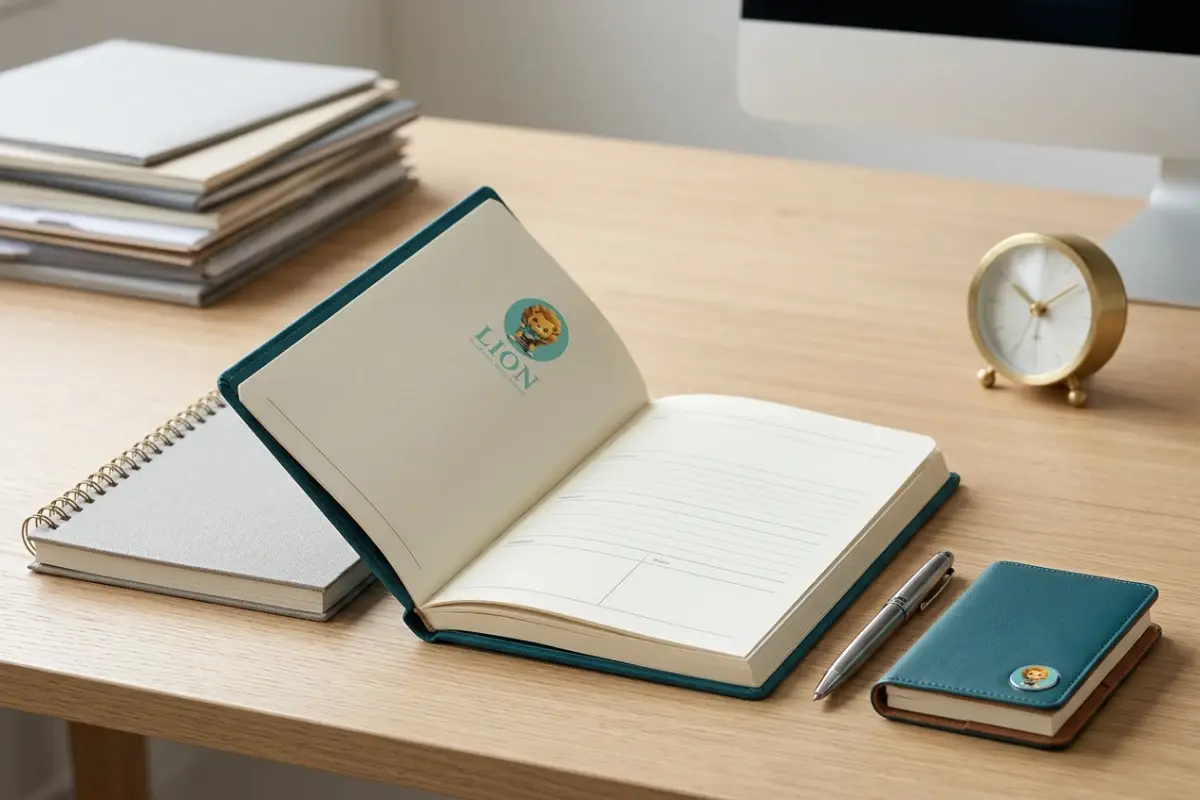
Membership Journals and Program Workbooks: Manufacturing & Sourcing Guide

Selecting the right physical format for membership journals and program workbooks requires balancing curriculum duration, member unboxing experience, content iteration cycles, mailing weight, and recurring replenishment costs across hardcover, softcover, wire-bound, or modular ring-insert structures. Aligning layout design with high-yield binding styles and durable materials ensures tactile brand retention while keeping global direct-to-consumer postage and recurring replenishment scalable.
What Physical Format Best Fits Your Membership Tier or Course Structure?
Choosing between casebound hardcover journals, flexible softcover workbooks, wire-o binders, and loose-leaf modular systems depends directly on how members interact with your curriculum and how often your editorial team updates content. Educational platforms, mastermind communities, and subscription box brands must evaluate durability, lay-flat functionality, weight, and visual prestige.
Format Type | Typical Program Application | Binding & Construction | User Experience & Utility | Production Lead Time & Scaling |
|---|---|---|---|---|
:--- | :--- | :--- | :--- | :--- |
Casebound Hardcover | Annual flagship memberships, executive masterminds, annual reflection journals | Thread-sewn book block, 2.0–3.0 mm greyboard, cloth/PU/printed paper wrap | Premium unboxing, archivable keepsake, lays flat with ribbon markers | 20–30 days; ideal for high-perceived-value onboarding kits |
Softcover / Flexibound | Quarterly sprints, 30/60/90-day challenges, single-cohort bootcamps | Section sewn or PUR perfect bound, 300–400 gsm art card cover with soft-touch matte lamination | Lightweight, portable, easy to slip into tote bags, economical to mail | 15–20 days; optimal for recurring quarterly replenishment cycles |
Twin-Ring Wire-O | Intensive training programs, interactive workshop manuals, daily habit trackers | Double-loop wire binding, semi-concealed or exposed, rigid backboard | Full 360-degree rotation, zero spine tension on small desks | 15–22 days; excels for desktop workbooks with dense writing prompts |
Modular Binder / Discbound | Evergreen courses with evolving modules, tiered coaching programs, dynamic workflows | Ring mechanisms (3-ring, 6-ring), discbound stems, or loose-leaf boxed sets | Members swap, insert, or reorder curriculum sheets as training evolves | 18–25 days; core shells stocked while interior refills print on demand |
For guided journal printing for memberships with multi-month journeys, casebound thread-sewn structures ensure that the spine withstands daily opening across a 365-day lifecycle without loose sheets. Conversely, for 6-to-8-week accelerator programs, flexible softcover program workbook manufacturing delivers substantial shipping savings without compromising interior paper quality.

Lay-flat smyth sewing and wire-o bindings optimize tactile writing comfort for daily guided coursework.
How Do You Select Paper Stock and Binding to Enhance Guided Learning and Reflection?
Interior paper selection directly dictates whether members can write with fountain pens, gel pens, brush markers, or highlighters without ghosting, feathering, or bleed-through. The physical feel of paper establishes perceived value long after the initial digital onboarding sequence.
Woodfree Uncoated Offset Paper (80 gsm to 100 gsm): Best suited for standard text-heavy workbooks, reading guides, and simple fill-in-the-blank reflection exercises. It keeps total unit weight low for recurring mailings while offering a clean, non-glare surface for graphite and standard ballpoint pens.
Premium Woodfree Writing Paper (100 gsm to 120 gsm): The industry standard for custom subscription journals and guided reflection planners. It offers balanced opacity and smoothness, eliminating ink show-through for gel pens and rollerballs while preserving a compact spine bulk.
Heavyweight Smooth Paper (140 gsm to 160 gsm): Required for creative memberships, artistic prompt journals, watercolor-compatible workbooks, and scrapbooking guides where wet media or heavy felt-tip markers are applied.
FSC-Certified and Recycled Paper Stocks (80 gsm to 120 gsm): Essential for mission-driven subscription boxes and eco-conscious education brands. Post-consumer waste (PCW) options deliver natural tactile tooth and verify compliance with global environmental commitments.
Binding methods must complement the selected paper weight. When designing membership journals and program workbooks with 120 gsm or heavier interior pages, smyth sewing (thread stitching) guarantees that the journal opens completely 180 degrees flat across two-page spreads. This feature is vital for two-page daily calendars, prompt grids, and progress matrices.
For modular planner inserts for courses, paper weight is commonly upgraded to 120 gsm or 140 gsm offset paper with precise 0.5 mm hole punching and reinforced margins to withstand repeated turning on metal rings without tearing.
How Can You Optimize Journal Weight, Mailer Compatibility, and Fulfillment Costs?
Shipping and packaging represent a significant portion of recurring subscription and direct-to-consumer program fulfillment costs. Engineering the physical dimensions, spine thickness, and packaging tolerances during pre-press prevents oversized parcel surcharges and shipping damage.
Trim Size Standardization: Adopting global standard sizes such as A5 (148 x 210 mm), B5 (176 x 250 mm), or US Trade (6 x 9 inches / 7 x 10 inches) maximizes paper sheet efficiency on press, eliminating paper waste while fitting standardized rigid cardboard mailers and padded kraft envelopes.
Spine Width and Weight Calculations: Reducing paper caliper from 120 gsm to 100 gsm across a 240-page journal can reduce total book block weight by up to 18%, frequently shifting the packed product from a higher postal bracket into a lower parcel rate.
Integrated Structural Add-Ons: Incorporating back cover gusseted expanding pockets, elastic closure bands, and dual satin ribbon page markers directly into the book binding eliminates the need for separate loose accessories that complicate fulfillment center kitting.
Protective Retail-Ready Packaging: Individual shrink-wrapping or custom-fitted kraft belly bands protect cover foils and delicate soft-touch coatings against scuffs during transit, ensuring every cohort member experiences pristine unboxing.
Custom subscription journals designed for recurring bi-monthly or quarterly mailouts benefit significantly from multi-pack boxing systems, where matching journals, module trackers, sticker sheets, and reference cards fit snug into custom-engineered mailer boxes manufactured to exact inner clearance dimensions.

E-commerce mailer-compatible dimensions and protective packaging minimize shipping overhead for subscription boxes.
How Can Dual-Site Manufacturing Balance Prototyping Agility with Scaled Cost Efficiency?
Managing physical printed materials for subscription communities and cohort-based training courses requires flexibility: early beta cohorts need quick prototype iterations, while mature programs require container-load economics and reliable replenishment schedules. Lion Paper Products operates a flexible China–Cambodia dual-site production model engineered to support this exact product lifecycle.
China Design & Prototyping Hub (Jiaxing Facility): Spanning 3,000 square meters, our Jiaxing base focuses on initial concept structuring, custom cover materials sourcing (PU, faux leather, specialty bookcloth, eco-fabrics), structural box engineering, pre-flight file checks, digital proofing, and rapid physical sampling. Fast physical sampling allows course creators and membership directors to validate layout pagination, paper feel, debossing depths, and foil stamps before authorizing production runs.
Cambodia Mass-Production Facility: Spanning 10,000 square meters, our Cambodia facility provides large-scale automated printing, folding, collating, case-making, thread-sewing, and automated packaging. With an annual notebook output exceeding 5 million units, this facility supports stable, cost-efficient bulk production runs, mitigating regional supply chain disruptions and optimizing landed unit costs for North American and European delivery.
Unified Standard Operating Procedures (SOPs): Both facilities operate under aligned quality control frameworks, utilizing standardized AQL 2.5/4.0 inspection protocols, physical defect color manuals, humidity-controlled paper storage, and automated box-wrapping lines to ensure absolute batch-to-batch consistency across consecutive seasonal subscription boxes.
This agile dual-facility synergy allows creator platforms to iterate new journal layouts quarterly at our Jiaxing development center, while transitioning established evergreen workbooks to our Cambodia plant for large-volume, cost-optimized production runs.
Buyer Sourcing Checklist: Specifications for Membership Journals and Workbooks
When preparing a request for quotation (RFQ) or initiating production for membership journals and program workbooks, providing clear structural parameters accelerates sample turnaround and prevents re-work. The following checklist outlines the essential technical inputs needed for accurate estimation:
Core Concept & Audience Persona: Target user profile, retail price tier, program duration (e.g., 30-day sprint, 52-week annual planner, 6-module masterclass), and primary delivery channel (direct-to-consumer mailer, event onboarding box, or global 3PL distribution).
Trim Size & Page Extent: Exact closed dimensions (width x height in mm or inches) and total page count (must be in multiples of 4 or 8 pages for sewn signatures; multiples of 2 pages for wire-o and ring-bound formats).
Cover Specifications: Cover material (e.g., 157 gsm coated art paper mounted over 2.5 mm greyboard, thermal PU leather, natural linen bookcloth, or 350 gsm C1S cardstock), surface finishes (anti-scratch matte lamination, hot foil stamping, blind debossing, spot UV, silk-screen printing), and corner rounding radius.
Interior Block Details: Paper type and basis weight (80–140 gsm woodfree uncoated, FSC-certified offset, or natural cream paper), printing color specs (1C/1C black or Pantone lines, 4C/4C full-color imagery), edge treatments (gilded edges, foil rimming, or plain trim), and perforation requirements.
Binding Mechanics: Smyth thread sewing with flat or round spine, flexible flexibound spine, concealed double-wire spiral, or modular pre-punched loose-leaf leaves.
Functional Hardware & Accessories: Elastic closure band (color matched or custom printed), pen loop attachment, satin ribbon bookmark count, expandable back inner pocket, and tabbed polypropylene or coated card dividers.
Secondary Packaging & Bundling: Custom self-seal polybags, shrink wrapping with barcode stickers, custom rigid two-piece slipcases, or customized corrugated mailer boxes ready for direct labeling.
Compliance & Certifications: Factory audit standards and material compliance requirements, such as FSC certification, ISO 9001 quality management, SMETA, WCA, GSV, FAMA, and CPSIA consumer safety compliance.

Automated production lines in China and Cambodia ensure strict AQL compliance and high-volume scalability.
Frequently Asked Questions About Sourcing Program Workbooks
What is the recommended minimum order quantity (MOQ) for custom program workbooks?
For fully custom printed workbooks and subscription journals, initial production runs typically begin at 500 to 1,000 units per artwork version. Smaller batch prototyping and pilot runs can be facilitated at our Jiaxing facility for early cohort testing, while volume runs above 3,000 to 5,000 units transition seamlessly to our Cambodia mass-production facility to maximize per-unit manufacturing savings.
How can we design workbooks to allow quarterly content updates without re-manufacturing the entire binder?
Educational brands frequently utilize modular planner inserts for courses paired with an archivable, high-end outer cover shell. By producing premium 6-ring PU binders, discbound covers, or slipcases in bulk, you can print smaller, dynamic batches of interior refill signatures every quarter. This approach allows course creators to refine exercises, adjust weekly prompts, and introduce timely masterclass notes without paying for new covers or hardware.
What binding style is best for workbooks with heavy daily writing prompts?
Smyth sewn casebound hardcovers and exposed twin-loop wire-o bindings provide the best user experience for intensive guided writing. Smyth sewing uses multiple threaded signature sections that lie completely flat at 180 degrees without breaking the spine or snapping glue lines. Twin-ring wire-o binding enables 360-degree fold-back flexibility, making it ideal for compact desktop workspaces during live webinars or coaching workshops.
How do dual-site production facilities safeguard against material supply delays?
Our dual-site network coordinates upstream raw material sourcing across China and Southeast Asia, maintaining active supply lines for FSC-certified paper mills, board stock suppliers, bookbinding fabrics, and non-toxic soy-based inks. When tight launch deadlines arise, initial batches can be sampled, produced, and air-shipped directly from Jiaxing, while the remaining bulk sea-freight volume completes production across our high-capacity lines in Cambodia.
To begin tailoring your next cohort kit or membership subscription journal, share the target user, interior format, target quantity, and launch timeline for a product-development review with the engineering team at Contact Lion Paper Products.
FAQ
What is the recommended minimum order quantity (MOQ) for custom program workbooks?
For fully custom printed workbooks and subscription journals, initial production runs typically begin at 500 to 1,000 units per artwork version. Smaller batch prototyping and pilot runs can be facilitated at our Jiaxing facility for early cohort testing, while volume runs above 3,000 to 5,000 units transition seamlessly to our Cambodia mass-production facility to maximize per-unit manufacturing savings.
How can we design workbooks to allow quarterly content updates without re-manufacturing the entire binder?
Educational brands frequently utilize modular planner inserts for courses paired with an archivable, high-end outer cover shell. By producing premium 6-ring PU binders, discbound covers, or slipcases in bulk, you can print smaller, dynamic batches of interior refill signatures every quarter. This approach allows course creators to refine exercises, adjust weekly prompts, and introduce timely masterclass notes without paying for new covers or hardware.
What binding style is best for workbooks with heavy daily writing prompts?
Smyth sewn casebound hardcovers and exposed twin-loop wire-o bindings provide the best user experience for intensive guided writing. Smyth sewing uses multiple threaded signature sections that lie completely flat at 180 degrees without breaking the spine or snapping glue lines. Twin-ring wire-o binding enables 360-degree fold-back flexibility, making it ideal for compact desktop workspaces during live webinars or coaching workshops.
How do dual-site production facilities safeguard against material supply delays?
Our dual-site network coordinates upstream raw material sourcing across China and Southeast Asia, maintaining active supply lines for FSC-certified paper mills, board stock suppliers, bookbinding fabrics, and non-toxic soy-based inks. When tight launch deadlines arise, initial batches can be sampled, produced, and air-shipped directly from Jiaxing, while the remaining bulk sea-freight volume completes production across our high-capacity lines in Cambodia.


Comments