


What Are the Greeting Cards Trends for 2026?


Top trends: eco-friendly “proof-backed” cards, personalization, minimalist elegance, photo cards, interactive tech (sound/LED/QR), modernized traditional art, and message-first typography.
What’s driving demand: Americans still buy ~6.5B greeting cards a year, and birthday/holiday remain the volume anchors.
How to win in 2026: keep a tight core SKU system, add personalization + premium finishes, and make sustainability claims verifiable (FSC/FTC-aligned).
Quick Content Reach:
Market Data for Greeting Cards
Greeting cards remain resilient because they deliver an emotional impact that digital messages don’t fully replace. The Greeting Card Association reports Americans purchase approximately 6.5 billion cards each year, with annual retail sales estimated between $7 and $8 billion.
The same source notes greeting card mail volume increased for the fourth year in a row (based on USPS household diary research) and shows rising USPS-delivered card volume across FY2015–FY2018.
On the global side, one major market report estimates the greeting cards market at USD 19.61B in 2024 and projects USD 22.96B by 2033 (CAGR ~1.8% from 2025–2033).
Data Table
Metric (What to Know) | Latest Public Figure | Why It Matters for 2026 | Source |
Annual greeting cards purchased (U.S.) | ~6.5 billion | Demand is still massive—plan assortments for volume + premium tiers | Greeting Card Association |
Annual retail sales (U.S.) | ~$7–$8B | Confirms a real, monetizable category even in a digital world | Greeting Card Association |
Best-selling everyday category | Birthday = “more than half” of total cards sold | Birthday cards should anchor your core line and replenishment | Greeting Card Association |
Biggest seasonal category | Christmas ~1.3B units | Holiday programs still drive major seasonal revenue | Greeting Card Association |
Tech/premium growth signal | Sound chips & LED lights noted as fast-growing | Interactive cards are moving from novelty to mainstream premium | Greeting Card Association |
Global market (all regions) | $19.61B (2024) → $22.96B (2033) | Forecasts support steady long-term planning | Grand View Research |
Example seasonal spend tie-in | Halloween greeting cards projected $500M (NRF 2023) | Smaller holidays add up—build “seasonal themed” capsules | NRF |
7 Greeting Cards Trends for 2026
1. Eco-friendly Cards with Meaning
Eco-friendly cards win in 2026 when sustainability is both emotional and provable. Many buyers send holiday cards because it feels good to receive a real greeting, so eco options must still feel premium—not “thin and dull.”
What’s changing in 2026:
FSC-certified paper becomes a baseline expectation for many retail programs, especially for brands selling in eco-forward channels. Verifying FSC status is simple if the supplier provides a certificate code you can check in FSC’s public search tools.
Sustainability claims also face higher scrutiny. In the U.S., the FTC’s Green Guides explain how marketers should avoid deceptive environmental claims and how “recyclable” and “recycled content” claims should be supported.

What to build (brand-ready):
A “meaning” sub-collection: gratitude, support, encouragement, and milestone messages—paired with FSC paper and minimal plastic packaging.
A clear on-card sustainability line (short, specific, verifiable), not vague buzzwords.
Supplier checklist (fast):
FSC Chain-of-Custody certificate code (verify on FSC public search).
Print process transparency (inks/coatings) and documented claims review aligned to FTC Green Guides if selling in the U.S.
2. Custom-made Cards with Personal Elements
Personalization sells because it turns a card into a keepsake. In 2026, buyers expect personal touches—names, inside jokes, hometown references, pet portraits, and custom photos—without paying luxury prices for every unit.
What this looks like in production:
Variable-data printing (names, short messages)
Small-batch personalization (limited-run captions or niche audiences)
Optional add-ons (stickers, seal sets, envelope liners)

Why it works: People aren’t sending fewer cards just because social media reminds them of birthdays; “card-worthy” relationships still generate card sending. Personalization lets brands capture that “this was made for you” feeling—at scale.
Procurement tip: Keep personalization modular. Use a stable base design (core SKU) with variable fronts/insides so you don’t explode your SKU count.
3. Minimalist Elegance that Speaks Volumes
Minimalism wins when it looks intentional, not empty. Clean typography, wide margins, and one strong visual element work especially well for sympathy, thank-you, and professional gifting.
What to design in 2026:
Simple color palettes (black/white, cream, muted tones)
Deboss/emboss details, blind stamping
High-contrast typography that reads instantly on shelf

Why it converts:Most greeting cards live in the $2–$5 price band, so minimal designs need a tactile “upgrade cue” (paper weight, finish, foil accent) to justify premium pricing.
Quality signal you can request: ISO 9001-certified production partners often have stronger process control for consistency across large runs.
4. Photo Cards for Capturing Memories
Photo cards win because they collapse the gap between “message” and “moment.” In 2026, photo cards aren’t just for holidays—they show up in birthdays, graduations, weddings, baby announcements, and “just because.”

What’s trending:
Photo + short caption formats (not long letters)
Film-frame layouts and collage grids
“One great photo” design with premium paper and clean type
5. Interactive Cards that Spark Joy
Interactive is moving from novelty to a real premium segment. The Greeting Card Association highlights cards using sound chips and LED lights as part of the top price tier and calls these innovations the fastest growing segment.

What “interactive” means in 2026:
Sound + light (premium shelf impact)
Pop-ups and 3D paper engineering
Pull tabs, scratch-off areas, sticker sheets
QR codes linking to a video message, playlist, or gift page
6. Traditional Designs with a Modern Twist
Traditional art styles still sell because they feel familiar, especially in holiday and family moments. The 2026 shift is subtle: modern colorways, cleaner composition, and updated copy.
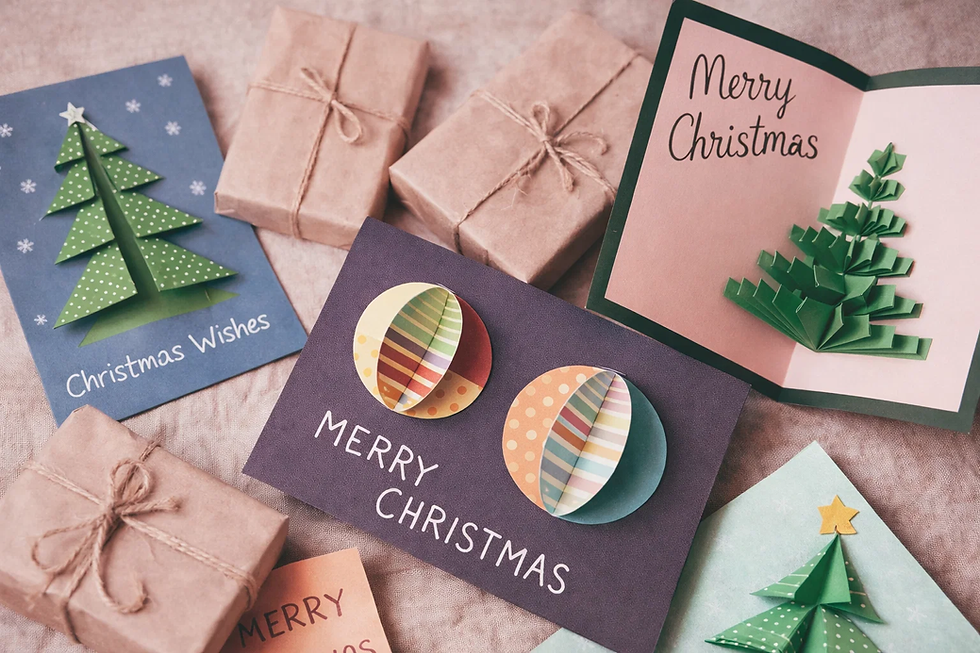
What to refresh (without losing the classic feel):
Vintage illustration with bolder typography
Classic florals with unexpected palette accents
Retro motifs + modern punchlines
Gold foil used sparingly (less “bling,” more “detail”)
Why this works on shelf: Holiday-based card sales have increased, and many consumers say they send holiday cards because receiving one feels good. Modernizing tradition keeps the emotional value while adding “newness.”
7. Cards that Focus on Words and Wishes
Message-first cards win because they reduce decision fatigue. Buyers often choose based on tone: funny, heartfelt, supportive, romantic, or professional.

What this means in 2026:
Strong inside copy and tone clarity
“Say it simply” outside, “say it well” inside
More niche micro-occasions (new job, hard week, long-distance friendship)
Shelf strategy: Organize by emotion as much as by occasion. People shop “how they feel,” then pick the moment.
Major Custom Greeting Cards Categories Outlook for 2026
1. Birthday Card
Birthday remains the anchor category, accounting for more than half of total cards sold. 2026 outlook: Keep a broad core birthday line (replenishable), then add limited-edition personalization and interactive upgrades.

2. Thank U Card
Thank-you cards align perfectly with minimalist elegance and message-first trends.2026 outlook: Build premium-feel thank-you sets (better paper + clean type) for gifting and professional use.

3. Holiday Card
Christmas is still the top seasonal driver (about 1.3B units purchased, including boxed cards). 2026 outlook: Split holiday into (1) classic tradition, (2) modern minimal, (3) photo-forward, and (4) premium interactive.

4. Seasonal Themed Card
Smaller seasonal moments still matter—Valentine’s Day, Mother’s Day, Halloween, and more. The Greeting Card Association lists major seasonal volume numbers (e.g., Valentine’s Day, Mother’s Day, Halloween). 2026 outlook: Create “small capsule drops” for seasonal themes, and test modern humor + personalization.

How to Choose Greeting Cards Based on 2026 Trends
Choosing the right assortment in 2026 is easier when you treat your line like a portfolio. Use these steps as a buying or product-planning checklist:
Start with your core volume SKUs.
Anchor on birthday + key holidays since birthday dominates total sales.
Pick one sustainability standard you can prove.
FSC is widely recognized, and you can verify certificates using FSC’s public tools.
Add one “premium reason” per collection.
Choose one: special paper feel, foil detail, embossing, or interactive elements (sound/LED/3D).
Decide your personalization level early.
Offer either (a) full custom, (b) limited personalization, or (c) photo upload. Don’t mix all three at once unless your ops are ready.
Plan for mailability (especially photo + thick formats).
USPS nonmachinable rules can affect cost when pieces are polywrapped/plastic enclosed or made with non-paper exterior surfaces.
Set your proof rules for green claims.
If you market environmental benefits in the U.S., align claims with the FTC Green Guides to reduce risk.
Conclusion
Greeting cards in 2026 will keep selling because they deliver a human moment that digital messages don’t fully replace. Consumers still buy billions of cards a year, and premium innovation is growing through interactivity, personalization, and better sustainability proof.
Brands that win will keep a tight core assortment, build smart premium upgrades, and back every major claim with documentation customers—and retailers—can trust.
—Leo Xia, CEO, Lion Paper Products
You design, we deliver.
FAQs:
Q1: Are greeting cards still a big market in 2026?
Yes. The Greeting Card Association reports Americans purchase about 6.5 billion greeting cards each year, with annual retail sales estimated between $7 and $8 billion.
Q2: What’s the biggest greeting card category to prioritize for sales?
Birthday is the top everyday category and accounts for more than half of total cards sold, so it should anchor your core line.
Q3: What’s the fastest-growing premium feature in cards?
Cards using special techniques and new technologies—such as sound chips and LED lights—are highlighted as a fast-growing segment by the Greeting Card Association.
Q4: How can I verify a supplier’s FSC claim for eco-friendly cards?
Ask for the FSC certificate code and verify it using FSC’s public certificate search tools.
Q5: What global market direction should brands expect?
One major market report estimates global greeting cards at USD 19.61B (2024) and projects USD 22.96B by 2033, suggesting steady growth.
Reference
Greeting Card Association – Greeting Cards: Info to Know (PDF; industry facts and USPS diary references)
https://www.greetingcard.org/wp-content/uploads/2020/04/Greeting-Card-Facts-2020.pdf
Grand View Research – Greeting Cards Market Size & Forecast (summary page)
https://www.grandviewresearch.com/industry-analysis/greeting-cards-market-report
Federal Trade Commission – Green Guides topic hub
https://www.ftc.gov/news-events/topics/truth-advertising/green-guides
FTC – Environmental Claims: Summary of the Green Guides
https://www.ftc.gov/business-guidance/resources/environmental-claims-summary-green-guides
FSC – Public Certificate Search (FSC Connect)
FSC – FSC Search (certificate database)
NRF – Halloween spending press release (includes greeting card spend)
GS1 – GS1 Digital Link standard (for persistent QR experiences)
ISO – ISO 9001:2015 overview
ISO – ISO 14001:2015 overview
Are you looking for a reliable manufacturer? Reach out to Lion Paper for a free quote and consultation. Let’s collaborate on creating custom writing paper products that will set your brand apart from the competition!
About Lion Paper
Company Name: Lion Paper Products
Office Address: 20th floor, Chuangyedasha Building, No. 135, Jinsui Road, Jiaxing City, Zhejiang Province, China
Factory Address: No.135, Xuri Road, Jiaxing City, Zhejiang, China
Email: Leoxia@lion-paper.com
Audit Certifications: ISO9001:2015/FSC/SEDEX SMETA/Disney FAMA/GSV/SQP


Comments