


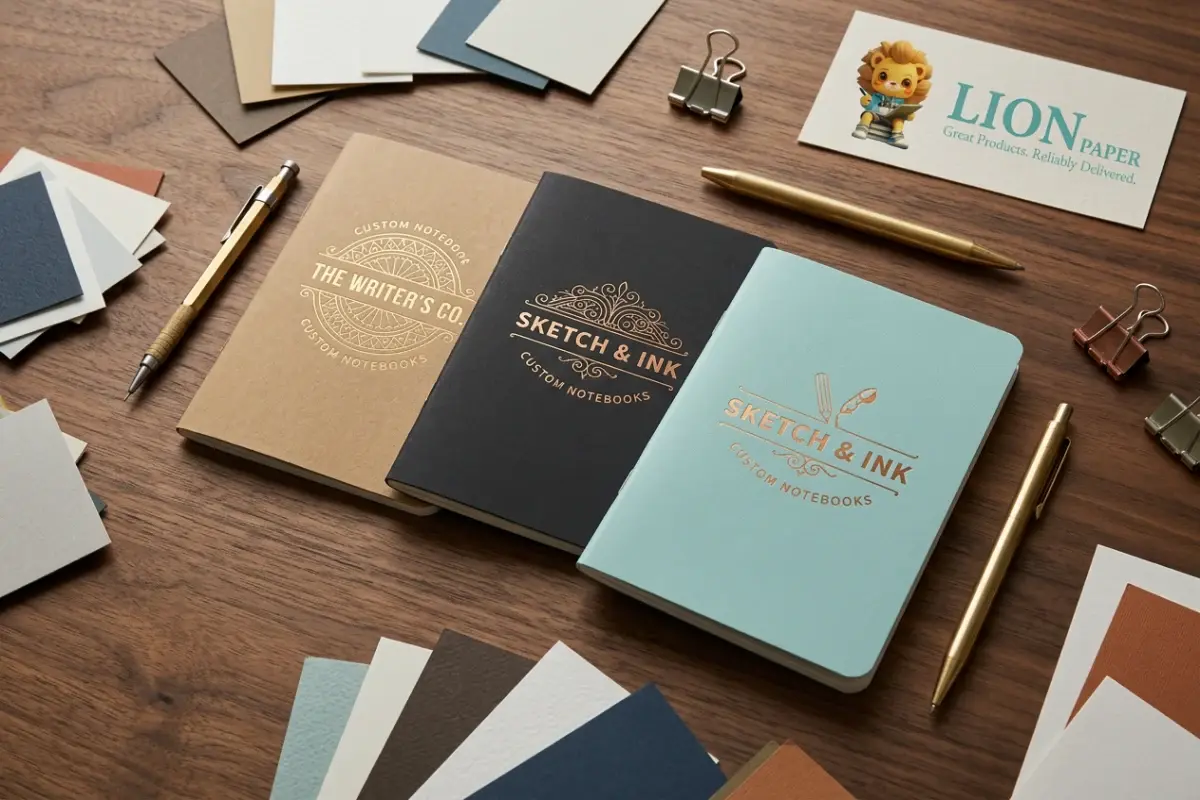
Comprehensive Guide to Sourcing Custom Pocket Notebooks for Retail and Brand Programs

Custom pocket notebooks are compact, portable paper stationery solutions engineered for retail shelves, corporate branding, and promotional programs. Typically manufactured in dimensions like 3.5x5.5 inches, A6, or A7, they feature tailored cover finishes, bleed-resistant inner stocks (70–120 GSM), durable bindings, and protective retail-ready packaging. Sourcing these items through an integrated supply-chain model balances aesthetic appeal, structural durability, compliance standards, and competitive landed unit costs.
What Are the Standard Formats and Dimensions for Custom Pocket Notebooks?
Selecting the right physical dimensions determines portability, ergonomic usability, and retail placement. Custom pocket notebooks must fit comfortably into standard pockets, pouches, or compact bags while maximizing printable writing area.
Field Standard (3.5 x 5.5 inches / 89 x 140 mm): The universally recognized standard for everyday carry (EDC) memo pads. It aligns perfectly with pocket-sized utility goods and standard display racks.
ISO A6 (4.1 x 5.8 inches / 105 x 148 mm): A standard international dimension that integrates seamlessly into corporate gift collections, journal multi-packs, and standard retail stationery programs.
ISO A7 (2.9 x 4.1 inches / 74 x 105 mm): Ultra-compact micro-notebooks optimized for quick notes, trade show giveaways, and modular inserts in organizer pouches.
Slim Reporter (3.0 x 5.0 inches / 76 x 127 mm): Top-bound configuration tailored for rapid field entries, inspections, hospitality service, and media applications.
Bespoke Custom Sizes: Engineered to fit proprietary brand packaging, tech pouches, or specialized leather covers.
Format Name | Dimensions (Inches) | Dimensions (mm) | Common Page Counts | Ideal Use Case |
|---|---|---|---|---|
:--- | :--- | :--- | :--- | :--- |
Field EDC | 3.5 x 5.5 in | 89 x 140 mm | 48, 64, 80 pp | Outdoor, retail lifestyle, multi-packs |
ISO A6 | 4.1 x 5.8 in | 105 x 148 mm | 80, 96, 160 pp | Premium journaling, corporate stationery |
ISO A7 Mini | 2.9 x 4.1 in | 74 x 105 mm | 32, 48, 64 pp | Promo gifts, pocket accessories, micro-planners |
Reporter Slim | 3.0 x 5.0 in | 76 x 127 mm | 50, 70, 100 pp | Quick-jot notes, inspections, hospitality |
Passport Size | 3.5 x 4.9 in | 89 x 125 mm | 48, 64 pp | Travel journals, wallet inserts |
Which Cover Materials, Binding Methods, and Branding Techniques Work Best for Custom Mini Notebooks?
The structural integrity of custom mini notebooks relies on pairing suitable outer materials with bindings that withstand daily flexing, friction, and pocket moisture.
Cover Substrates and Textures
Heavyweight Cover Stocks (250–400 GSM): Kraft cardstock, black specialty board, coated art paper (C1S/C2S), and colored duplex boards. Coated stocks support vibrant CMYK or Pantone offset printing, while textured uncoated boards convey an organic, tactile aesthetic.
Softcover Polyurethane (PU) & Faux Leather: Thermosensitive PU allows heat debossing that darkens naturally under pressure, providing a sophisticated executive look without excessive bulk.
Hardcover Greyboard (1.5–2.0 mm): Wrapped in printed art paper, bookcloth, or vegan leather. Hardcovers provide a rigid backing for writing without a desk, frequently enhanced with rounded corners and edge gilding.
Flexible Polypropylene (PP): Semi-rigid, water-resistant plastic covers ideal for industrial, laboratory, outdoor, or heavy-utility memo books.
Industrial Binding Options
Saddle Stitching (Staple Bound): Two or three copper, black, or galvanized steel wire staples along the spine. This is the most cost-effective binding for 32- to 64-page booklets, opening completely flat.
Singer Sewn Binding: Thread stitching along the spine using contrasting or brand-matched thread. Leaves exposed thread tails for an artisanal, boutique stationery finish.
Section Sewn & Perfect Bound (Smyth Sewn): Folded signatures stitched together and glued to a spine. Essential for thicker pocket journals (96–192 pages) to prevent page loss while allowing flat lay.
Wire-O and Spiral Binding: Twin-loop metal or plastic spiral along the top or side. Ideal for flip-over usage and quick page turning.

Precision saddle stitching and foil stamping deliver durability and refined aesthetics for custom mini notebooks.
Surface Embellishment Techniques
Blind Debossing & Embossing: Creates tactile 3D relief on kraft board or PU leather.
Metallic & Matte Foil Stamping: Gold, silver, copper, or holographic foils applied with precision heat stamping.
Spot UV & Raised 3D Varnish: Highlights logos or graphic patterns with high-gloss contrast against matte laminate backgrounds.
Functional Cover Additions: Flat woven elastic closure bands, integrated pen loops, satin ribbon page markers, and expandable back accordion pockets.
How Do You Select Paper Stock and Interior Page Layouts for Branded Pocket Memo Pads?
The internal paper stock dictates the tactile writing experience, ink compatibility, and overall notebook thickness. For branded pocket memo pads, paper engineers evaluate grammage, opacity, surface smoothness, and pulp sourcing.
Paper Grammage and Grade Comparison
70–80 GSM Uncoated Woodfree Paper: Standard lightweight stock for mass-market multi-packs and high-volume corporate giveaways. Keeps overall notebook profile slim.
100–120 GSM Premium Offset / Ivory Paper: High-density, bleed-resistant stock suitable for rollerballs, gel pens, and light fountain pen usage with minimal ghosting.
Recycled & Post-Consumer Waste (PCW) Paper: Contains 30% to 100% recycled fiber, aligning with corporate ESG frameworks and consumer eco-stationery preferences.
FSC-Certified Stocks: Sourced from responsibly managed forestry operations, traceable through verified chain-of-custody protocols.
Stone Paper: Tree-free, water-resistant calcium carbonate composite stock, suited for all-weather utility books.
Grid Formats and Inner Page Engineering
Lined / Ruled: Standard 5 mm to 7 mm line spacing printed in subtle gray, cyan, or custom brand Pantone inks.
Dot Grid: 5 mm matrix offering guidance for bullet journaling, sketch drafting, and structured notes without dominating the page.
Graph / Quad Ruled: 3 mm to 5 mm square grid engineered for technical sketches, calculations, and structured checklists.
Plain / Blank: Unprinted cream or white stock allowing total freedom for illustration, diagramming, and ideation.
Functional Micro-Perforations: Clean tear-off perforations placed near the inner margin or top edge for easily detachable memos.
Pre-Printed Informational Pages: Inside front and back covers can incorporate measurement conversion charts, contact info fields, brand storytelling, or calendar references.
What Are the Best Retail Packaging, Multipack, and Display Options for Pocket Notebooks?
Because pocket notebooks are compact, retail merchandising strategies often rely on bundling techniques and branded outer packaging to elevate perceived value and simplify handling.
| PACKAGING CONFIGURATIONS |
+--------------------------------+--------------------+ | Configuration | Typical Specifications | Target Channel |
+--------------------------------+--------------------+ | 3-Pack Banded | Printed 250 GSM Kraft Band | DTC, Bookstores | | Individual Boxed | Rigid Lid-Bottom or Tuck Box | Gift Programs | | Shrink-Wrapped | 15-20 Micron POF Film + Barcode| Supermarkets | | CDU Display Set | Corrugated Counter Shipper | Retail Checkouts |
+--------------------------------+--------------------+
Belly Bands / Paper Wraps: Heavyweight kraft or art paper bands (200–300 GSM) wrapped horizontally or vertically around 2-pack or 3-pack sets. They provide ample space for barcodes, product storytelling, and certifications without obscuring the cover designs.
Polyolefin (POF) Shrink Wrapping: Clear, recyclable shrink film protecting individual notebooks or bundles from warehouse dust, moisture, and retail scuffing.
Custom Retail Tuck Boxes & Slipcases: Rigid paperboard or folding cartons housing sets of 2, 3, or 4 complementary notebooks, creating a premium retail-ready gift set.
Counter Display Units (CDUs): Pre-assembled corrugated cardboard counter displays holding 24 to 48 units. Designed for point-of-sale impulse purchases, complete with high-impact header cards.
Compliance Labelling & Barcoding: Direct-printed or scannable adhesive GS1-standard EAN/UPC barcodes, regulatory warning labels, batch tracking codes, and FSC logo placements.

Belly band packaging and corrugated counter display units optimize branded pocket memo pads for retail environments.
How Do Dual-Site Manufacturing Capabilities and Cost Drivers Affect Bulk Pocket Notebooks?
Procuring bulk pocket notebooks requires balancing unit costs, prototyping speed, quality control, and international trade dynamics. Sourcing through a dual-site manufacturing network optimizes each phase of production.
Key Unit Cost Drivers in Pocket Notebook Manufacturing
Order Quantity: Economies of scale significantly reduce setup costs on automated offset printing presses, signature collators, and saddle-stitching lines.
Paper Grammage and Type: Upgrading from standard 70 GSM offset to premium 100 GSM ivory or FSC-certified specialty paper impacts the core material bill.
Cover Finishing Complexity: Multiple finishing processes (e.g., combining foil stamping, soft-touch matte lamination, and spot UV) increase die setup and press handling stages.
Packaging Architecture: Individually boxed sets or complex multi-packs require additional assembly labor compared to simple bulk pack cartoning.
The Dual-Site Production Model (China & Cambodia)
Lion Paper Products operates an integrated supply-chain model utilizing facilities in Jiaxing, China, and Cambodia. This multi-node structure delivers distinct strategic benefits across project lifecycles:
Rapid Prototyping & Design (Jiaxing Facility): The 3,000-square-meter Jiaxing engineering hub manages concept generation, dieline creation, raw material sourcing, and physical sampling. High-precision sample cutters and proofing presses generate physical prototypes within 3 to 7 working days.
Volume Manufacturing & Tariff Efficiency (Cambodia Facility): The 10,000-square-meter automated facility in Cambodia executes large-scale production runs. Notebook output across the group exceeds 5 million units annually. This facility offers advantageous tariff positions for North American and European retailers, alongside stable labor structures.
Standardized Quality Control: Both manufacturing facilities operate under unified Standard Operating Procedures (SOPs), AQL (Acceptable Quality Limit) 2.5/4.0 inspection standards, visual defect reference catalogs, and automated tension/binding tests.
Regulatory & Social Compliance: Production lines conform to international audits and certifications, including ISO 9001, FSC chain-of-custody, SMETA, WCA, GSV, FAMA, and CPSIA compliance for consumer safety.
Production Stage | Jiaxing Hub (China) | Cambodia Production Center |
|---|---|---|
:--- | :--- | :--- |
Core Function | R&D, Prototyping, Pilot Runs | Mass Scale-Up, Automated Assembly |
Facility Size | ~3,000 m² | ~10,000 m² |
Turnaround Time | Fast sampling (3–7 days) | High-throughput container shipping |
Strategic Advantage | Material agility & engineering | Tariff optimization & cost control |
Quality Oversight | Master SOP & Defect Catalog | Replicated SOP & Inline AQL Audits |
What Procurement Checklist Ensures a Seamless Order with a Pocket Notebook Manufacturer?
Working with an industrial pocket notebook manufacturer requires precise technical alignment before issuing purchase orders. Following a structured engineering checklist minimizes delays, print errors, and revision cycles.
Define Format and Dimensional Tolerances: Specify final trim dimensions (e.g., 3.5 x 5.5 inches), corner radius (e.g., 6 mm or 8 mm rounded corners), and total page count (including or excluding covers).
Select Cover Specifications: Determine cover board type, weight in GSM, outer and inner lamination (matte, gloss, anti-scratch), and exact embellishment placements via vector dieline layers.
Specify Interior Block Architecture: Establish paper type (woodfree, ivory, recycled), weight (70–120 GSM), ruling style (ruled, dot, grid, blank), line spacing, margin rules, and ink codes (1C Black, 1C Pantone, or full 4C CMYK).
Determine Binding Method: Select saddle stitching (specify staple color), singer sewing (specify thread color and stitch pitch), wire-o, or smyth-sewn perfect binding.
Review Artwork & Pre-Press Files: Provide vector PDF files with minimum 3 mm bleed margins, CMYK color spaces, embedded high-resolution graphics (300 DPI+), and outlined fonts.
Formulate Packaging Guidelines: Specify multi-pack bundling counts (e.g., shrink-wrapped 3-packs with belly bands), master carton drop-test standards (e.g., double-wall corrugated 5-ply cartons), and pallet stacking limits.
Verify Compliance & Labelling Needs: Confirm required FSC claim labels, country of origin markings, CPSIA tracking labels, and destination-specific barcode symbology.
Approve Pre-Production Samples (PPS): Review wet proofs for accurate color balance and structural samples for paper bulk, binding strength, and corner trimming before authorizing mass press runs.

Rigorous inline quality control and standardized SOPs ensure consistent page ruling and color accuracy across volume runs.
How Does Lion Paper Support Custom Pocket Notebook Programs from Concept to Delivery?
Lion Paper Products delivers end-to-end supply chain integration, transforming creative concepts into scalable, retail-ready products. By combining Chinese design agility with Cambodian volume manufacturing, brand owners and retail buyers achieve an optimized balance of product design, compliance, cost efficiency, and lead times.
Our cross-functional teams assist at every stage: refining structural dielines, recommending cost-effective paper combinations, preparing packaging for e-commerce or brick-and-mortar retail display, and managing container freight logistics to North American, European, Australian, and global distribution centers. For new brand launches, seasonal collections, or high-volume procurement programs, share your preferred size, branding, quantity, and packaging requirements with our team for a comprehensive feasibility review.
FAQ
What is the standard minimum order quantity (MOQ) for custom pocket notebooks?
Typical minimum order quantities range from 1,000 to 3,000 units for fully customized softcover notebooks depending on the complexity of printing and embellishments. For high-volume automated production runs at our Cambodia facility, MOQs are structured to maximize container-load cost efficiencies.
How can I prevent fountain pen or rollerball ink bleed-through on custom pocket notebooks?
To eliminate ink feathering and ghosting, specify high-opacity woodfree or ivory offset paper rated at 100 GSM to 120 GSM with high surface sizing. Stone paper or dedicated fountain-pen-friendly papers can also be engineered into the notebook block.
What certifications are available for corporate sustainability and safety compliance?
Notebooks can be manufactured in compliance with ISO 9001 quality systems, FSC chain-of-custody standards for sustainable forestry, CPSIA safety standards, and audited under SMETA, WCA, GSV, and FAMA frameworks.
Can custom pocket notebooks be bundled as retail-ready 2-packs or 3-packs?
Yes. Multiple notebooks can be collated with custom-printed belly bands, shrink-wrapped in protective polyolefin film, packed in custom slipcases, or organized into shelf-ready counter display units (CDUs) complete with scannable barcodes.


Comments