


What Is Die Cut Stationery?
- Leo Xia

- Sep 19, 2025
- 14 min read
Updated: Oct 17, 2025
Our Youtube Podcast:
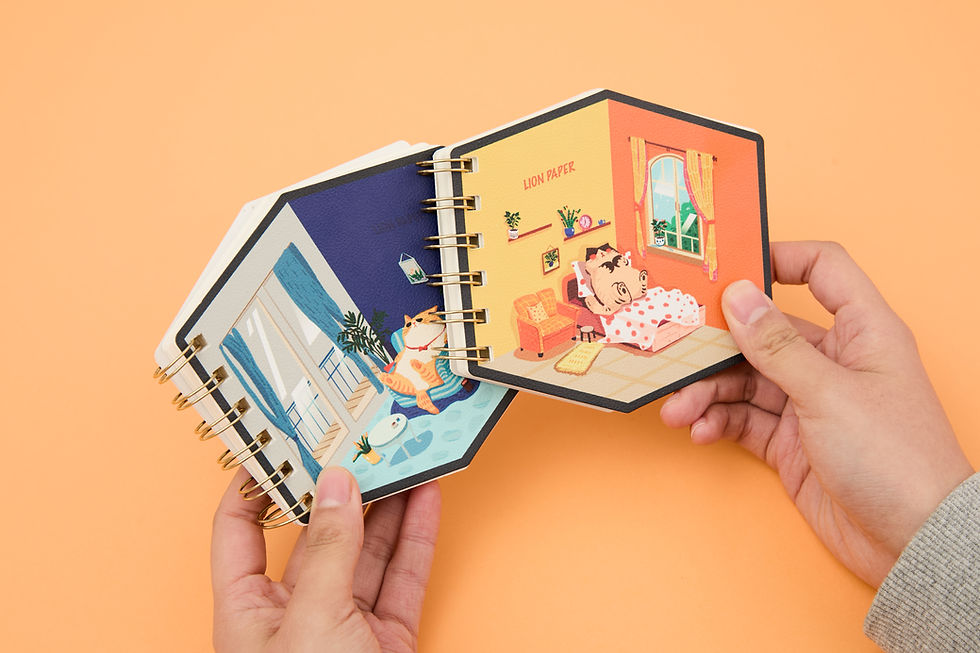
Die‑cut stationery goes beyond rectangles and squares. By using die cutting – a manufacturing process that cuts or forms material into precise shapes – notebooks, journals and other paper goods can be produced with custom curves, windows, tabs and decorative edges. Think of it as a cookie‑cutter for paper: a steel or rotary die presses into the stock, shearing away excess material and leaving a clean, consistent outline. The result is stationery that feels more bespoke, stands out on shelves and conveys craftsmanship.
Quick Content Reach:
What does “die cut stationery” mean?
A die cut simply refers to material that has been cut using a die – a custom‑shaped tool made of steel or mounted on a cylinder. In stationery production this means paper, cardboard or even plastic sheets are pressed against a die to remove the excess and form a specific outline. Early versions of this process appeared almost 200 years ago: cobblers used hand‑driven punches to cut uniform pieces of leather for shoes. Over time the technique evolved into automated flatbed presses and rotary cylinders capable of cutting paper, plastics and other substrates quickly and accurately.
Die‑cut stationery products include:
Notebooks and journals with rounded corners, scalloped edges or tabbed dividers.
Planners and calendars featuring shaped covers, fold‑out pages or die‑cut windows.
Stickers, labels and tags with intricate contours or peel‑off sections.
Greeting cards and invitations designed with apertures, lace‑like borders or pop‑ups.
Envelopes, folders and gift packaging custom‑cut to suit brand aesthetics.
By combining die cutting with high‑quality paper and printing, stationery buyers can differentiate their products, improve usability and enhance perceived value.
Ready to turn ideas into custom shapes? Email us at Leoxia@lion-paper.com to scope your die-cut concept.
History and evolution of die cutting in stationery
The roots of die cutting trace back to the Industrial Revolution. In the mid‑19th century, shoemakers began using hand‑operated punches to cut uniform pieces of leather for shoes, which increased productivity and consistency. Over the next century, flatbed presses and steel‑rule dies allowed printers to cut paper into envelopes and cards with greater precision. Today, automated rotary and laser systems can cut an array of materials – from thin paper to plastic and metal – with tolerances of a fraction of a millimetre .
Modern die cutting can be performed in several ways:
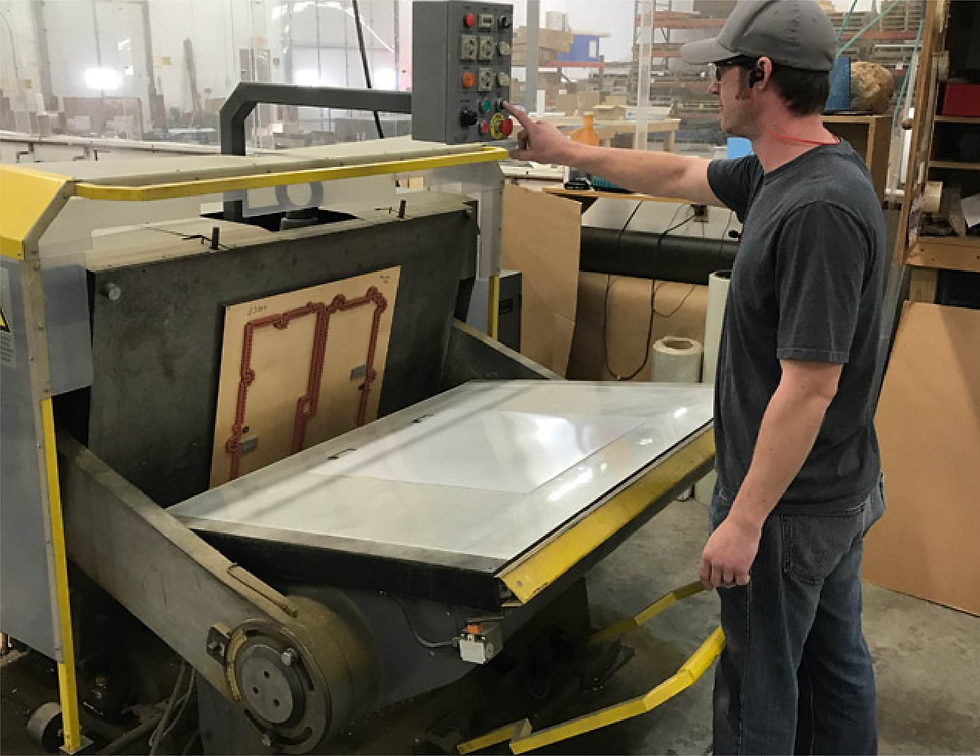
Steel‑rule (flatbed) cutting – A custom die made from steel blades embedded in a wooden base is pressed against sheets using hydraulics. It works well for thick or rigid materials and low‑to‑medium production volumes.
Rotary cutting – Cylindrical dies rotate as material passes through the machine. This method suits thin‑to‑medium materials and is ideal for high‑speed, high‑volume production.
Laser and digital cutting – High‑powered lasers or computer‑controlled blades trace the design without physical dies. Digital die cutting excels for short runs, intricate designs and rapid prototyping. It eliminates the cost of tooling and allows on‑the‑fly design changes.
Roll die cutting – A specialized form of rotary die cutting in which flexible materials are fed through rollers containing the die. It is used for mass production of labels, medical components and packaging films.

By the early 2000s, improvements in CAD software, laser engraving and flexible dies enabled more complex dielines and faster setup times. Today, die cutting remains fundamental to stationery manufacturing because it combines efficiency with creative freedom.
How die cutting works: from design to finished product
Designing the die
The first step is to conceptualize the shape you want to achieve. Designers create a dieline, a digital vector drawing that outlines the finished product, including cut lines, fold lines, bleed areas and safe zones for graphics. Modern software such as CAD allows designers to transfer these drawings directly onto a die board using laser engraving for precision.
A steel‑rule die typically consists of:
Base (die board) – Often made from wood or composite material, this holds the steel blades and supports the substrate during cutting.
Steel rule blade – Strips of hardened steel bent to match the dieline and inserted into grooves in the die board; they act as the cutting edge.
Ejection rubber – Foam or rubber pieces placed around the blade to push the cut material away and prevent sticking.
Registration marks – Guides to ensure alignment with printed artwork and guarantee consistent positioning on each sheet.
For rotary dies, the cutting pattern is etched onto a curved cylinder. Flexible dies (thin steel sheets) can be magnetically attached to cylinders for quick changeovers and lower cost .
Cutting the material
Once the die is ready, sheets of paper or board are prepared. The press applies pressure to push the die into the material. The key steps for a flatbed die cutting operation include placing the steel die on a platen, aligning the material, locking the die into the press and engaging the hydraulic or mechanical press. Rotary cutters use a continuous web of material that passes between the die cylinder and an anvil cylinder; the rotating die simultaneously cuts and ejects waste, enabling high‑speed production.
Laser and digital cutters work differently: a computer controls the laser or blade to follow the dieline precisely, cutting or scoring without physical tooling. Digital systems are popular for short runs or samples because they avoid the cost and lead time of manufacturing a die.
Functions beyond cutting
Die cutting does more than just slice through paper. Depending on the design and pressure used, dies can perform functions such as scoring, creasing and perforating. Scoring leaves an impression or partial cut used to fold packaging neatly, while creasing creates a fold line for binding or construction. Perforating involves a series of small cuts that allow easy tearing for coupons, tickets or tear‑off pages. Through cutting completely separates the piece from the sheet.
Other specialized methods include blanking (trimming outer edges), drawing (elongating materials), forming (shaping on a curved surface), coining (creating circular holes) and broaching (using rows of teeth to cut thick or hard materials). These techniques are more common in packaging and industrial applications but sometimes appear in stationery when unique features are required.
Quality control
Precision is critical. Professionals choose paper weights and textures carefully; thinner stocks cut cleanly while heavier materials may require sharper blades or laser cutting. Cutting cotton or textured paper can cause frayed edges. Experienced operators avoid sharp corners to prevent tearing, leave sufficient space between holes and edges, and ensure artwork bleeds beyond the cut line to avoid white borders. At Lion Paper Products we use video‑recorded quality inspections and state‑of‑the‑art equipment to guarantee consistent results across thousands of pieces.

Types of dies and machines used for stationery
Understanding die and machine options helps buyers choose the right solution for their projects.
Types of dies
Nesting dies – A set of dies in graduated sizes used to create layered shapes.
Corner dies – Specialized dies for cutting decorative corners on cards, pages or covers.
Edgeable dies – Designed to run along the edges, adding decorative borders to notebooks or invitations.
Types of machines
Manual die cutters – Operated by hand with steel dies and a lever, suitable for hobby or small runs.
Digital cutters – Use a blade or laser controlled by software; ideal for home use or small studios where versatility is required.
Industrial flatbed presses – Hydraulic presses that accommodate large sheets and thick substrates; best for low‑volume or oversized products.
Rotary and semi‑rotary machines – Use rolling dies on a magnetic cylinder to cut continuous webs; these machines offer high speed and are preferred for mass‑produced notebooks, calendars and labels.
Choosing the right method
Selecting a die‑cutting method depends on:
Run size: Rotary or roll die cutting is cost‑effective for high volumes, while steel‑rule or laser cutting suits small orders or prototypes.
Material thickness: Flatbed presses handle rigid materials like chipboard, whereas rotary or digital machines handle thin paper and plastic.
Design complexity: Intricate shapes may require laser or digital cutting; simple shapes can use steel‑rule dies. Rounded corners and standard tabs are easy with manual or rotary cutters.
Budget and timelines: Steel‑rule dies involve up‑front tooling cost but lower per‑unit costs; digital cutting eliminates tooling but is slower per piece.
As a buyer, talk to your manufacturer about your volume, material and design requirements to ensure the right equipment is used. At Lion Paper Products our engineers evaluate each project and recommend the most efficient and cost‑effective method.
Materials used in die cut stationery
Die‑cutting works on a surprising range of substrates. Common materials for stationery include:
Paper and cardstock: Most notebooks, journals and planners use uncoated or coated papers ranging from 60 gsm to 350 gsm. Thinner papers cut cleanly but may require supports; thicker card can cause less precise edges.
Kraft and recycled paper: For eco‑friendly products or rustic aesthetics. Recycled paper stocks may vary in density; careful testing ensures clean cuts.
Leatherette and faux leather: Used on cover wraps; requires rotary or laser cutting to avoid tearing.
Plastic and polypropylene: Durable materials for spiral covers and dividers; best handled with rotary or digital cutters.
Fabric and felt: Used for speciality journals and pouches. Flatbed or laser cutting may be necessary for thicker textiles.
Consider how your material choice affects cutting performance and the finished feel of your product. Heavier or fibrous materials may need narrower blades or extra passes. Discuss any specialty materials with your manufacturing partner.
Applications of die‑cut stationery
Die cutting enables unique stationery designs that delight consumers and boost functionality. Here are some popular applications:
Rounded corners prevent pages from dog‑earing and give notebooks a smooth, refined look. Die‑cut index tabs help users quickly access sections, while shaped covers – such as hearts, clouds or geometric panels – create novelty journals that stand out in retail displays. Business notebooks often feature die‑cut logos or windows on the cover, allowing glimpses of the first page or a company motif.
Planners benefit from die‑cut page dividers, monthly tabbed sections and perforated pages for tear‑off notes. Desk calendars often use die‑cut bases or stands, and wall calendars may have shaped hangers or decorative cut‑outs. Custom shaped edges make calendars more interactive and align with branding campaigns.
Stickers, labels and tags
Die cutting allows complex sticker shapes, from circles and ovals to elaborate designs. Through cutting yields individual pieces, while partial cutting (also known as kiss cutting or creasing) cuts through only the top layer of sticker material so that labels peel off easily without removing the backing. This is ideal for product labels and decorative sticker sheets.
Greeting cards and invitations
Invitations often feature die‑cut windows, lace borders or pop‑up structures to create tactile excitement. Shaped edges add elegance to wedding invitations, while die‑cut flaps and pockets hold RSVP cards. Holiday cards may incorporate intricate snowflakes or ornaments cut into the cover.
Gift packaging and envelopes
Die‑cut boxes, bags and envelopes allow brands to create cohesive stationery sets. For example, a journal with matching gift box cut from the same dieline ensures precise fit. Envelopes with scalloped flaps or custom shapes enhance the unboxing experience. Die‑cut belly bands or wraps secure notebooks without adhesives.
Business cards and promotional materials
Creative shapes make a brand memorable. Business cards shaped like products or logos catch attention, and die‑cut door hangers or table tents add functionality. Marketing brochures with die‑cut windows invite recipients to interact with the design.

Benefits of die‑cut stationery
Stationery buyers choose die‑cut products for several reasons:
Precision and consistency
Die cutting offers extremely accurate and repeatable cuts – whether you produce 100 journals or 10,000. The clean edges and consistent shapes maintain quality standards across an entire order.
Customization and brand differentiation
Unique shapes, windows and tabs allow brands to express personality and stand out. Your notebook can mirror your logo or an aspect of your story. Die‑cut promotional materials are more memorable than standard rectangles.
Scalability and cost efficiency
Once a steel‑rule die is built, it can be reused indefinitely. While the initial tooling cost may seem high, the per‑unit cost drops dramatically as order size increases. Rotary and roll die cutters enable rapid production, reducing labor time and enabling lower prices per piece.
Versatility of materials and functions
Die cutting works on paper, card, plastic, vinyl, fabric and even thin metals. This flexibility lets brands create multi‑material stationery sets or incorporate protective plastic covers and pockets. Beyond cutting, the process also scores, creases and perforates, adding functional features like tear‑off notes or easy‑fold pages.
Speed and efficiency
Modern rotary and digital die cutters operate quickly and minimize setup time. Digital systems allow design modifications without building a new die, while rotary machines cut continuous webs at high speed – perfect for large runs and tight deadlines.
Environmental considerations
Efficient die cutting reduces waste by optimizing material use and enabling precise nesting on sheets. Excess paper is collected for recycling. At Lion Paper Products we align our processes with FSC and ISO 9001 certifications to ensure responsible sourcing and sustainable practices.

Challenges and considerations
While die cutting brings numerous benefits, there are factors to keep in mind:
Initial tooling costs
Custom dies require design and fabrication. For small runs or one‑off projects, the cost may outweigh benefits. Digital die cutting or laser cutting can eliminate tooling but may be slower and more expensive per piece.
Material limitations
Thick, dense or multi‑layer materials can be difficult to cut cleanly and may require multiple passes or specialized equipment. Some materials fray or tear if corners are too sharp or holes placed too close to edges. Work with experienced manufacturers to select appropriate materials and design features.
Alignment and safety
Improper alignment can lead to miscuts, especially when running the material through the machine a second time. Sharp dies pose injury risks if mishandled. Always trust skilled operators and maintain strict safety protocols.
Production volume
For very low quantities, digital or manual cutting may be more economical. For high volumes, rotary or roll cutting is typically the most efficient.

Die cutting versus other processes
Stationery manufacturers sometimes confuse die cutting with kiss cutting or laser engraving. Understanding the differences helps in specifying the right technique.
Die cutting completely severs the material from the sheet, creating individual pieces or windows.
Kiss cutting (partial cutting) slices through the top layer but leaves the backing intact, making it ideal for stickers and labels.
Laser engraving uses a laser to mark or cut material without physical contact. It is excellent for detailed etching on covers or personalized names but is slower than die cutting for bulk runs.
A project may combine multiple techniques: for example, a planner cover could be die‑cut to shape, laser‑engraved with a logo and kiss‑cut for adhesive tabs.
Why custom die‑cut stationery matters for your brand
As CEO of Lion Paper Products, I’ve seen first‑hand how thoughtful design elevates stationery. In a crowded marketplace, simply adding a logotype or new color isn’t enough. Die‑cut notebooks and planners tell a story. A rounded corner signals approachability. A die‑cut window reveals a textured inner page. Tabbed dividers make organization intuitive. These tactile details transform a commodity into an experience.
Creating bespoke experiences
Corporate clients often request custom die‑cut planners that mirror their brand identity. For a tech company, we might integrate angular tab shapes that echo circuit boards. A boutique hotel could choose wave‑shaped edges inspired by the ocean. These subtle cues delight users and reinforce the brand message. By using die cutting, the product itself becomes a marketing tool.
Enhancing functionality
Die‑cut stationery isn’t just about aesthetics – it also improves usability. Tear‑off pages make sharing notes easy. Scored lines help calendars stand upright. Elastic bands pass through die‑cut slots to keep journals closed. As a buyer you should think about how each cut can add value for your customers.
Cost‑effective differentiation
Large retailers and wholesalers face price pressure. Die cutting offers a cost‑effective way to differentiate your product line without completely redesigning it. A single die can be reused for multiple orders, and the per‑unit cost drops as volume increases. For example, creating a die‑cut heart shape for a Valentine’s Day notebook can be a one‑time investment that pays off across thousands of units.
Partner with an experienced manufacturer
Delivering high‑quality die‑cut stationery requires expertise. At Lion Paper Products, our factories in China and Cambodia and our partner factory in South Korea are equipped with Heidelberg printing presses, automatic punching machines, spiral binding lines and computerized quality‑control systems. Our R&D team can produce custom samples within 5–7 days, and our sales consultants have over a decade of experience in the U.S. market. We ensure each die‑cut notebook, planner or stationery item meets international standards like ISO 9001 and FSC.

Sustainability and environmental impact
Die cutting is not inherently wasteful; in fact, it can help reduce material usage when designed thoughtfully. By optimally nesting shapes on a sheet, manufacturers minimize offcuts and maximize yield. Excess material can be collected and recycled. At Lion Paper Products we prioritize recycled and FSC‑certified papers and have invested in efficient machinery that reduces energy consumption.
Buyers should also consider the life cycle of their products. Using durable materials like high‑quality paper and recyclable plastic covers extends a notebook’s life, reducing the need for frequent replacements. Die‑cut packaging can be designed for easy disassembly and recycling.
How to choose the right die‑cutting partner
When sourcing die‑cut stationery, ask potential suppliers:
What equipment do you use? Modern rotary and laser systems ensure precision and speed. Outdated equipment may lead to inconsistent cuts.
How do you handle quality control? Look for certifications like ISO 9001 and robust inspection processes. At Lion Paper Products each quality inspector wears a video recorder to document checks.
What materials can you work with? Ensure your supplier can handle the papers, plastics and finishes you require.
What is the sampling process? A reliable partner should provide prototypes before full production. We turn samples in 5–7 days so you can test and refine your design.
Do you have experience with my market? Understanding local regulations (e.g., CPSIA, Proposition 65) and consumer preferences is vital for exporting to the U.S., U.K., Germany, Spain, Australia, Qatar or South Africa.
Taking the time to evaluate suppliers up front prevents headaches later and ensures your die‑cut stationery meets both functional and aesthetic goals.
Emerging trends in die‑cut stationery
The die‑cut stationery landscape continues to evolve. Here are some trends group buyers should watch:
Digital personalization: Digital die cutting combined with variable data printing allows notebooks and planners to be personalized with names or messages. Each copy can have a unique die‑cut window or tab without creating a new die.
Interactive elements: Pop‑up components, pull tabs and sliding panels add interactivity. These effects require precise die cutting and scoring but can turn a simple planner into an engaging experience.
Mixed media covers: Combining die‑cut paper with laser‑engraved wood or acrylic covers creates rich textures and layers. Transparent die‑cut windows reveal patterns or photographs beneath.
Sustainable materials: Consumers increasingly value eco‑friendly products. Expect more die‑cut stationery made from recycled paper, plant‑based plastics and compostable packaging.

As trends evolve, the underlying requirement remains the same: precise, consistent die cutting and an experienced manufacturer who can turn ideas into tangible products.
Conclusion
Die‑cut stationery is more than a decorative flourish. By leveraging the versatility of steel‑rule, rotary and digital cutting methods, you can create notebooks, planners and packaging that stand out, function better and tell your brand story. Understanding the history, process and benefits of die cutting empowers buyers to make informed decisions about materials, equipment and partners. While there are up‑front costs and technical considerations, the rewards – precision, customization, efficiency and sustainability – make die‑cut stationery a worthwhile investment.
If you’re considering adding die‑cut products to your range, we’d love to help. With decades of experience and state‑of‑the‑art factories, Lion Paper Products offers end‑to‑end support from design to delivery.
—Leo Xia, CEO, Lion Paper Products
You design, we deliver.
FAQs:
Q1: What is die‑cut stationery?
A: Die‑cut stationery refers to paper goods such as notebooks, planners, labels and cards that are cut into custom shapes using a steel‑rule or rotary die. The process allows precise edges, tabs and windows that standard trimming cannot achieve, giving products a unique look and improved functionality.
Q2: How does die‑cut stationery differ from regular stationery?
A: Regular stationery is typically cut into standard rectangles or squares, while die‑cut stationery uses custom dies to create rounded corners, shaped covers, perforations or windows. This not only enhances aesthetics but also adds features like easy‑tear pages and tabbed sections.
Q3: What are the most popular die‑cutting methods for notebooks?
A: Popular methods include steel‑rule (flatbed) cutting for thick covers and large formats, rotary cutting for high‑volume runs of thin paper, digital cutting for prototypes and intricate shapes, and roll die cutting for mass‑produced labels or tabs.
Q4: Which materials can be used in die‑cut stationery?
A: Die cutting works on paper, cardstock, kraft paper, faux leather, plastic, polypropylene, fabric and even thin metals. The choice depends on the desired feel and durability of the product. Thinner papers cut cleanly, while thicker materials may require special equipment.
Q5: Why choose die‑cut notebooks for your business?
A: Die‑cut notebooks differentiate your brand with unique shapes, logos and functional features like tabbed sections or tear‑off pages. They deliver consistent quality at scale and can be cost‑effective over large orders.
Q6: How to choose a die‑cut stationery manufacturer?
A: Evaluate equipment, certifications, sampling processes and experience. Ask about quality control, material capabilities and lead times. A reliable manufacturer should provide samples, hold certifications like ISO 9001 and offer expertise in your target markets. Lion Paper Products combines advanced machinery, skilled craftsmen and stringent inspections to ensure top‑notch results.
Are you looking for a reliable manufacturer? Reach out to Lion Paper for a free quote and consultation. Let’s collaborate on creating custom writing paper products that will set your brand apart from the competition!
About Lion Paper
Company Name: Lion Paper Products
Office Address: 20th floor, Chuangyedasha Building, No. 135, Jinsui Road, Jiaxing City, Zhejiang Province, China
Factory Address: No.135, Xuri Road, Jiaxing City, Zhejiang, China
Email: Leoxia@lion-paper.com
Audit Certifications: ISO9001:2015/FSC/SEDEX SMETA/Disney FAMA/GSV/SQP

Comments