


Plastic-Free Calendar Packaging: 7 Powerful Checks Before Removing Shrink Wrap

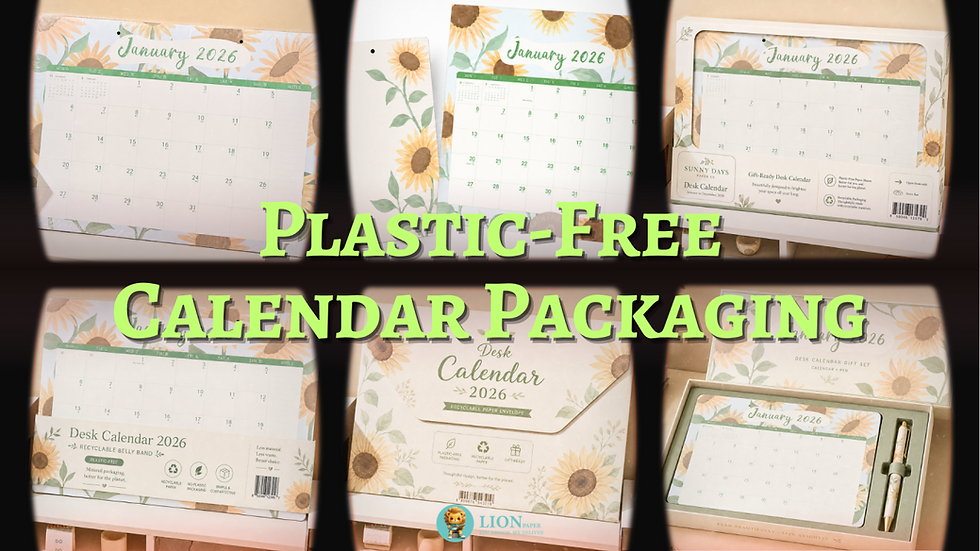
Plastic-free calendar packaging means replacing plastic shrink wrap, polybags, plastic windows, and other plastic packaging parts with paper-based or cardboard-based alternatives. The best options include paper wafer seals, wrap-around paper covers, paper sleeves, belly bands, rigid paperboard mailers, FSC-certified backing boards, paper header cards, and cardboard slipcases.
Before removing shrink wrap, calendar publishers and sourcing teams should check seven things: product protection, product closure, retail display, barcode visibility, carton packing, recycling claims, and production samples. A good plastic-free package must protect the calendar, keep it closed, scan correctly at retail, fit cartons efficiently, support clear recycling language, and work at factory speed.
The goal is not just to remove plastic. The goal is to keep the calendar retail-ready after the plastic is gone.
Quick Content Reach:
Why Plastic-Free Calendar Packaging Matters Now
Plastic packaging is under pressure for a clear reason. The OECD reported that global plastic waste more than doubled from 156 million tonnes in 2000 to 353 million tonnes in 2019, while only 9% of plastic waste was ultimately recycled after losses during recycling.
Packaging is a major part of short-life plastic use, so buyers now look closely at every plastic film, bag, window, and sleeve used around consumer products.
For calendars, the most common plastic part has long been shrink wrap. It made products look clean. It kept pages closed. It protected covers from dust and handling marks. It also helped cartons pack in a neat and predictable way.

But shrink wrap was never just “a piece of plastic.” It was part of the full packaging system.
That is why removing it needs care. A wall calendar may open in transit. A planner may get cover scratches. A desk calendar may lose its shape. A premium gift calendar may look less valuable on the shelf. If the new pack does not solve these problems, the product may become less sustainable in practice because damage, returns, and repacking create waste too.
UNEP’s “Turning off the Tap” report says reducing plastic pollution requires system redesign, including reducing unnecessary plastic use and redesigning products and packaging for reuse, recycling, and better material choices. That idea fits calendar packaging very well. The smarter move is not a simple material swap. It is a better packaging design.
What Plastic-Free Calendar Packaging Really Means
Plastic-free calendar packaging uses paper or cardboard-based materials instead of plastic shrink wrap, polybags, plastic windows, plastic trays, or plastic stands.
Common options include:
Packaging option | Best use case | Key benefit |
Paper wafer seal | Standard wall calendars | Keeps pages closed with low material use |
Wrap-around paper cover | Retail calendars | Adds space for barcode and product details |
Paper sleeve | Premium calendars, diaries, planners | Improves branding and gift feel |
Belly band | Simple calendar and notebook sets | Reduces material while holding product together |
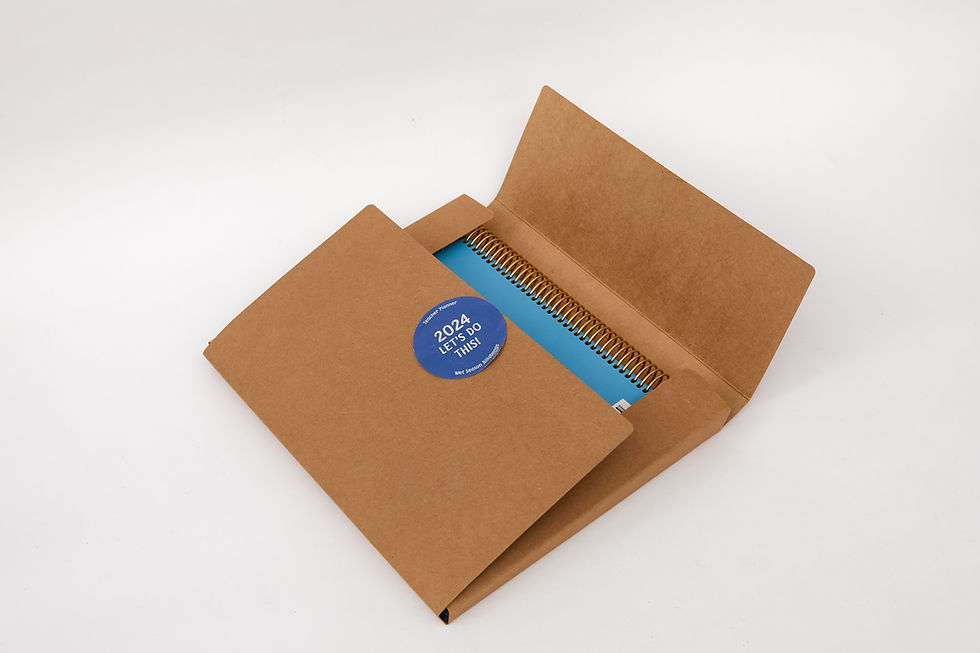
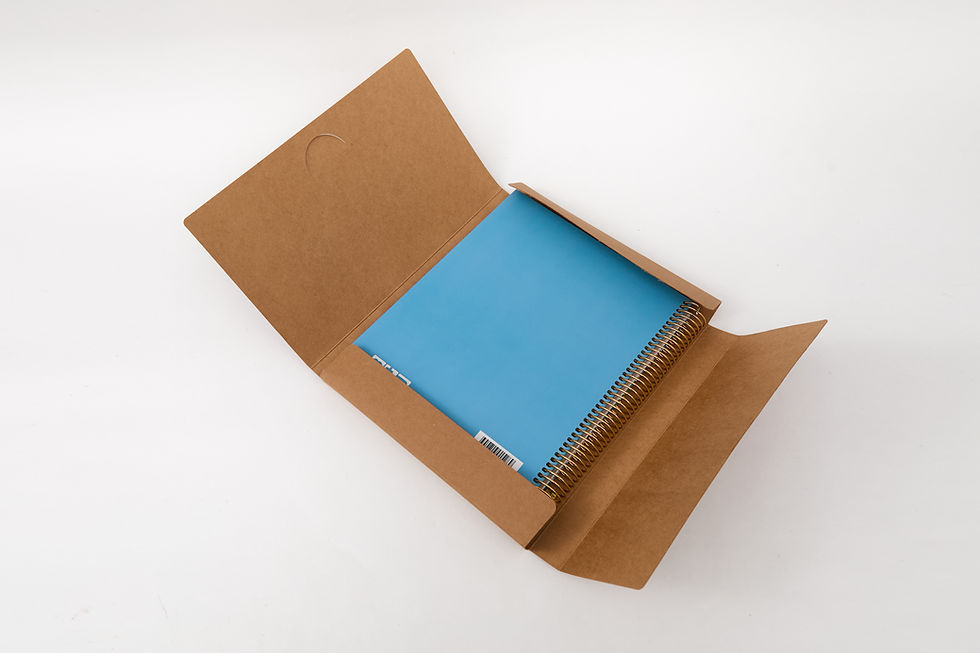
Rigid paperboard mailer | E-commerce calendar shipping | Helps prevent bending and corner damage |
FSC backing board | Wall calendars and desk pads | Adds support and responsible sourcing proof |
Cardboard slipcase | Gift sets and premium programs | Adds protection and shelf value |
Clear language matters. “Eco-friendly packaging” is too broad. Better claims include “no shrink wrap,” “plastic-free paper sleeve,” “recyclable paper packaging,” or “FSC-certified paperboard backing,” when those claims are true and supported.
In the United States, the FTC Green Guides apply to environmental claims in labeling, advertising, promotional materials, and business-to-business marketing. They also explain that claims should not mislead reasonable buyers or consumers. This is why specific, provable packaging claims are safer than vague green language.
Why Shrink Wrap Was Used in the First Place
Before choosing a replacement, it helps to understand what shrink wrap was doing.
Shrink wrap helped with five jobs:
Closure — It kept the calendar closed.
Protection — It reduced dust, scratches, and loose pages.
Shelf appearance — It gave the product a clean retail look.
Handling — It helped staff and shoppers handle the item without pages opening.
Packing — It made carton loading easier and more stable.
When plastic is removed, each of these jobs still needs an answer.
For example, a paper belly band may close the product, but it may not protect the corners. A paper sleeve may look premium, but if it is too tight, factory packing may slow down. A rigid mailer may protect e-commerce orders, but it may be too costly for a mass retail program.
The right package depends on the calendar format, price point, sales channel, and shipping route.
Best Plastic-Free Packaging Options for Calendars
1. Paper Wafer Seal with a Wrapped Paper Flap
A paper wafer seal is one of the most practical first steps for standard wall calendars. It keeps the calendar closed without hiding the cover artwork.

This option works well when the product needs:
Basic closure
Easy opening
Low added material
Clear front-cover visibility
A simple plastic-free message
The seal must be strong enough to survive packing and transport. It should also open cleanly without tearing the cover. Test the adhesive on the real cover stock before approval.
2. Wrap-Around Paper Cover
A wrap-around paper cover gives the calendar both closure and communication space. It can carry the barcode, price, product size, recycling message, license notice, retailer code, and brand story.
This matters because once shrink wrap is removed, the package still needs a place for retail information.
A wrap-around cover is useful for wall calendars, art calendars, licensed calendars, and seasonal retail programs. It should not cover the most important part of the artwork unless the design calls for that.
3. Paper Sleeve
A paper sleeve can make a calendar or planner feel more premium. It works well for diaries, planners, notebook sets, gift calendars, and licensed stationery collections.
A sleeve gives the brand more design space. It can also improve the unboxing feel because it looks more intentional than disposable plastic film.

Still, small details matter. If the sleeve is too loose, the product may slide out. If it is too tight, packing workers may lose speed. If the paper is too thin, corners may dent. If the opening direction is awkward, retail handling may suffer.
A paper sleeve should always be tested with the final product size, cover finish, binding type, and carton layout.
4. Recyclable Belly Band
A belly band is a low-material option. It can hold the calendar closed, carry a barcode, and show a clear packaging message.

It works best for:
Planners
Diaries
Slim wall calendars
Notebook and calendar bundles
Promotional stationery sets
But a belly band is not a full protection system. It may not protect covers, corners, or edges. It may also slide on smooth laminated covers. For long-distance shipping, it often needs stronger carton protection or a backing board.
Use a belly band when closure and labeling are the main needs. Avoid relying on it alone when the product needs heavy handling protection.
5. Rigid Paperboard Mailer
For online calendar sales, the packaging challenge changes. Retail display becomes less important. Shipping protection becomes more important.
A calendar sold online may face bending, corner hits, rain exposure, label damage, returns, and rough parcel handling. A soft paper envelope may not be enough for a wall calendar or desk pad.
A rigid paperboard mailer can protect flat products better. For higher-value items, add a backing board or corner support.
ISTA test procedures are often used to evaluate packaged products under real distribution conditions, including parcel, truckload, less-than-truckload, and retailer-specific shipping systems. For example, ISTA lists procedures for LTL shipment, unitized loads, fast-moving consumer goods in European retail supply chains, and parcel delivery systems.
6. Cardboard Slipcase or Gift Box
A cardboard slipcase or gift box is a strong choice for premium calendar sets. It can improve display value, protect the product, and support a clear plastic-free packaging claim.

This option works well for:
Advent calendars
Countdown calendars
Premium planner sets
Calendar and greeting card bundles
Corporate gift stationery
Licensed character gift programs
The risk is overdesign. A box that is too heavy, too slow to pack, or too expensive may hurt the program. Premium packaging should feel useful, not wasteful.
7 Checks Before Removing Shrink Wrap
1. Check Product Protection
Ask one simple question: can the calendar survive real handling?
Real handling includes carton loading, warehouse movement, pallet stacking, retail unpacking, shelf display, and shoppers flipping through the product.
Check these areas:
Cover scratches
Corner dents
Edge wear
Page movement
Binding stress
Hanger hole damage
Backing board strength
Do not approve the design only because it looks good on a table. Test it through the full journey.
2. Check Product Closure
The calendar must stay closed during packing, shipping, and display.
Possible closure methods include:
Paper wafer seals
Paper flaps
Belly bands
Paper sleeves
Header cards
Paper corner tabs
Wrap-around covers
The closure should be strong but not frustrating. Consumers should be able to open it without damaging the product.
3. Check Retail Display
The package must work in the store.
Will the calendar hang correctly? Will it stand? Will it stack? Will it sit inside a display carton? Can staff unpack it quickly? Can shoppers see the cover art?
Removing plastic should not make the retailer’s job harder. A good plastic-free package should still look clean, neat, and ready to sell.
4. Check Barcode Visibility
When shrink wrap is removed, the barcode may need a new home.
It can move to:
Back cover
Paper sleeve
Belly band
Header card
Wrap-around cover
Sticker label
Backing board
GS1 US states that barcode placement can affect scan performance and that, for checkout items, the barcode is often placed on the lower right-hand section of the back of the package, away from edges, with enough quiet space around it. GS1 also warns that poor scan performance can lead to manual keying and possible retail issues.
Always test barcode scanning on the final printed sample, not only on artwork.
5. Check Carton Packing
A packaging change can affect carton size, case pack quantity, pallet efficiency, and freight cost.
Even a small sleeve thickness can change how many units fit in a carton. A rigid gift box may improve shelf value but reduce pallet count. A loose belly band may shift inside the carton and cause uneven stacking.
Before final approval, pack real samples into real cartons. Shake, stack, open, and repack them. Check whether warehouse staff can handle the new format without extra steps.
6. Check Recycling and Material Claims
A strong claim is clear, true, and easy to understand.
Good examples include:
“No shrink wrap”
“No polybag”
“Plastic-free paper packaging”
“Recyclable paper sleeve”
“FSC-certified paperboard backing”
“Paper-based retail packaging”
Avoid broad claims such as “green,” “earth-friendly,” or “100% sustainable” unless the brand has strong proof and the claim is properly qualified.
For paper and board packaging, ISO 18604:2013 gives requirements for packaging to be classified as recoverable through material recycling, while also noting that the standard alone does not create automatic proof of compliance with every requirement.
For teams selling into Europe, Regulation (EU) 2025/40 on packaging and packaging waste supports the wider EU move toward packaging that is reusable or recyclable by 2030. This makes clear packaging design and accurate material claims even more important for future retail programs.
7. Check Production Samples
A drawing is not enough. A small mockup is not enough.
Approve the packaging only after testing real samples with:
Final calendar size
Final cover material
Final paper weight
Final binding
Final barcode position
Final carton
Final packing method
Final shipping route
A sample should answer the hard questions before mass production begins. Does the sleeve slide? Does the seal tear the paper? Does the belly band stay in place? Does the barcode scan? Does the carton still close well?
A real sample shows risk before the risk becomes expensive.
Proof, Certification, and Documents Buyers Should Ask For
Plastic-free packaging becomes more trusted when the claim is backed by records. Buyers should ask suppliers for proof, not just promises.
Useful documents may include:
Proof or certificate | What it supports |
FSC Chain of Custody certificate | Responsible sourcing of paper or board materials |
FSC license code and supplier invoice | Traceability of certified material |
Material specification sheet | Paper grade, board thickness, coating, adhesive, and recyclability notes |
Barcode verification or scan test | Retail checkout readiness |
ISTA or transport test report | Distribution and shipping protection |
ISO 18604 assessment reference | Material recycling classification support |
Final sample approval record | Factory-ready production proof |
Carton packing test result | Case pack, pallet, and freight planning |
FSC explains that Chain of Custody certification verifies forest-based materials along the path from the forest to finished goods. The FSC label on a finished product signals that materials have met chain of custody requirements from sourcing to distribution. FSC also notes that certified material must be identified and tracked during manufacturing and distribution, with related records kept.
This kind of proof helps sourcing teams, retailers, and sustainability teams speak the same language.
How to Match Packaging to Calendar Format
Not every calendar needs the same plastic-free structure.
A thin promotional wall calendar may only need a wafer seal and a backing board. A premium art calendar may need a paper sleeve. A desk calendar may need stronger edge protection. An online calendar may need a rigid mailer. A gift calendar may need a slipcase or box.
Here is a practical match:
Calendar format | Recommended packaging | Main reason |
Standard wall calendar | Paper wafer seal or wrap-around cover | Keeps pages closed and cover visible |
Premium wall calendar | Paper sleeve or slipcase | Improves brand and gift feel |
Desk calendar | Belly band plus carton support | Keeps set together without excess material |
Planner or diary | Paper sleeve or belly band | Adds barcode and brand space |
E-commerce calendar | Rigid paperboard mailer | Helps reduce bending in shipping |
Advent calendar | Cardboard gift box | Protects structure and improves presentation |
Retail display program | Header card or wrap-around cover | Supports hanging, scanning, and shelf display |
The best choice is the one that balances protection, cost, appearance, recycling claim, and factory speed.
Common Mistakes to Avoid
The first mistake is removing plastic without replacing its function. If shrink wrap kept the product closed, the new design needs another closure method.
The second mistake is hiding the barcode or placing it on a curved, folded, glossy, or uneven surface. A beautiful package still fails if it cannot scan.
The third mistake is choosing paper that is too thin. Thin paper can tear, wrinkle, and dent. That may make the product look cheap.
The fourth mistake is making the package too complex. Too many folds, locks, inserts, or glue points can slow production and raise cost.
The fifth mistake is using vague claims. Clear claims build trust. Vague claims create questions.
The final mistake is skipping real production samples. A package can look perfect in artwork and still fail on the packing line.
Conclusion
Plastic-free calendar packaging is not just about removing shrink wrap. It is about redesigning the package so the calendar still works in the real world.
The best design keeps the calendar protected, closed, easy to scan, ready for retail display, efficient to pack, clear in its recycling claim, and practical for mass production.
For calendar publishers, stationery brands, sourcing teams, and retailers, the winning solution is not always the most expensive one. It is the one that fits the product journey from factory to carton, from warehouse to shelf, and from shelf to consumer.
Removing plastic is the easy part. Keeping the calendar retail-ready after the plastic is gone is where good packaging design begins.
—Leo Xia, CEO, Lion Paper Products
You design, we deliver.
FAQs:
Q1: What is plastic-free calendar packaging?
Plastic-free calendar packaging means using paper or cardboard-based packaging instead of plastic shrink wrap, polybags, plastic windows, plastic trays, or plastic stands. Common choices include paper sleeves, belly bands, wafer seals, backing boards, mailers, and cardboard boxes.
Q2: What can replace shrink wrap on wall calendars?
Paper wafer seals, wrap-around paper covers, paper sleeves, belly bands, FSC backing boards, and paper header cards can replace shrink wrap. The best choice depends on the calendar size, weight, retail channel, and protection needs.
Q3: How should brands make recycling claims on calendar packaging?
Brands should use specific and provable claims, such as “no shrink wrap,” “plastic-free paper sleeve,” or “recyclable paper packaging.” Broad words like “green” or “eco-friendly” should be avoided unless they are clearly explained and supported by evidence.
Q4: Do calendar publishers need FSC-certified packaging?
FSC certification is not always required, but many buyers prefer it for paper and board packaging. If a product carries an FSC claim or label, the supplier should provide valid chain of custody proof and related documents.
Q5: What should be tested before mass production?
Test product closure, cover protection, corner strength, barcode scanning, retail display, carton packing, pallet efficiency, recycling claims, packing speed, and the final production sample.
Reference
OECD Global Plastics Outlook
https://www.oecd.org/en/publications/global-plastics-outlook_de747aef-en.html
UNEP “Turning off the Tap” Report
https://www.unep.org/resources/turning-off-tap-end-plastic-pollution-create-circular-economy
FTC Green Guides
https://www.ecfr.gov/current/title-16/chapter-I/subchapter-B/part-260/
ISTA Test Procedures
GS1 US Barcode Placement Guidelines
https://www.gs1us.org/upcs-barcodes-prefixes/how-to-use-your-upc-barcodes/place-barcodes-on-products
ISO 18604:2013 Packaging and Material Recycling
EU Regulation 2025/40 on Packaging and Packaging Waste
FSC Chain of Custody Certification
Are you looking for a reliable manufacturer? Reach out to Lion Paper for a free quote and consultation. Let’s collaborate on creating custom writing paper products that will set your brand apart from the competition!
About Lion Paper
Company Name: Lion Paper Products
Office Address: 20th floor, Chuangyedasha Building, No. 135, Jinsui Road, Jiaxing City, Zhejiang Province, China
Factory Address: No.135, Xuri Road, Jiaxing City, Zhejiang, China
Email: Leoxia@lion-paper.com
Audit Certifications: ISO9001:2015/FSC/SEDEX SMETA/Disney FAMA/GSV/SQP
Comments