


How to Choose the Right Paper for Custom Notebooks


Start with use case first, not paper first. A journal, a school notebook, a branded corporate notebook, and a fountain-pen notebook do not need the same paper.
For most custom notebooks, 80–100 gsm is the safest working range. Go lighter for cost-sensitive everyday notebooks and higher for premium, ink-heavy, or fountain-pen use. GSM is measured under ISO 536.
GSM is not the same as thickness. Thickness is measured separately under ISO 534, so two sheets with the same GSM can still feel different in hand.
If show-through matters, look at opacity, which is measured separately under ISO 2471.
For environmental credibility, use FSC or PEFC verification tools, and consider EU Ecolabel for eligible paper products.
For suppliers, strong trust signals include ISO 9001 for quality management and ISO 14001 for environmental management.
Quick Content Reach:
Understanding The Needs
Define Purpose & User Image
The right notebook paper starts with one question: who is going to use it, and for what. A student notebook needs cost control and decent durability. A branded executive notebook needs a more premium writing feel. A creative journal may need better opacity and smoother performance for gel pens, markers, or fountain pens. That matters because paper-based stationery remains a major part of the global stationery market, and educational institutes were the largest application segment in a major 2023 market analysis.
A helpful way to frame the decision is to define the notebook’s job in one line:
daily notes
meeting notebook
retail gift notebook
school exercise book
journal or planner
brand giveaway
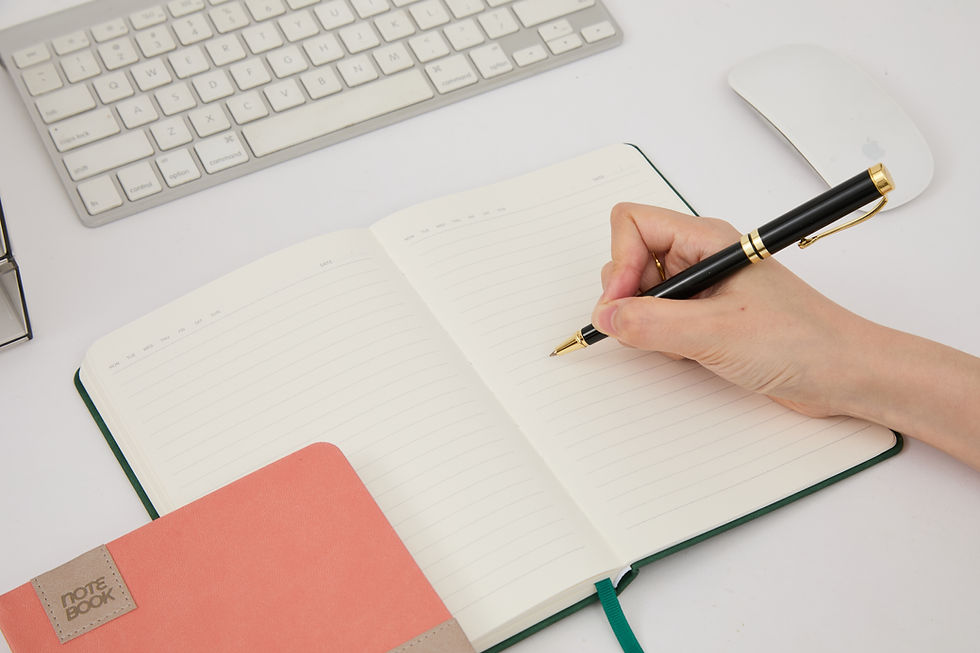
Once that job is clear, paper choices become easier. Heavier paper is not always better. Better means the paper matches the writing tool, price point, and user expectation.
Consider Format & Portability
Format changes how paper feels in real use. Pocket and A6 notebooks are carried everywhere, so lighter paper can be acceptable if portability matters more than luxury. A5 works as the most flexible all-round size for journals, meetings, and retail notebooks. Larger formats can carry heavier paper more naturally, especially for premium desk use. International paper sizes are standardized under ISO 216, which covers trimmed A and B series sizes for writing paper and printed matter.
For B2B notebook projects, format also affects shipping, storage, and shelf display. Smaller formats lower freight and fit gift sets more easily. Larger formats create more perceived value, but they raise material and packing costs.
Paper Quality Essentials
GSM (Grams per Square Meter) – The Weight of the Experience
GSM is the first paper number most buyers ask about, and for good reason. It is the standard way to express paper grammage, and ISO 536 defines the method for determining it.
A practical notebook guide looks like this:
Paper Range | Best Use | What It Feels Like | Typical Trade-Off |
60–70 gsm | low-cost school or promo notebooks | light, flexible | more show-through, less premium feel |
80 gsm | standard office and everyday notebooks | balanced | good for most ballpoint and pencil use |
90–100 gsm | premium everyday notebooks | stronger, cleaner writing feel | slightly higher cost and weight |
100–120 gsm | journals, planners, fountain-pen friendly notebooks | more substantial, less show-through | higher material and freight cost |
For most custom notebooks, 80–100 gsm is the strongest middle ground. It gives a noticeable quality feel without making the notebook too heavy or too expensive.

Texture, Smoothness & Pen Compatibility
Texture and smoothness affect how a notebook feels more than many buyers expect. Smooth paper usually gives cleaner lines and a more polished writing feel. Slightly textured paper can feel warmer and more natural, especially for pencil or slower handwriting.
In practice, wetter inks usually need better-sized, more stable paper. Ballpoint pens are forgiving. Gel pens and rollerballs often benefit from smoother paper. Fountain pens usually perform better on paper with stronger surface control and better opacity. This is not a single standard number. It is a performance choice that should be tested with the real pens your users will use.
For B2B orders, the safest move is simple: always approve paper with a real writing sample, not only a paper swatch.
Color & Opacity
Paper shade changes the whole notebook mood. Bright white paper feels sharper and more technical. Natural white or ivory paper feels softer and more premium. That is why many journals and branded gift notebooks lean warm rather than bright.
Opacity matters when users write on both sides of the page. ISO 2471 specifies a method for determining paper opacity by diffuse reflectance. That matters because opacity is not just “how thick the sheet looks.” It is a measurable property.
At the same time, opacity and thickness should not be confused. ISO 534 covers thickness, density, and specific volume, which is why two papers at the same GSM can still feel different and perform differently in notebooks.
A simple rule works well in sourcing: if you want a notebook to feel premium and reduce show-through complaints, move upward in both opacity and paper quality, not only GSM.
Environmental Certifications
Environmental claims are only useful when buyers can verify them. For notebook paper, the most practical certifications and verification systems are these:
FSC is one of the clearest ways to verify responsible forest sourcing. FSC provides public certificate search tools, which makes supplier claims easier to check before ordering.
PEFC offers another recognized path for responsible forest certification and also provides a public “Find Certified” tool for supplier verification.
EU Ecolabel is useful for eligible paper products sold into Europe. The European Commission states that this product group covers printed paper products, envelopes, wrapping paper, and stationery products, and that the criteria address fibre sourcing, hazardous substances, emissions, energy use, and waste.
If you market green benefits in the United States, be careful with language. The FTC says the Green Guides help marketers ensure claims are true and substantiated, and its summary specifically warns against broad, vague claims that are not properly qualified.
A good B2B rule is this:
use specific claims
use verifiable certificates
avoid generic “eco-friendly” language unless you can explain exactly what you mean
Choosing the Right Layout & Binding
Inner Page Layout
Inner layout affects how users judge the notebook almost as much as the cover. The right paper can still feel wrong if the ruling does not fit the use case.
Ruled pages suit meetings, classes, and general office use.
Dot grid works well for planners, journaling, and modern branded notebooks.
Plain pages suit sketching, ideation, and mixed writing/drawing use.
Squared pages still work well for technical notes, math, and structured planning.
Paper choice should support the layout. Dot grid and plain pages tend to expose show-through more clearly, so opacity and smoothness matter more there.

Custom Templates
Custom templates are one of the easiest ways to raise notebook value without radically changing the product. A few examples:
meeting action pages
weekly planning spreads
goal and habit trackers
project grids
school subject dividers
brand-specific templates for training or onboarding
If the paper is too thin, custom templates with dense print can make the notebook feel busy and cheap. If the paper is balanced well, the same templates feel useful and premium.
Binding Options & Influence
Binding changes both perception and performance.
Saddle stitched notebooks feel simple and low cost.
Perfect bound notebooks feel clean and retail-ready, but opening flat can be limited.
Spiral or wire-o is practical and easy to write on, especially for desks and schools.
Sewn or casebound works best for premium notebooks, journals, and long-term use.
Paper choice and binding should be decided together. Heavy paper inside a weak binding can feel clumsy. Light paper inside a premium casebound cover can feel disappointing. The best notebook projects treat paper, layout, and binding as one system.
Scenario-Based Recommendations
This quick matrix helps turn all the above into a buying decision.
Scenario | Best Paper Direction | Layout | Binding | Main Goal |
Corporate gift notebook | 100–120 gsm, smooth, high-opacity, refined shade | ruled or dot grid | casebound or sewn | premium feel |
Conference giveaway | 80–100 gsm, dependable writing surface | ruled | wire-o or perfect bound | budget and utility |
Student notebook | 80–100 gsm, balanced cost and durability | ruled or grid | spiral or sewn | everyday function |
Creative journal | 100 gsm and up, tooth or smooth based on pen test | blank or dot grid | sewn or lay-flat | tactile experience |
Planner/workbook | good opacity, stable printing surface | custom template | wire-o | practical use |
Eco-positioned brand notebook | FSC or PEFC traceable stock, possibly EU Ecolabel where relevant | simple functional layout | depends on use | provable sustainability |
Working with Lion Paper Products
Established in 2015, Lion Paper Products is a reputable manufacturer and supplier based in Jiaxing, Zhejiang, China. With over a decade of export expertise, we specializes in fashion stationery, lifestyle products, and high-quality notebooks,etc.
Operating from a 30,000 m² facility and backed by a skilled team, Lion Paper Products collaborates with global brands, retailers, and licensed IP partners across Europe, the United States, and Asia.
Key Highlights:
Comprehensive OEM & ODM Assistance: Lion Paper Products offers end-to-end design and manufacturing services, from the initial idea to the final product. Our in-house R&D team assists brands in tailoring sizes, materials, colors, and logos to align with market trends.
Diverse Product Line: Lion Paper Products manufactures high-quality notebooks, journals, planners, and notepads, etc for retail and promotional purposes.
Material Versatility: Utilizes high-quality PU leather, nylon, canvas, PVC, recycled fabrics, and FSC Paper that ensure a balance between quality and sustainability.
Reliable Capacity: The ability to produce on a large scale supports both small MOQ projects and large export orders, guaranteeing quick delivery and consistent quality.
Strong Brand Collaboration: Partners with global fashion labels and licensed brands to create products that embody the unique design identity of each client.
Certified and Ethical Production: Dedicated to ensuring workplace safety, environmental stewardship, and ethical sourcing in compliance with BSCI and ISO standards.
Why Lion Paper Products Is a Reliable Partner:
Lion Paper is a reliable partner for its blend of design creativity, modern production systems, and stable quality control.
Unlike trading intermediaries, Lion Paper Products owns its factory and manages every production stage — from prototype design to packaging and shipping.
For stationery, and lifestyle brands looking for a reliable, long-term manufacturing partner, Lion Paper Products provides a unique blend of international expertise, customizable options, and effective communication, supported by decades of successful outcomes.
Conclusion: Choose the Right Paper for Custom Notebooks
The right paper for custom notebooks is the paper that fits the user, the writing tool, the format, and the brand promise at the same time.
Start with purpose. Then choose size and portability. After that, decide the paper feel: GSM, texture, shade, and opacity. Finally, verify the trust layer: chain of custody, environmental criteria, quality systems, and any needed compliance documents.
If one choice deserves extra care, it is this: never choose paper by GSM alone. The best custom notebooks win because the paper feels right in the hand, works with real pens, and supports a brand story people can believe.
—Leo Xia, CEO, Lion Paper Products
You design, we deliver.
FAQs:
Q1: What is the best paper weight for custom notebooks?
For most custom notebooks, 80–100 gsm is a safe working range. It suits common ballpoint and gel pen use and keeps cost under control. Premium notebooks often move into the 100–120 gsm range for a more substantial feel.
Q2: Is thicker paper always better?
No. Thicker paper can feel more premium, but it also raises cost, increases bulk, and may reduce total page count. A well-made 90 gsm sheet can outperform a poor 100 gsm sheet if the surface and opacity are better.
Q3: What matters more: GSM or opacity?
Both matter, but users often notice show-through first. GSM affects weight and stiffness. Opacity affects how clean the page looks when both sides are used. For planners and journals, opacity can have a bigger impact on perceived quality.
Q4: How do I test paper before mass production?
Ask for a printed dummy and run a real pen test with the pens your end users are likely to use. Check dry time, feathering, bleed-through, show-through, and writing feel. Then review the final page bulk and binding behavior.
Q5: Is recycled paper always the best eco choice?
Not always. Recycled content can be excellent, but the best choice depends on your market, print method, finish requirements, and proof. In many projects, the strongest claim comes from verified sourcing plus clear environmental criteria, not from one buzzword alone.
Reference
FSC Chain of Custody
FSC consumer / certification information
McKinsey packaging and paper sustainability research
ISO 536 — Paper and board — Determination of grammage
ISO 2471 — Paper and board — Determination of opacity
ISO 216 — Writing paper and printed matter sizes
ISO 9706 — Paper for documents — Requirements for permanence
ISO 9001 standard
PEFC certification / chain of custody context
EU Ecolabel for paper products
EU REACH regulation overview
amfori BSCI
Sedex / SMETA
Rhodia / Clairefontaine paper reference
Two Sides Trend Tracker 2025
Are you looking for a reliable manufacturer? Reach out to Lion Paper for a free quote and consultation. Let’s collaborate on creating custom writing paper products that will set your brand apart from the competition!
About Lion Paper
Company Name: Lion Paper Products
Office Address: 20th floor, Chuangyedasha Building, No. 135, Jinsui Road, Jiaxing City, Zhejiang Province, China
Factory Address: No.135, Xuri Road, Jiaxing City, Zhejiang, China
Email: Leoxia@lion-paper.com
Audit Certifications: ISO9001:2015/FSC/SEDEX SMETA/Disney FAMA/GSV/SQP

Comments