


Canton Fair 2026 Phase 3: Top 4 Sustainable Stationery Trends for Buyers


Canton Fair 2026 Phase 3 will run May 1–5, 2026 at the China Import and Export Fair Complex in Guangzhou, and the official product scope includes Stationery and Office Supplies. For global stationery buyers, the four most important sustainable sourcing trends in 2026 are recycled and FSC paper materials, biodegradable components, plastic-free packaging, and verified sustainable branding for private label products. Buyers should ask suppliers for real proof, including FSC chain-of-custody documents, GRS/RCS claims where relevant, ISO 14001 environmental management evidence, social audit records such as BSCI or SMETA, and market-specific compliance documents for REACH, EN71, Prop 65, and packaging rules.

Quick Content Reach:
Introduction: Why Sustainable Stationery Matters for Global Buyers in 2026
Sustainable stationery is no longer a small niche for eco stores. It is becoming a serious buying category for importers, wholesalers, corporate gift buyers, school suppliers, online sellers, and private label brands. The reason is simple: buyers want useful products, but they also want products that carry a cleaner story, safer materials, and stronger proof.
Stationery may look simple at first glance. A notebook, folder, pen box, paper bag, or desk set seems easy to source. Yet every part of the product matters. The paper may come from certified forests or unknown sources. The cover may use recycled board or virgin plastic. The gift box may be easy to recycle or hard to separate. The printed claim may say “eco-friendly,” but without proof, that claim can create risk for the buyer.
Global regulations are also raising the bar. In the EU, the Packaging and Packaging Waste Regulation entered into force in 2025 and is set to apply from August 12, 2026; it aims to make packaging recyclable, less wasteful, clearly labelled, and more aligned with recycled-content and reuse goals. In the United States, the FTC Green Guides help marketers make sure environmental claims are truthful and substantiated.
The Growing Demand for Eco-Friendly Paper Products and Gifts
Paper products sit at the center of the sustainability conversation because they are used every day and often bought in large volumes. Eurostat reported that the EU produced 83.4 million tonnes of packaging waste in 2022, equal to 186.5 kg per inhabitant, and paper and cardboard made up 41% of all EU packaging waste.
Plastic is another pressure point. UNEP states that humanity produces more than 400 million tonnes of plastic each year, much of which ends up in the environment. That is why buyers are looking for plastic-free folders, paper-based gift boxes, kraft paper sleeves, recycled paper notebooks, refillable desk products, and packaging that is easier to recycle.
For stationery buyers, this creates a clear opportunity. Products that are useful, attractive, well-priced, and properly verified can win space in retail chains, school supply programs, office supply catalogs, promotional gift campaigns, and B2B corporate gifting.
Why Canton Fair 2026 Phase 3 Is Important for Stationery Buyers
The Canton Fair’s official schedule lists Phase 3 of the 139th Spring session for May 1–5, 2026, with the venue at the China Import and Export Fair Complex, No. 382 Yuejiang Zhong Road, Guangzhou. The official Phase 3 product category includes Stationery and Office Supplies, making this phase the key window for buyers searching for paper products, desk items, filing goods, notebooks, school supplies, and related gifts.
This matters because buyers can compare many suppliers in a short period. You can touch samples, check print quality, compare paper thickness, review packaging, ask for certificates, and discuss OEM or private label options face to face.
What Professional Buyers Should Expect from This Guide
This guide is written for practical sourcing. It explains what to look for, what to ask, and what mistakes to avoid. It also includes buyer tables, supplier evaluation tips, and an RFQ template you can use at the booth.
The goal is not to chase green words. The goal is to source better products with better proof.
Why Canton Fair 2026 Phase 3 Matters for Stationery Buyers
Canton Fair 2026 Phase 3 Dates, Venue, and Product Scope
Buyer Item | Official / Practical Detail |
Event | 139th Canton Fair, Spring 2026 |
Phase 3 Dates | May 1–5, 2026 |
Opening Hours | 9:30–18:00 |
Venue | China Import and Export Fair Complex, Guangzhou |
Relevant Product Scope | Stationery, Office Supplies, Toys & Children, Home Textiles, Fashion, Health & Recreation |
Best Buyer Focus | Recycled notebooks, kraft paper sets, desk organizers, folders, paper packaging, private label stationery gifts |
The official Canton Fair page confirms the dates, venue, opening hours, and Phase 3 product categories, including Stationery and Office Supplies.
Why Phase 3 Is the Key Stage for Paper Products, Stationery, and Gifts
Phase 3 is the most relevant stage because stationery often overlaps with other consumer categories. A recycled notebook may be sold as a school product, office item, lifestyle gift, or corporate promotion. A kraft paper desk organizer may sit between stationery, home office, and giftware. A custom paper folder may serve schools, banks, insurance companies, hotels, and retail brands.
This mix gives buyers more choice. It also helps you spot design ideas outside your usual product lane.
Who Should Attend: Importers, Wholesalers, Retailers, and Private Label Buyers
The best visitors for this category include:
Buyer Type | Best Products to Source | Key Concern |
Importers | Full stationery ranges, notebooks, folders, desk sets | Price, volume, shipping, compliance |
Wholesalers | Stock designs, fast-moving paper goods | MOQ, delivery time, repeat supply |
Retailers | Giftable stationery, eco paper sets | Packaging, shelf appeal, barcode, labelling |
Corporate gift buyers | Custom notebooks, gift boxes, pen-and-paper sets | Branding, color matching, deadlines |
Private label brands | OEM collections, custom packaging | Certifications, exclusivity, design control |
Quick Buyer Snapshot: Sustainable Stationery at Canton Fair 2026 Phase 3
Best Product Categories to Source at Phase 3
Category | Examples | Sustainability Angle |
Recycled paper notebooks | Journals, planners, memo pads | Recycled content, FSC paper, soy-based ink |
Kraft paper stationery | Gift boxes, envelopes, folders | Low-plastic look, simple recyclability |
Filing products | Paper folders, document wallets | Plastic-free alternatives to PP folders |
Desk organizers | Paperboard trays, pen holders | Recycled board, flat-pack design |
Stationery gift sets | Notebook + pencil + box sets | Plastic-free packaging, private label branding |
School supplies | Sketchbooks, flash cards, paper kits | EN71 checks if designed for children |
Key Buying Criteria: Materials, Certifications, MOQ, Packaging, and Lead Time
A strong supplier should answer five questions clearly:
Buying Criteria | What to Check | Why It Matters |
Material | Recycled paper %, FSC paper, kraft paper grade | Prevents vague eco claims |
Certification | FSC, GRS/RCS, ISO 14001, BSCI, SMETA | Builds buyer trust |
MOQ | Stock MOQ vs custom MOQ | Controls cash flow |
Packaging | Plastic-free, recyclable, labelled | Supports EU and retail needs |
Lead time | Sample time, bulk time, peak season risk | Protects launch dates |
FSC chain-of-custody certification is especially important for paper and packaging because it verifies that a company has systems to produce and trade FSC-certified products.
How Sustainable Stationery Supports Modern Retail and Corporate Gift Markets
Modern buyers want products that are easy to explain. A notebook made with verified recycled paper and packed in a plastic-free kraft box is easier to sell than a generic notebook with a green leaf printed on it.
Retailers want clean shelf stories. Corporate buyers want gift sets that look responsible. Online sellers want product pages with clear proof points. Procurement teams want documents that reduce risk.
That is why sustainable stationery works best when design, function, and evidence move together.
Top 4 Sustainable Stationery Trends 2026
1. Eco-Friendly Materials: Recycled Paper, FSC Paper, Kraft Paper, and Plant-Based Alternatives
The first major trend is better material choice. Buyers are moving from simple “eco” labels to specific material claims.
Strong examples include:
FSC-certified paper notebooks
Recycled paper journals
Kraft paper folders
Sugarcane or bamboo paper blends
Recycled greyboard gift boxes
Plant-based film windows instead of PVC windows

FSC is one of the most recognized paper sourcing signals. For paper and packaging products, FSC says chain-of-custody certification verifies that processes are in place to produce and trade FSC-certified products.
Buyer Tip
Do not ask only, “Is this eco-friendly?” Ask:
Weak Question | Better Question |
Is this green? | What percentage of recycled content is used? |
Is the paper sustainable? | Is the paper FSC-certified, FSC Mix, FSC Recycled, or from another verified source? |
Can we print an eco logo? | What documents support the claim on the product and packaging? |
2. Biodegradable Stationery and Compostable Components
The second trend is biodegradable and compostable design. This can include paper-based parts, natural fiber accessories, compostable sleeves, or biodegradable binding materials.
But buyers must be careful. “Biodegradable” is one of the most risky words in sustainability marketing because it depends on conditions, time, disposal systems, and local rules. The FTC Green Guides explain that environmental claims should be truthful and substantiated, and that marketers should qualify claims to avoid deceiving consumers.
Good practice is to request test reports and disposal instructions. If a supplier claims a component is compostable, ask whether it is home compostable or industrial compostable. These are not the same.

Better Product Ideas
Product | Better Claim Style |
Paper notebook sleeve | “Plastic-free paper sleeve” |
Compostable bag | “Industrial compostable where accepted” |
Kraft paper folder | “Made with recycled kraft paper” |
Paper pen holder | “Recyclable paperboard body” |
3. Plastic-Free and Recycled Packaging for Stationery Gifts
The third trend is packaging. In many stationery gift sets, packaging creates more waste than the product itself. Buyers now look for gift boxes with fewer layers, no PVC window, paper tape, molded pulp trays, recycled board, and smaller shipping cartons.
This trend is also driven by regulation. The EU’s PPWR aims to make packaging recyclable, minimally wasteful, clearly labelled, and more aligned with recycled-content and reuse rules.
For importers selling into Europe, packaging is not just a nice design detail. It is part of compliance, cost, and brand trust.
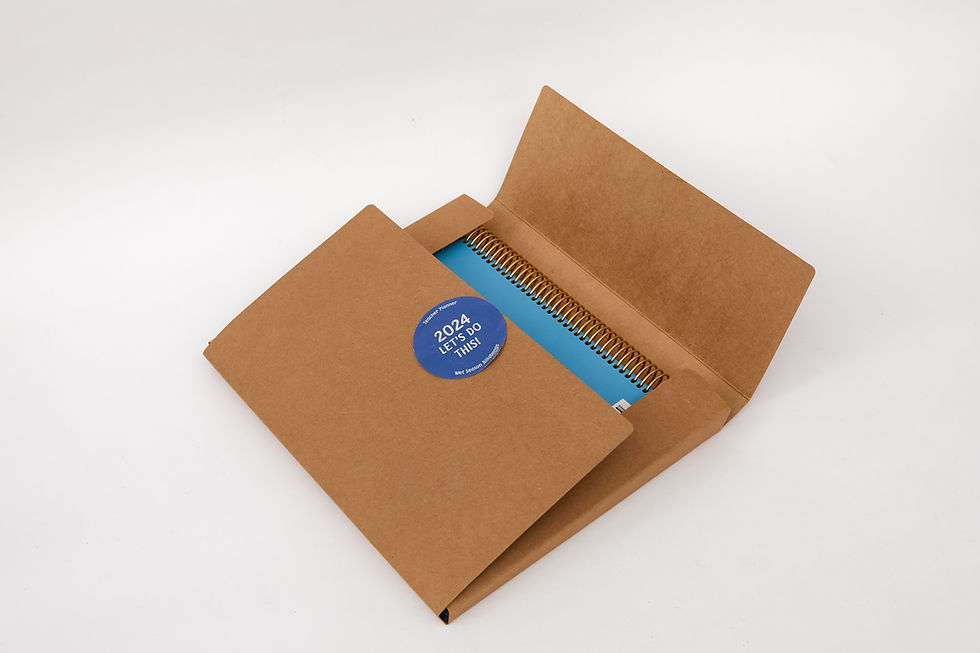
Packaging Comparison Example
Old Packaging Choice | Better 2026 Option | Buyer Benefit |
PVC window box | Die-cut paper window or no window | Less plastic, cleaner recycling |
Foam insert | Molded pulp tray | Better sustainability story |
Laminated gift box | Uncoated kraft paper box | Easier to recycle |
Individual polybag | Paper band or glassine-style sleeve | Less single-use plastic |
Oversized carton | Right-sized export carton | Lower freight and waste |
4. Sustainable Branding and Customization for Private Label Buyers
The fourth trend is verified branding. Private label buyers want custom colors, logos, belly bands, inserts, and retail boxes. But sustainability claims on packaging must be specific and supportable.
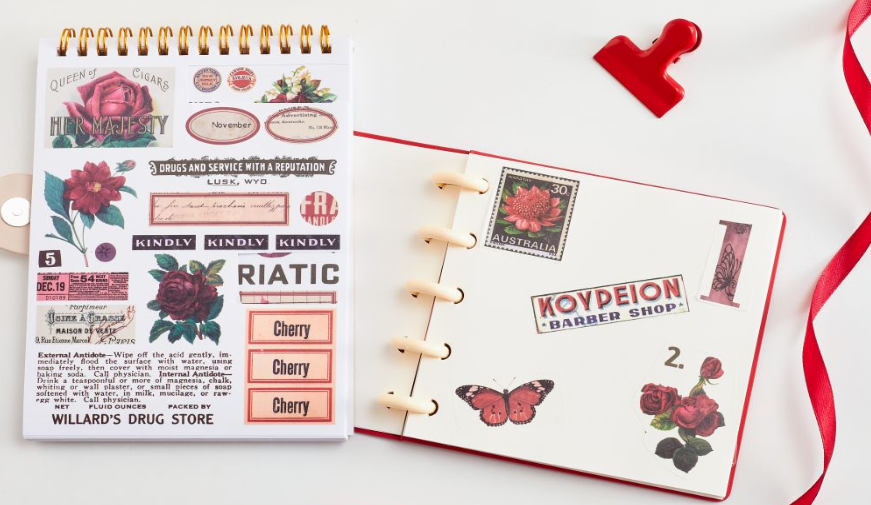
In 2026, vague phrases like “green,” “eco,” and “earth-friendly” are less useful. Better claims are more precise:
Vague Claim | Stronger Claim |
Eco notebook | Cover made with 100% recycled paperboard |
Green gift set | Packed in a plastic-free kraft paper box |
Sustainable paper | FSC-certified paper used for inner pages |
Planet-friendly | Printed with water-based ink; no PVC window |
For EU-facing brands, sustainability labels and green claims need extra care. The EU’s consumer rules are moving toward stronger controls on misleading environmental and social advertising, with application of new rules by member states set for September 27, 2026.
How to Evaluate Sustainable Stationery Suppliers at Canton Fair 2026
Check Certifications: FSC, GRS, ISO, BSCI, Sedex, EN71, REACH, and Prop 65
A good supplier should not only show samples. They should show documents.
Certification / Standard | Best Use in Stationery Sourcing | What Buyers Should Ask For |
FSC | Paper, board, packaging | Chain-of-custody certificate, license code, scope |
GRS / RCS | Recycled material claims | Transaction certificates, scope certificate |
ISO 14001 | Factory environmental management | Valid certificate and issuing body |
BSCI / amfori | Social compliance | Recent audit result or platform access |
Sedex / SMETA | Labour, safety, ethics, environment | SMETA report and corrective action plan |
EN71 | Children’s stationery or toy-like kits | Lab test reports for target market |
REACH | EU chemical compliance | SVHC declaration, test reports if needed |
Prop 65 | California market | Chemical assessment or warning strategy |
The RCS and GRS set criteria for third-party certification of recycled materials and chain of custody, while GRS includes additional social, environmental, and chemical requirements. Sedex describes SMETA as a widely used social audit covering labour, health and safety, environmental performance, and ethics. ISO published ISO 14001:2026 as an updated environmental management standard focused on measurable environmental performance.
Request Sustainable Materials and Proof of Environmental Claims
At the booth, ask for evidence before discussing big orders. A supplier may have one certified product but not all products under that certificate. The certificate scope matters.
Ask these questions:
Is this exact product covered by the certificate?
Is the paper FSC-certified or only the supplier’s other paper?
Can you provide a transaction certificate for recycled materials?
Can the claim be printed on retail packaging?
Can the claim be used in the EU, US, UK, or Australia?
Focus on Functionality, Durability, and User Experience
A sustainable notebook still needs to open flat. A paper folder still needs to hold documents. A kraft gift box still needs to protect the product during shipping.
Check:
Paper smoothness
Ink bleed-through
Binding strength
Folder folding lines
Box compression strength
Moisture resistance
Print color accuracy
Barcode and label placement
A product that breaks quickly is not sustainable in real life.
Compare MOQ, Lead Time, Customization Options, and Compliance Costs
The cheapest quote may not be the best landed cost. Sustainable materials, lab testing, certification use, and compliant packaging can add cost. That does not mean the supplier is expensive. It means the buyer needs a clear cost breakdown.
Cost Item | Question to Ask |
Material upgrade | What is the price difference between regular paper and FSC paper? |
Recycled content | Is post-consumer recycled paper available? |
Certification use | Is logo use included or charged separately? |
Testing | Which tests are included in the quote? |
Packaging | Can you remove plastic without reducing protection? |
Shipping | Can the box size be reduced to lower freight cost? |
Sustainable Stationery Product Ideas Worth Sourcing in 2026
Recycled Paper Notebooks and Journals
Recycled paper notebooks are easy to understand and easy to sell. They work for schools, offices, bookstores, lifestyle shops, and corporate gifts.
Best options include:
Product Idea | Recommended Specification |
A5 recycled notebook | 80–100 gsm recycled inner paper, recycled board cover |
Spiral notebook | Recycled paper, metal spiral, no plastic cover |
Softcover journal | FSC paper, kraft cover, water-based ink |
Planner | FSC Mix paper, recyclable paper sleeve |
Kraft Paper Gift Sets and Desk Organizers
Kraft paper has a natural look that many buyers like. It also pairs well with simple black printing, white ink, blind embossing, and belly bands.
Good sourcing ideas:
Kraft paper pen holders
Foldable paper desk trays
Memo cube gift sets
Notebook and pencil box sets
Paperboard calendar stands
Plastic-Free Filing Products and Paper Folders
Plastic folders are common, but paper alternatives are gaining attention. Buyers can source:
Paper document wallets
Recycled board folders
Kraft envelope files
Paper expanding files
Plastic-free report covers
For the EU market, also consider chemical compliance. REACH applies to chemical substances used in mixtures and articles and aims to protect human health and the environment from chemical risks.
Eco-Friendly Packaging for Stationery Gift Sets
Packaging can turn a simple product into a strong retail offer. Look for:
Packaging Type | Best Use |
Kraft paper box | Notebook gift sets |
Molded pulp tray | Pens, clips, small desk tools |
Paper belly band | Retail branding without plastic wrap |
Recycled carton | E-commerce shipping |
Paper hangtag | Claim explanation and QR code |
Buyer RFQ Template for Sustainable Stationery Suppliers
Use this RFQ format when talking to suppliers at the booth or by email.
Questions to Ask About Paper Materials and Recycled Content
RFQ Field | Buyer Question |
Product name | What is the exact model number of this product? |
Paper type | Is the paper virgin, recycled, FSC-certified, FSC Mix, or FSC Recycled? |
Recycled content | What percentage is pre-consumer or post-consumer recycled content? |
Paper weight | What gsm is used for cover and inner pages? |
Ink | Do you offer soy-based or water-based ink? |
Certificate scope | Is this exact product covered by the certificate? |
Proof | Can you provide certificate copies and transaction documents? |
Questions to Ask About Packaging, Labeling, and Compliance
RFQ Field | Buyer Question |
Retail packaging | Can you offer plastic-free packaging? |
Export packaging | What is the carton size and gross weight? |
Labeling | Can you add barcode, recycling marks, country of origin, and warning labels? |
EU market | Can you support REACH and packaging compliance documents? |
US market | Can you support Prop 65 review for California sales? |
Children’s items | Can you provide EN71 reports if the product is for children? |
California’s Prop 65 rules require a clear and reasonable warning before knowingly and intentionally exposing anyone to a listed chemical, unless exposure is below risk thresholds; responsibility can fall on manufacturers, producers, packagers, importers, suppliers, or distributors. For children’s stationery that may be treated like a toy or toy-like kit, buyers should check EU toy safety harmonised standards and current references.
Questions to Ask About Production Capacity, MOQ, Samples, and Delivery Time
RFQ Field | Buyer Question |
MOQ | What is the MOQ for stock design and custom design? |
Sample time | How many days for a plain sample and printed sample? |
Bulk lead time | How many days after deposit and artwork approval? |
Capacity | What is monthly capacity for this item? |
OEM | Can you customize size, cover, binding, packaging, and inserts? |
Quality control | What inspection standard do you use before shipment? |
Common Mistakes Buyers Should Avoid When Sourcing Sustainable Stationery
Relying Only on Eco Labels Without Checking Certificates
A green icon is not proof. A leaf symbol is not a certificate. A supplier’s claim must match the product, material, packaging, and target market.
Ask for the certificate number, issuing body, valid date, scope, and product coverage.
Ignoring Packaging Regulations in Target Markets
Packaging rules are changing fast, especially in Europe. The EU PPWR applies to businesses placing packaging on the EU market and covers primary, secondary, tertiary, and service packaging.
Do not approve packaging only because it looks nice. Check recyclability, labelling, material mix, and unnecessary plastic.
Choosing the Cheapest Supplier Without Testing Product Quality
Low price can hide weak paper, poor binding, bad glue, chemical risk, or poor carton strength. Always order samples before bulk production. For larger orders, arrange pre-shipment inspection.
Missing Key Details in OEM and Private Label Agreements
Before paying a deposit, confirm:
Artwork ownership
Pantone color standard
Packaging structure
Certificate use permission
Market exclusivity
Defect tolerance
Replacement terms
Delivery penalty terms
Claim wording approval
Private label buyers should also avoid overclaiming. “Made with recycled paper” is safer than “saves the planet.”
Final Thoughts: How Buyers Can Source Smarter at Canton Fair 2026 Phase 3
Sustainable stationery in 2026 is about proof, not buzzwords. The best products will combine good design, practical use, verified materials, responsible packaging, and clear documentation.
At the fair, do three things well. First, shortlist suppliers that understand both product quality and compliance. Second, collect real documents, not just brochures. Third, compare the full landed cost, including packaging, testing, certification use, freight, and retail readiness.
The winning buyer will not be the one who asks for the lowest price first. The winning buyer will be the one who asks better questions.
—Leo Xia, CEO, Lion Paper Products
You design, we deliver.
FAQs:
Q1: Which phase of Canton Fair is best for stationery buyers?
Phase 3 is the best phase for stationery buyers because the official product category includes Stationery and Office Supplies. It also includes related consumer categories such as toys, children’s products, fashion, home textiles, and health and recreation, which can overlap with stationery gifts and lifestyle paper goods.
Q2: What sustainable stationery products should buyers look for?
Buyers should look for recycled paper notebooks, FSC paper journals, kraft paper folders, plastic-free filing products, molded pulp trays, paperboard desk organizers, and stationery gift sets packed in recyclable or plastic-free packaging.
Q3: What questions should buyers ask sustainable stationery suppliers at the booth?
Ask about material source, recycled content, FSC or GRS/RCS proof, MOQ, sample time, bulk lead time, packaging options, test reports, chemical compliance, and whether environmental claims can legally appear on retail packaging in your target market.
Q4: Are plastic-free stationery packages important for EU and global buyers?
Yes. Plastic-free and recyclable packaging is becoming more important because packaging waste is under closer legal and retail pressure. Eurostat reported that the EU generated 83.4 million tonnes of packaging waste in 2022, and the EU PPWR aims to make packaging more recyclable, less wasteful, and better labelled.
Reference
Are you looking for a reliable manufacturer? Reach out to Lion Paper for a free quote and consultation. Let’s collaborate on creating custom writing paper products that will set your brand apart from the competition!
About Lion Paper
Company Name: Lion Paper Products
Office Address: 20th floor, Chuangyedasha Building, No. 135, Jinsui Road, Jiaxing City, Zhejiang Province, China
Factory Address: No.135, Xuri Road, Jiaxing City, Zhejiang, China
Email: Leoxia@lion-paper.com
Audit Certifications: ISO9001:2015/FSC/SEDEX SMETA/Disney FAMA/GSV/SQP

Comments