


Paper Notebook Market Size and Trends for 2026

Paper notebooks are still very much alive in a digital world. Students, office workers, and creatives continue to rely on physical notebooks for learning, planning, and deep thinking. At the same time, eco-friendly materials and smart integrations are reshaping how notebooks are designed and sold.
In this article, we’ll walk through Paper Notebook Market Size and Trends for 2026, break down key product segments (size, binding, pages, covers, users), highlight the biggest trends, and show how brands and consumers can make better choices using real data and recognized certifications.
Quick Content Reach:
Paper Notebook Market Overview
Recent industry research suggests the global paper notebook market was worth about USD 76.3 billion in 2025 and is forecast to grow to around USD 89.7 billion by 2030, implying a steady CAGR of roughly 3.3% over that period.[1]
Using that growth rate, the Paper Notebook Market Size and Trends for 2026 point to a value in the USD 79–80 billion range, showing that demand is stable rather than declining. Other analysts who track notebooks as a subcategory within stationery also forecast low- to mid-single-digit annual growth through the late 2020s, confirming this overall pattern.[2][3]
At the broader stationery level, paper-based products (including notebooks and loose-leaf paper) still hold the largest share of the market, accounting for more than 45% of global stationery revenues in 2024.[4] Educational institutions remain the biggest buyers, followed by corporate and home-office users.[4]
Illustrative Market Size Table (Global Paper Notebook Market)
Based on published 2025–2030 projections (3.3% CAGR), the market can be summarized like this:[1][2]
Year | Estimated Market Size (USD Bn) | Notes |
2024 | ~73.7* | Back-calculated from CAGR (approximate) |
2025 | 76.28 | Reported base year value |
2026 | ≈78.80* | Derived from 3.3% CAGR – focus year |
2027 | ≈81.40* | Derived from same CAGR |
2028 | ≈84.08* | Derived from same CAGR |
2029 | ≈86.86* | Derived from same CAGR |
2030 | 89.72 | Reported forecast value |
*Estimated values using the published CAGR; exact figures may vary by research provider.
Below, we’ll zoom in on how this market breaks down by size, binding, page style, cover material, and consumer groups.
1. Paper Notebook Market – Notebook Size
Size is one of the most important segmentation factors in the paper notebook market.
Analyst data shows that A4 notebooks captured about 37.3% of global paper notebook revenue in 2024, making them the single largest size segment.[1] This dominance is driven by schools, universities, and offices that prefer A4 because it aligns with standard printer and copier formats.
At the same time, pocket-sized notebooks (A6 and below) are growing faster than the market average, with projections of around 4.4% CAGR through 2030 as commuters, field workers, and mobile professionals favor compact formats that can fit in a bag or jacket pocket.[1]
Typical size mix in the market (2024–2026, indicative):
Size Segment | Common Formats | Role in Market |
Large / A4 | A4, US Letter | Core for education and office use |
Medium / A5 | A5, B5 | Popular for personal journals and planners |
Pocket / Small (≤A6) | A6, pocket, field notebooks | Fast-growing for portability and on-the-go notes |
For 2026, expect A4 to remain dominant by revenue, while A5 and pocket sizes continue to capture share in lifestyle, journaling, and travel notebooks.
2. Paper Notebook Market – Binding Types
Binding affects durability, usability, and perceived value.

Market reports indicate that spiral and Wire-O bindings together generated just over 30% of notebook revenues in 2024, reflecting their popularity in education, engineering, and design, where pages must lie flat or fold back easily.[1]
At the same time, sewn binding (case-bound or thread-sewn) is growing faster than average, with estimates of about 4.5% CAGR between 2025 and 2030.[1] This reflects demand for long-lasting notebooks used as archives, professional records, and high-end journals.
Binding types and 2026 outlook:
Spiral / Wire-O: High usage in school and technical environments; good for note-heavy subjects and sketching.
Sewn / Case-bound: Preferred for premium diaries, bullet journals, and legal/archival notes.
Glued / Perfect-bound: Common in low-cost pads and promotional notebooks.
In 2026, brands that combine practical spiral formats with stronger recycled covers or premium papers are likely to capture both mass and mid-tier segments.
3. Paper Notebook Market – Inner Page Styles
Inner page styles are a key differentiator, especially for creative and professional users.

Recent segmentation data shows that ruled (lined) pages account for about 45–46% of total paper notebook sales, making them the single largest page style, followed by blank and grid formats.[1]
However, niche formats are gaining ground:
Dotted pages are popular with bullet journalers and designers.
Specialty layouts (monthly planners, project boards, Cornell notes) appeal to productivity-focused users.
Typical 2024–2026 pattern (global, approximate):
Ruled / lined – dominant across students and office users
Blank – favored by artists, designers, and sketchers
Grid / graph – key for engineering, math, and tech fields
Dot-grid – rising for journaling and flexible layouts
By 2026, expect more hybrid formats (e.g., half-ruled, half-blank pages) tailored to specific communities like content creators and project managers.
4. Paper Notebook Market – Cover Material
Cover materials directly influence durability, aesthetics, and price.
Industry data shows soft-cover cardstock accounted for more than 50% of notebook sales in 2024, around 52–53% by volume, thanks to its low cost and suitability for bulk school and promotional purchasing.[1]

Hardcover notebooks, although smaller in volume, are forecast to grow at about 4.3% CAGR through 2030, driven by gifting, freelancing, and professional users who want products that look and feel premium.[1][3]
Eco-friendly covers are also rising:
Recycled board and kraft paper covers
Bamboo, cork, and fabric-wrapped covers
Minimal plastic laminates to improve recyclability
One research report on recycled notebooks estimates this submarket reached USD 2.1 billion in 2024, with a robust 7.3% growth rate from 2018–2024, underlining the strength of sustainable cover and paper options.[5]
5. Paper Notebook Market – Consumers
Across reports, students remain the largest user group, accounting for roughly 61% of paper notebook demand in 2024.[1]

Key consumer segments in 2026:
Students (K–12, university) – high-volume buyers tied to curriculum cycles and exam periods.
Office and corporate users – meeting notes, project notebooks, corporate-branded giveaways.
Creative professionals – designers, illustrators, content creators who prefer sketchbooks and premium journals.
Hobbyists & lifestyle users – bullet journaling, wellness journaling, travel logs, and memory-keeping.
Even with rising digital adoption, stationery analysts note that paper notebooks remain embedded in educational and workplace routines, especially in markets with growing student populations and expanding corporate sectors.[4][6]
2026 Paper Notebook Market Trends
1. Sustainability and Eco-Friendly Materials
Across all reports, sustainability is the single most important long-term trend in paper notebooks. A dedicated study on notebook sustainability notes that around 40% of global notebooks in 2023 used recycled paper, with that share expected to reach about 50% by 2025.[7]

Supporting this, the recycled paper market as a whole is projected to grow from USD 38.9 billion in 2025 to over USD 53.6 billion by 2033, showing sustained demand for recycled fiber in writing and printing papers.[8]
Key eco-trends for 2026:
FSC®-certified paper: Many notebook brands now use paper certified by the Forest Stewardship Council (FSC), which sets international standards for responsible forest management.[9] Brands and buyers can verify certification using the FSC public certificate database.[10]
Recycled and alternative fibers: Growth in recycled notebooks and materials such as bamboo, sugarcane bagasse, and agricultural residues.[5][6]
Low-impact inks and finishes: Soy-based or water-based inks, plastic-free laminates, and minimal foil to keep products recyclable.
For brands, promoting FSC, recycled content, and ISO 14001-certified production has become a competitive advantage rather than a niche add-on.
2. Customization and Personalization
Customization is another strong driver. A major stationery market report highlights that consumers are shifting toward custom-designed, personalized stationery, helped by online platforms that allow users to add names, logos, colors, and layouts to notebooks and planners.[11] Global Market Insights

By 2026, you can expect:
On-demand printing with custom covers, brand colors, and artwork
Personalized page layouts (goal tracking, habit trackers, project dashboards)
Corporate notebooks with logo debossing and custom inserts
This trend aligns with broader corporate gifting, where companies increasingly choose eco-friendly, personalized notebooks as practical gifts.[12] Fortune Business Insights
3. Premium and Design-Focused Products
Even while volumes stay anchored in the education sector, premium notebooks are growing faster in value terms. Analysts point to strong demand for high-quality gifting stationery, including branded planners and design-led notebooks in the corporate and consumer markets.[12]

In practice, “premium” often means:
Thicker, smoother paper (often 90–120 gsm)
Hardcovers or fabric-bound covers with foil, embossing, or debossing
Limited-edition collaborations with artists, designers, or brands
Matching packaging (slipcases, belly bands, gift boxes)
The launch of luxury digital notebooks by brands like Montblanc shows how far design and prestige can be pushed, even when the core function—note-taking—seems simple.[13]
4. Portable and Pocket-Sized Formats
As mentioned earlier, pocket-sized notebooks (A6 and smaller) are projected to grow above the market average, around 4.4% CAGR to 2030, as more people take notes on the go.[1]
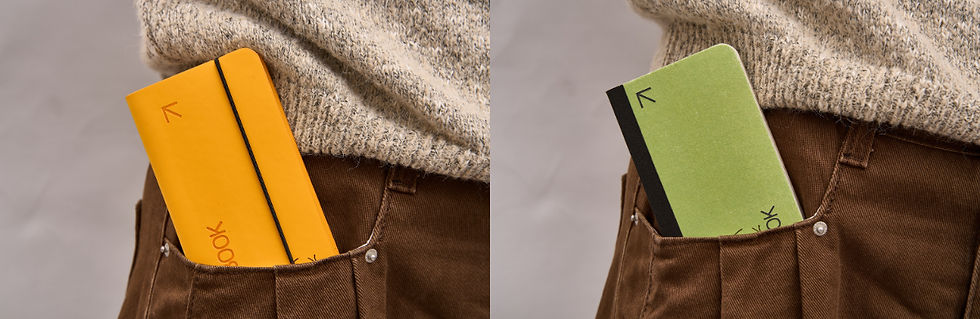
In 2026, pocket formats benefit from:
Field work and service jobs that still require quick pen-and-paper jotting
Everyday carry (EDC) culture, where a small notebook is part of the essentials
Travel journaling and sketching
Brands that combine pocket sizes with durable, water-resistant covers and elastic closures tend to perform well with commuters and outdoor users.
5. Creative and Personal Notebook Uses
Journaling, bullet journaling, and creative planning are now mainstream, not niche. Stationery market data notes that more than 1.5 billion people worldwide use stationery items such as notebooks, pens, and markers regularly, and a growing share of that usage is personal rather than strictly academic or professional.[6] Market Growth Reports+2Market Data Forecast
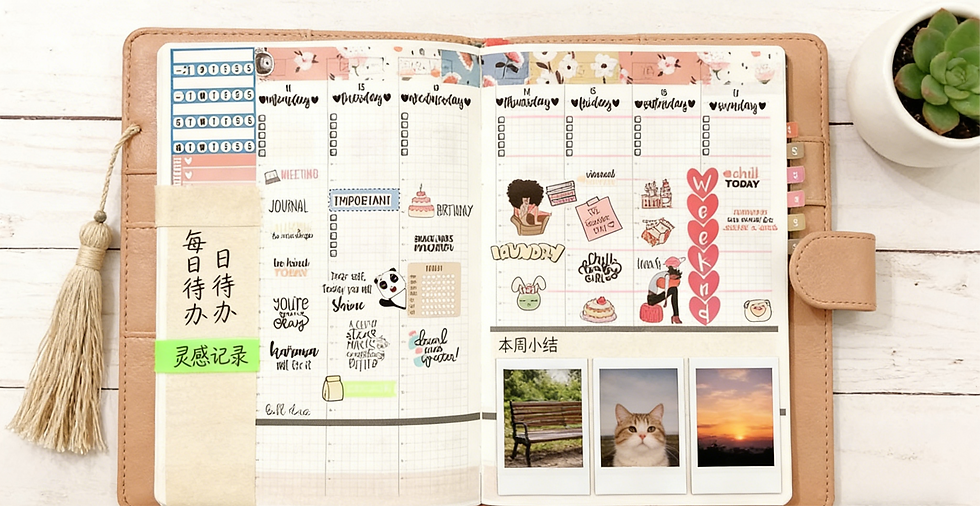
In 2026, creative uses include:
Wellness and mood-tracking journals
Goal-setting and habit-tracking notebooks
Memory books, travel logs, and mixed-media sketchbooks
This trend supports design diversity: more dotted pages, color-coded indexes, stickers, and accessories designed specifically for journaling communities.
6. Smart and Digitally Integrated Notebooks
“Smart” notebooks bridge the gap between paper and digital tools. Reports on smart and reusable notebooks highlight products that allow users to handwrite notes, scan them via apps, and store them in the cloud or convert them to searchable text.[14]

Key features gaining traction by 2026:
Reusable pages that can be wiped or re-used multiple times
Integrated QR codes or page markers for auto-tagging notes
Seamless integration with tools like Google Drive, Notion, and Microsoft OneNote
Hybrid digital-paper devices (E Ink tablets and digital notepads) that simulate pen-on-paper feel
While smart notebooks are still a smaller slice compared to traditional paper notebooks, they are one of the fastest-growing subsegments, especially among tech-savvy students and professionals.
How Brands and Consumers Can Adapt to 2026 Paper Notebook Trends
Brands and consumers both need a simple framework to navigate Paper Notebook Market Size and Trends for 2026 and make smart decisions.
For Brands and Manufacturers
Align with credible sustainability standards
Use FSC-certified or equivalent responsibly sourced paper as a baseline. FSC provides a recognized global framework for sustainable forestry and chain-of-custody certification.[9][10]
Consider implementing ISO 14001 environmental management systems to structure and demonstrate long-term environmental performance.[13][15]
Strengthen quality management
Many large notebook manufacturers now maintain ISO 9001 quality management certification, which helps them deliver consistent products and meet customer and regulatory requirements.[16] ISO+2ASQ+2
Highlighting ISO 9001 certification on B2B materials gives retailers and corporate buyers an extra level of assurance.
Invest in design and customization platforms
Build or integrate online configurators that allow customers to customize size, cover, branding, and page layouts.
Offer low-MOQ customized notebooks for small businesses, creators, and schools.
Develop tiered product lines
Core line: A4 soft-cover, spiral-bound, ruled notebooks at accessible prices.
Mid-tier: A5 journals with thicker paper, better covers, and dot-grid options.
Premium: Hardbound, design-led collections with eco-certified paper and artist collaborations.
Experiment with smart features without abandoning paper
Partner with app providers or smart-pen companies.
Add simple digital touches (page markers, QR codes) before jumping into hardware-heavy solutions.

For Retailers and Consumers
Check for certifications
Look for FSC® logos on notebooks or confirm suppliers in the FSC Certificate Database.[10]
For corporate or institutional buying, ask whether manufacturers operate under ISO 9001 (quality) and ISO 14001 (environment) frameworks.[15]
Match products to use cases
Students: A4 or B5 spiral notebooks with durable covers.
Professionals: A5 sewn or case-bound notebooks, often with numbered pages.
Creatives: Mixed media or sketchbooks with higher GSM and blank/dot-grid layouts.
Choose eco-friendly as default
Prefer recycled, FSC-certified, or eco-labeled products where possible.
Consider reusable or smart notebooks if they fit your workflow.
Balance paper and digital
Use paper notebooks for planning, deep thinking, and creative work.
Digitize important pages with scanning apps or smart notebook systems for backup and search.

Conclusion
The Paper Notebook Market Size and Trends for 2026 show a category that is mature but far from obsolete. Global market size continues to grow modestly, with students and educational institutions driving volumes, while creative, corporate, and premium segments drive value.[1][4]
The most important forces shaping 2026 are:
Sustainability – recycled paper, FSC-certified sources, and ISO 14001-backed production.
Customization and premium design – notebooks as personal objects, gifts, and brand touchpoints.
Smart integration – reusable and connected notebooks that blend analog and digital.
For brands, transparent use of recognized certifications (FSC, ISO 9001, ISO 14001) and clear communication of materials and sourcing are now essential credibility signals. For consumers, choosing notebooks that align with both personal values and practical needs is easier than ever—provided you know what to look for.
FAQs:
Q1: What is the estimated paper notebook market size in 2026?
A: Based on published forecasts showing the market at USD 76.28 billion in 2025 and USD 89.72 billion by 2030 (3.3% CAGR), the global paper notebook market in 2026 is estimated at around USD 79–80 billion.
Q2: Are paper notebooks still growing despite digital devices?
A: Yes. Multiple research firms forecast steady, positive growth for paper notebooks through the late 2020s, supported by education, corporate demand, and creative uses, even as digital tools grow.
Q3: How do I verify if a notebook manufacturer is actually FSC-certified?
A: Use the official FSC public certificate search or the FSC certificate dashboard. You can search by company name or certificate code to verify that the supplier holds a valid forest management or chain-of-custody certificate.
Q4: What is the difference between traditional and smart notebooks?
A: Traditional notebooks are fully analog. Smart notebooks either use reusable pages plus a scanning app or digital-paper devices that capture handwriting and sync it to the cloud. Reviews and buying guides show rapid growth in reusable smart notebook options that blend sustainability with digital convenience.
Q5: What certifications indicate strong quality management in notebook manufacturing?
A: Look for ISO 9001:2015 certification. It’s the international standard for quality management systems and helps manufacturers show they can consistently meet customer and regulatory requirements.
Reference
[1] Mordor Intelligence, Paper Notebook Market Size, Share & 2030 Trends Report, 2025. Mordor Intelligence+1
[2] MarketReportsWorld, Paper Notebooks Market Size, Share, 2024–2033, 2025. Market Reports World
[3] ResearchAndMarkets, Paper Notebooks Market – Global Forecast 2024–2029, 2025. PR Newswire+3Research and Markets+3Technavio+3
[4] MarketDataForecast, Global Stationery Market Size, Share & Trends, 2025–2033, 2025. Market Data Forecast+2Grand View Research+2
[5] Growth Market Reports, Recycled Notebook Market Research Report 2033, 2025. Growth Market Reports+1
[6] MarketGrowthReports, Stationery Products Market, 2024. Market Growth Reports
[7] Business Research Insights, Paper Notebooks Market Size Growth to 2033, 2025. Business Research Insights
[8] Straits Research, Recycled Paper Market Size, Trend Analysis, 2025–2033, 2025. Straits Research+1
[9] Forest Stewardship Council (FSC), Paper & Packaging – Certified Materials for a Sustainable Future. Forest Stewardship Council+1
[10] Forest Stewardship Council (FSC), Global FSC Certificate Database & FSC Search. FSC United States+2FSC Search+2
[11] Global Market Insights, Stationery Products Market Analysis (focus on personalization), 2025. Global Market Insights Inc.
[12] Fortune Business Insights, Stationery Products Market – Corporate Gifting and Premium Stationery, 2025. Fortune Business Insights+1
[13] ISO, ISO 14001:2015 – Environmental Management Systems (official overview). ABS QE+3ISO+3ISO+3
[14] WIRED & curated tech guides, Best Digital Notebooks and Smart Pens, 2025; plus vetted smart notebook product reviews. The Verge+3WIRED+3technocapture.com+3
[15] ASQ, ISO 14001 – Environmental Management Systems Standard Overview, 2025. ASQ+2ISO Certification USA+2
[16] ISO and ASQ, ISO 9001:2015 – Quality Management Systems (standard and overview), 2025. ISO+3ISO+3ASQ+3
Are you looking for a reliable manufacturer? Reach out to Lion Paper for a free quote and consultation. Let’s collaborate on creating custom writing paper products that will set your brand apart from the competition!
Company Name: Lion Paper Products
Office Address: 20th floor, Chuangyedasha Building, No. 135, Jinsui Road, Jiaxing City, Zhejiang Province, China
Factory Address: No.135, Xuri Road, Jiaxing City, Zhejiang, China
Email: Leoxia@lion-paper.com
Audit Certifications: ISO9001:2015/FSC/SEDEX SMETA/Disney FAMA/GSV/SQP

Comments