


Pantone 2026 “Cloud Dancer”: Build a Notebook & Stationery Collection


If you’re planning a 2026 launch, Pantone’s Color of the Year is a signal worth using—but only if you turn it into a system, not a one-off cover color.
Pantone’s Color of the Year 2026 is PANTONE 11-4201 Cloud Dancer, described as a versatile “structural” shade that can harmonize, adapt, and create contrast across the whole color spectrum. That wording matters, because it gives stationery brands a clear direction: use Cloud Dancer as the base that makes your whole collection feel intentional.
This article shows you how to do that—step by step—with practical tables, production notes, and supplier-ready checklists. It’s written for CEOs, heads of product, buyers, and designers who need something that works in the real world.
Quick Content Reach:
Quick Summary
What Cloud Dancer is
Cloud Dancer is Pantone’s 2026 Color of the Year (PANTONE 11-4201), a soft white-neutral meant to support other colors rather than compete with them.

What to do with it
Use it as a collection base color across notebooks, planners, memo pads, and matching accessories—then add a small number of secondary and accent colors to create SKUs that feel like a set.
Who this guide is for
Stationery brands building Spring/Summer 2026, Back-toSchool 2026, or Holiday 2026
Teams that want a cohesive “series” (notebooks + matching items + packaging)
Buyers who need repeatable specs, predictable lead times, and fewer quality surprises
Cloud Dancer Basics
Official color name and code
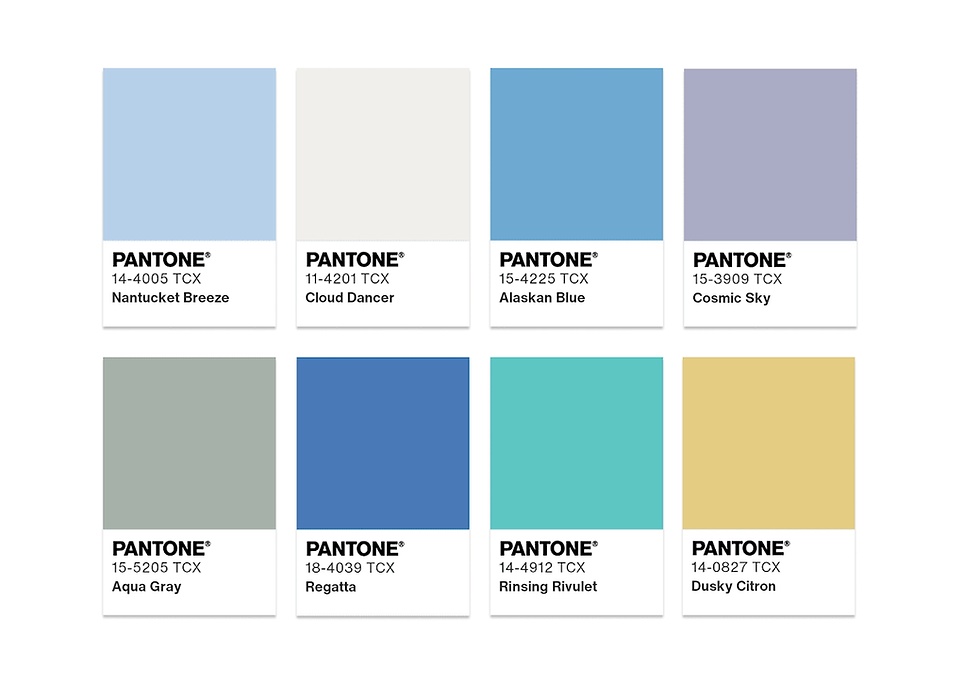
Pantone lists the 2026 Color of the Year as PANTONE 11-4201 Cloud Dancer and frames it as a flexible foundation color.
Pantone also published seven ready-to-use palettes built around Cloud Dancer. These are extremely useful when you’re mapping out a full stationery range, because they already solve the “what pairs well?” question.
Why this neutral works
Neutrals are powerful in stationery for one simple reason: they reduce risk.
They photograph well (with the right texture).
They work across seasons.
They let your brand marks, finishes, and patterns do the talking.
Pantone’s own messaging supports this idea: Cloud Dancer is meant to “scaffold” other colors and help them shine.
Why It Matters for Stationery
A single “pretty notebook” is easy to copy. A well-built collection is harder to copy—and easier to grow.
Collections also help you:
Increase average order value (sets, bundles, gift packs)
Expand shelf impact (repeatable look across multiple SKUs)
Create “drops” (limited editions without redesigning everything)
Why neutrals feel premium
In many Western markets, “quiet” design signals quality. The trick is making the neutral look intentional, not plain. That comes from CMF decisions: paper, texture, finish, and small accent details.
What buyers expect in 2026
The global stationery category remains large and competitive. One market estimate puts the stationery products market at USD 108.88B in 2024, with growth projected through 2032. Another widely cited estimate puts the market at USD 112.15B in 2023, trending upward through 2030.
In a market that big, a trend color only helps if it supports what retailers already want:
Consistency across reorders
Sustainability credentials that can be verified
Packaging that looks good online and in-store
Build a Color System
Pick your audience
Before you pick “pretty colors,” pick the buyer:
Premium minimalist (matte, soft-touch, subtle marks)
Creative / design-led (illustration, pattern, curated accents)
Student / BTS (bright accents, tougher finishes, sharper price points)
Set color roles
A collection feels unified when each color has a job:
Base: the collection anchor (Cloud Dancer)
Secondary: the “family identity” (a muted blue, warm beige, soft sage, etc.)
Accent: the detail that makes SKUs pop (foil, elastic, edge paint)
Use a simple ratio
Start simple and repeat it across SKUs.
Table: Color roles and usage ratio (starter model)
Color Role | Suggested Use | Where It Shows Up | Why It Works |
Base (Cloud Dancer) | 50–70% | Covers, sleeves, box base, inserts | Strong “collection look” |
Secondary | 20–40% | Spines, pattern blocks, inner covers | Differentiates series lines |
Accent | 5–10% | Foil stamp, elastic band, edge paint | Creates memory + premium cue |
If you want fast pairing ideas, Pantone’s published Cloud Dancer palettes are a good starting point.
Plan Your SKU Set
Start with 5–12 SKUs
For most EU/US stationery brands, a clean first launch is:
2–3 notebook formats (A5 + B6 + pocket or hardcover + softcover)
1 planner
1 memo / notepad
1–2 accessories (pencil case, sticker set, bookmark, pen)
Create a SKU ladder
A “ladder” lets buyers trade up:
Core: Cloud Dancer base + simple mark
Premium: upgraded cover stock + soft-touch or emboss
Limited: special accent color + foil + gift-ready packaging
Keep naming consistent
Collections get messy when names are random. Use a repeatable naming rule:
Collection name (Cloud Dancer Series)
Format (A5 Notebook)
Sub-colorway (Sage Accent / Ink Accent)
Finish (Matte / Soft-touch / Foil)
Table: SKU matrix example (collection-ready)
Product | Colorway A | Colorway B | Accent / Finish | Best For |
A5 Notebook | Cloud Dancer base | muted sage | blind emboss + matte | premium minimal |
Weekly Planner | Cloud Dancer base | warm beige | gold foil title | gifting + lifestyle |
Memo Pad | Cloud Dancer base | soft blue | spot UV pattern | desk + office |
Pencil Case | matching tone | matching tone | woven label | BTS + sets |
Gift Set | unified base | 2–3 variants | sleeve + insert | retail display |
CMF Choices (Color, Material, Finish)
Best materials for Cloud Dancer
Cloud Dancer “wins” when it has texture. Consider:
Textured cover paper (linen, laid, felt)
Soft-touch lamination (if fingerprint-resistant)
High-opacity inner paper (less show-through)
Best finishes for white tones
White tones can look flat if you only rely on ink. Finishes do the heavy lifting:
Blind emboss (subtle, premium)
Foil stamp (small, controlled accents)
Edge paint (great for sets)
Spot UV (pattern-on-white works well when the base is calm)
Common risks to avoid
Yellowing (paper choice + storage + coating)
Fingerprints (soft-touch without anti-fingerprint treatment)
Color drift (different paper batches, inconsistent coating, weak QC)
Table: Finish comparison (real-world view)
Finish | Look & Feel | Best Use | Common Risk | Simple Tip |
Matte lamination | clean + modern | mass retail | scuffing | add rub test in sampling |
Soft-touch | premium + velvety | premium line | fingerprints | request anti-fingerprint option |
Foil stamping | sharp + giftable | logos/titles | misalignment | approve positioning via mockup |
Emboss/deboss | tactile + quiet | minimal covers | stock sensitivity | use thicker cover stock |
Edge paint | “set” signal | premium sets | chipping | add abrasion test |
From Design to Production (7 Steps)
This is the part most trend articles skip. But it’s the part that saves you money.
Step 1 — Write the spec
Your spec should include:
Size, page count, ruling
Cover stock, inner paper GSM
Print method and tolerances
Finish details (foil, emboss, lamination)
Packaging (band, sleeve, box, barcode)
Step 2 — Make a mockup
Request a physical mockup early. White tones are hard to judge on screens.
Step 3 — Approve samples
Test samples in real conditions:
Under retail lighting
Under daylight
Next to your other SKUs
Step 4 — Run a pilot batch
Pilot runs catch issues that “one perfect sample” hides:
scuffing
glue/adhesive marks
wrap alignment
batch-to-batch paper variation
Step 5 — Scale production
Lock down:
paper batch plan
finish standard
defect standard (what counts as acceptable)
Step 6 — Pack as a set
If you’re selling a series, plan set packing early:
inserts
sleeves
gift boxes
multi-SKU carton logic
Step 7 — Final QC
Do final QC to your defect standard, not “looks fine.”
Example: one partner, full set
Here’s a simple truth: collections fail when parts don’t match. The notebook is warm-white. The pencil case is cool-white. The sleeve is a different white again. The set looks accidental.
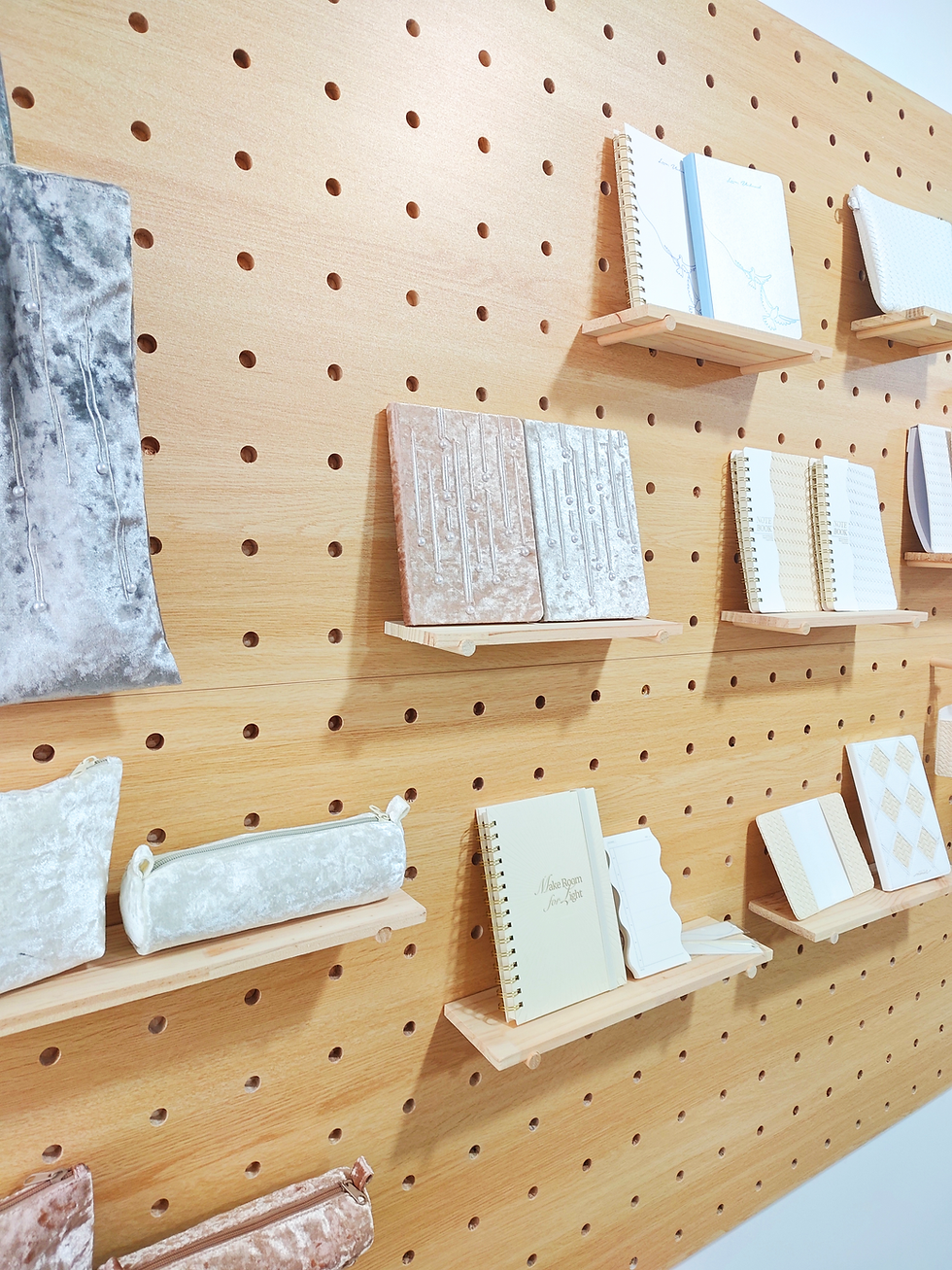
That’s why many brands prefer one partner to handle the core notebook plus matching items, using the same CMF plan across SKUs.
At Lion Paper Products, this is how we usually approach a collection build:
We lock the CMF spec first (paper + finish + touch + “white tone” target).
We validate it through sampling + a pilot batch before scaling.
We keep a shared QC checklist across the notebook and the matching SKUs, so “Cloud Dancer” stays consistent from product to packaging.
We have rich experience in manufacturing and supplying stationery kit and bundle series. Click here to find our stationery kit series!
If you’re building a 2026 series and want your set to look like a set, that workflow matters more than the trend itself.
Supplier Readiness Checklist
Can they handle multi-SKU?
Ask:
Can you produce notebooks + matching items under one project plan?
Can you pack as sets (sleeves, inserts, gift boxes)?
Can you support rolling reorders?
Can they match CMF?
Ask:
Do you track paper batches and coatings?
How do you manage color consistency for neutrals?
Can you show previous “white tone” projects?
Do they have proof docs?
For EU/US brands, these documents reduce buyer friction:
FSC Chain of Custody (CoC) if you want verified responsible sourcing. FSC explains that CoC enables use of the FSC label because the supply chain meets traceability requirements.
ISO 9001 if you want a recognized quality management system. ISO states ISO 9001 is for organizations aiming to meet customer and regulatory requirements and improve customer satisfaction.
amfori BSCI (or similar) if retailers require social compliance. amfori describes BSCI as a system to identify, assess, verify, and mitigate social risks at production sites.
Numbered checklist you can copy into your RFQ
Spec sheet (materials, GSM, finishes, packaging)
Sample plan (what you’ll test)
Pilot batch plan (quantity + timeline)
QC standard (defect list + tolerance)
Compliance docs (FSC/ISO/BSCI if needed)
Reorder plan (lead time + batch control)
How we use this at Lion Paper Products
We run the same checklist internally because it keeps projects clean. It also makes communication faster. When the spec is clear, sampling is tighter, and reorders go smoother.

Sustainability & Compliance
FSC basics
If you want to print “FSC” on packaging, you need more than good intentions. FSC explains that chain-of-custody certification supports traceability and enables organizations to use FSC trademarks on finished products.
What to ask for
Ask for:
Certificate number
Scope (what products it covers)
Validity dates
Trademark use rules (especially if you’ll print logos)
Third-party certifiers also outline how FSC CoC supports traceability claims for paper products.
Safe eco claims
Simple rule: say only what you can prove. If your product is FSC-certified, say that. If it’s “recyclable,” confirm local recycling acceptance for the materials and coatings.
Make the Collection Look Premium
E-commerce photo tips
Cloud Dancer needs texture, shadow, and contrast.
Use soft side light to show texture.
Add one accent prop in your secondary colorway.
Keep backgrounds clean, but not pure white if your product is near-white.
Packaging that sells
A collection feels premium when packaging matches the system:
Sleeve in Cloud Dancer base
Secondary color on the spine
Accent foil only on key text
Repeatable placement across every SKU
Short copy ideas
Use simple language. Let the product do the work.
“Clean base. Quiet details.”
“Designed to mix and match.”
“A calm set for busy days.”
“Soft neutral, strong structure.”
“Made as a full series—not a one-off.”
Conclusion
Cloud Dancer is not a magic color. It’s a useful base. And in stationery, a good base can make your whole line feel stronger.
If you want a simple action plan:
Use Cloud Dancer as your base
Build a three-role palette (base / secondary / accent)
Launch a tight SKU set with a clear ladder
Lock your CMF spec early
Protect the look with sampling + pilot run + QC
If you’re building a 2026 collection and want it to feel consistent from notebook to packaging, Lion Paper Products can help you turn your palette into a manufacturable, reorder-friendly set. The easiest next step is to send a short RFQ with your target SKUs, finishes, and launch date—then we’ll respond with a spec checklist and sampling plan.
—Leo Xia, CEO, Lion Paper Products
You design, we deliver.
FAQs:
Q1: Will Cloud Dancer look boring?
Not if you treat it as a base color and add texture and finish. White tones look premium when the material and finish are intentional.
Q2: Which finish looks best with Cloud Dancer?
Blind emboss + matte lamination is a strong “quiet luxury” combo. Foil works too, but keep it minimal.
Q3: How many SKUs should I launch first?
Start with 5–12 SKUs. That’s enough to look like a collection without creating inventory pain.
Q4: How do I keep colors consistent across notebooks and accessories?
Use one CMF spec, control paper batches, and approve a pilot batch. Neutrals drift more than you think.
Q5: What should I test in samples?
Rub resistance, scuffing, fingerprint marks (if soft-touch), edge paint durability, and “white tone” under different lighting.
Q5: Which certifications matter for EU/US buyers?
Common asks include FSC CoC for paper sourcing traceability, ISO 9001 for quality systems, and BSCI-style social compliance frameworks depending on your retail partners.
Reference
Pantone: Color of the Year 2026 (PANTONE 11-4201 Cloud Dancer).
Fortune Business Insights: Stationery products market size and forecast.
Grand View Research: Stationery products market estimate and outlook.
FSC: Chain of custody certification and paper/packaging guidance.
ICC: Incoterms® 2020 official resource (useful if you import globally).
Are you looking for a reliable manufacturer? Reach out to Lion Paper for a free quote and consultation. Let’s collaborate on creating custom writing paper products that will set your brand apart from the competition!
About Lion Paper
Company Name: Lion Paper Products
Office Address: 20th floor, Chuangyedasha Building, No. 135, Jinsui Road, Jiaxing City, Zhejiang Province, China
Factory Address: No.135, Xuri Road, Jiaxing City, Zhejiang, China
Email: Leoxia@lion-paper.com
Audit Certifications: ISO9001:2015/FSC/SEDEX SMETA/Disney FAMA/GSV/SQP


Comments