


A Guide to Lamination: Matte vs Glossy Finishes in Stationery

Updated: Oct 26, 2025
Listen This Contents Via a Short Podcast:
Lamination is the process of bonding a clear plastic film over printed paper to protect it from dirt, moisture and wear. Matte lamination has a non‑reflective, velvet‑like surface that offers an understated, sophisticated look and reduces glare, while gloss lamination provides a shiny finish that makes colors vibrant and eye‑catching. Choosing between these two finishes depends on factors such as appearance, durability, readability and budget. This guide compares matte versus glossy finishes in stationery products and offers expert tips for selecting the right lamination for your brand.
Quick Content Reach:
In the world of custom stationery, lamination may seem like a small detail, yet it can dramatically change how your notebooks, planners, packaging and promotional materials are perceived. As the CEO of Lion Paper Products, I’ve spent more than 20 years working with buyers across the United States, Europe, Asia and Australia, helping them select the right finishes for their products. Lamination isn’t merely a plastic cover; it is a technical process that bonds a thin film to both sides of the paper for added strength, water‑resistance and a polished appearance. Understanding the nuances between matte lamination and glossy lamination allows buyers to make informed decisions that align with brand identity, product functionality and budget. In this article, I’ll explore the science behind lamination, compare matte and glossy finishes from multiple angles and share insights from our factories in China, Cambodia and South Korea.
What Is Lamination and Why Does It Matter?
Lamination refers to the process of bonding a clear, plastic film onto printed paper to enhance its durability and appearance. Heat and pressure secure the film to the paper’s surface, creating a barrier against stains, moisture, fingerprints and tears. Laminated materials are widely used in items that are frequently handled—menus, price lists, maps, membership cards and, of course, notebooks and planners. The laminated film comes in various thicknesses measured in mils (one‑thousandth of an inch). Thicker films add rigidity for products like covers and signage, while thinner films preserve flexibility for folding items such as brochures and calendars. By investing in lamination, you’re not just adding a shiny (or velvety) surface; you’re protecting your printed designs from abrasion and environmental hazards and prolonging the product’s lifespan. For B2B buyers who rely on consistency and longevity in wholesale shipments, lamination provides peace of mind and reduces the cost of replacing damaged goods.
The Role of Lamination in Stationery Products
In stationery, lamination does more than preserve ink; it influences tactile feel, readability and perceived value. Matte lamination gives covers a soft, velvety touch that feels luxurious and professional, while gloss lamination creates a polished, mirror‑like surface that makes colors pop. Soft‑touch films, a variation of matte lamination, add a velvet texture that appeals to the sense of touch and enhances the customer experience. The choice of finish can communicate subtle cues about your brand: matte suggests sophistication and understatement; gloss conveys energy and vibrancy. For notebooks and planners designed for everyday use, lamination improves durability by resisting spills, scuffs and fingerprints. In packaging, laminated boxes resist moisture and dust, ensuring that products arrive intact and appealing. Understanding these functional and aesthetic benefits lays the groundwork for comparing matte versus glossy finishes in detail.
Matte Lamination: Characteristics, Benefits and Drawbacks
Matte lamination is characterised by a smooth, non‑reflective surface. Unlike glossy films that reflect light, matte absorbs it, giving printed material a soft, understated appearance. A matte laminated notebook cover feels velvety and warm to the touch, conveying elegance and professionalism. Because of its low‑glare quality, matte lamination improves readability in bright environments and under fluorescent lights. This makes it ideal for text‑heavy materials like business cards, letterheads and planners. Matte finishes are also fingerprint‑resistant, meaning smudges and dirt are less noticeable, and the paper provides a better writing surface—pens and pencils glide smoothly without ink smudging. In high‑end packaging, matte lamination signals quality and sophistication.
Despite these benefits, matte lamination has some drawbacks. Colors can appear slightly muted because the non‑reflective film absorbs light rather than reflecting it. Dark tones may look flatter than on glossy surfaces. Matte finishes are also more susceptible to scuffing; heavy handling can create visible scratches over time. Additionally, matte lamination generally costs more because the film is manufactured differently and requires extra processing steps. As a buyer, you should weigh the aesthetic appeal and superior tactile experience against these limitations when deciding whether matte is right for your product line.
Common Applications of Matte Lamination in Stationery
Professional business cards and corporate identities – Matte cards convey sophistication and minimize glare, making contact information easy to read. They suit consultants, lawyers, designers and anyone seeking an understated look.
Invitations and formal letterheads – For formal events like weddings or corporate events, matte invitations offer a refined feel without being flashy, while letterheads maintain clarity and professionalism.
Notebooks, journals and planners – The smooth, non‑reflective surface makes writing comfortable and reduces smudging. Matte lamination is particularly popular for premium diaries and planners used in professional settings.
Luxury packaging – Matte lamination on gift boxes or bespoke packaging suggests quality and pairs well with foil stamping or embossed elements. For high‑end stationery gifts, matte exudes exclusivity.

Glossy Lamination: Characteristics, Benefits and Drawbacks
Glossy lamination features a shiny, reflective surface that enhances color saturation and visual impact. It creates a polished finish that catches the eye from across the room and makes images and graphics appear crisp and vibrant. Because gloss film reflects light, it adds depth to printed designs, making them stand out. The gloss coating also adds an extra layer of protection against dirt, dust and moisture, making it easy to wipe clean. For products with high‑resolution photographs or bold graphics, gloss lamination provides maximum color vibrancy and a professional appearance.
However, gloss lamination has its own drawbacks. The reflective surface can create glare under strong lighting, making text harder to read. Glossy finishes show fingerprints, smudges and scratches more readily than matte, requiring frequent cleaning to maintain a pristine look. Writing on glossy surfaces is challenging; ink smudges or takes longer to dry, which is inconvenient for personalized stationery or note cards. In terms of cost, gloss lamination is usually cheaper than matte because the film is easier to produce. For large print runs or budget‑conscious projects, gloss can be a cost‑effective choice.
Common Applications of Glossy Lamination in Stationery
Greeting cards and invitations – Glossy finishes make holiday cards, birthday invitations and wedding announcements pop with vibrant colors, capturing recipients’ attention.
Stickers and labels – For promotional labels or product decals that require bright colors and crisp images, gloss lamination ensures designs stand out and remain durable .
Postcards and brochures – Marketing materials like brochures and postcards benefit from gloss because the sheen enhances photos and illustrations, making them eye‑catchingsyloon.com.
Children’s books and illustration‑heavy stationery – Gloss lamination amplifies illustrations and allows easy cleaning, making it ideal for picture books and school supplies.

Comparing Matte vs Glossy Lamination
The decision between matte lamination and gloss lamination isn’t merely aesthetic; it involves multiple performance factors. Below is a comparison of key attributes buyers should consider:
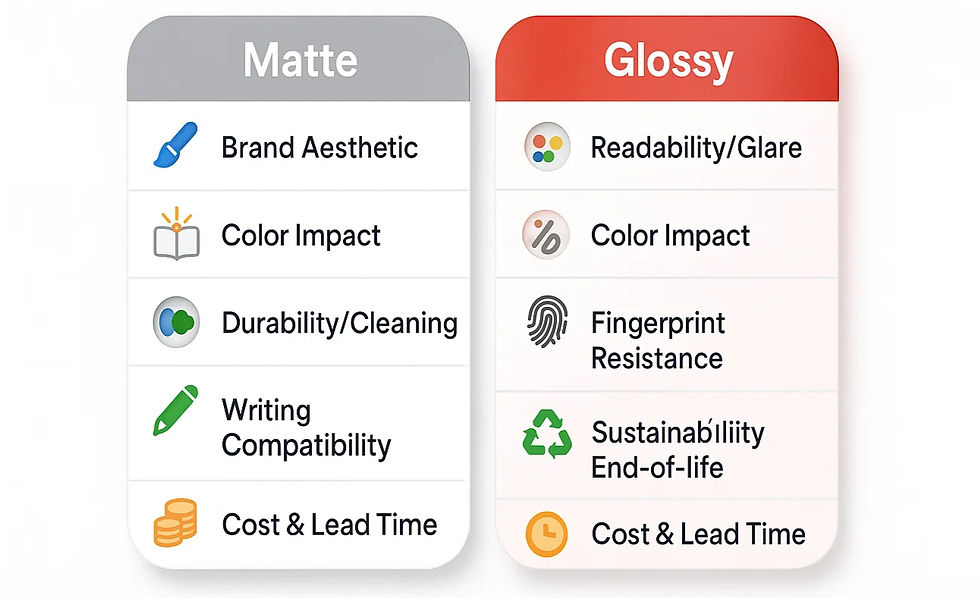
Attribute | Matte lamination | Gloss lamination |
Appearance & feel | Offers a subtle, non‑reflective finish that feels soft and sophisticated. Colors may be muted, but the result looks upscale. | Provides a shiny, reflective surface that makes colors vivid and eye‑catching. The finish feels slick and contemporary. |
Readability & writing | Excellent readability in bright light; no glare; ideal for text‑heavy designs. Allows users to write smoothly with pens and pencils without smudging. | Can create glare that makes text harder to read. Writing is difficult; ink smudges or dries slowly. |
Durability | Resistant to fingerprints and smudges; scratches less visible but the surface can wear over time. | More durable against water, dirt and general wear, but fingerprints and scratches are more noticeable. |
Applications | Best for business cards, notebooks, planners, luxury packaging and any product requiring a premium, understated look. | Ideal for promotional materials, stickers, labels, children’s books and any design where high impact and vibrant colors are desired. |
Cost | Usually more expensive due to film production and processing. Often reserved for high‑end stationery and premium projects. | Typically cheaper and more budget friendly; suitable for large print runs or cost‑sensitive projects. |
This table underscores how each finish has strengths and weaknesses, so your choice should align with the intended use and your brand’s aesthetic. For example, a fashion planner targeting young professionals might benefit from matte lamination to convey elegance, while a children’s notebook for art projects would shine—literally—with a glossy finish.
Factors to Consider When Choosing a Lamination Finish
Selecting between matte lamination and gloss lamination requires a holistic view of product requirements. Here are key considerations B2B buyers should weigh:
1. Lighting Environment and Display Conditions
Where will customers use or view your stationery? Matte lamination excels in brightly lit environments like retail stores or offices because it reduces glare. Glossy finishes are suitable in settings where controlled lighting highlights vibrant colors, such as trade shows or product displays. If your stationery will be displayed under spotlights or direct sunlight, matte may enhance visibility.
2. Handling Frequency and Durability Requirements
Consider how often the product will be handled. Glossy films offer superior protection against moisture and dirt and can be wiped clean easily. This makes them appropriate for menus, children’s materials and planners used daily. Matte finishes hide fingerprints and smudges but can show wear on edges over time, so they are better suited to products with moderate handling or those that will be stored carefully.
3. Design Elements: Text vs Images
The content of your design influences the finish. Text‑heavy materials benefit from matte lamination because the absence of glare improves readability. Conversely, photo‑rich or graphic‑heavy designs come alive with gloss lamination, which enhances vibrancy and sharpness. If your design includes both, you might consider combining finishes—for example, using matte for the background and a spot‑gloss UV varnish on images or logos to create contrast.
4. Brand Positioning and Customer Perception
Finish communicates brand identity. Matte lamination suggests sophistication, subtlety and premium quality, appealing to professionals and luxury consumers. Gloss conveys energy, innovation and vibrancy, which suits youthful brands or products aimed at drawing attention. Aligning the finish with your brand’s personality enhances customer trust.
5. Cost and Budget
Matte lamination usually commands a higher price because of the specialized film and additional processing. If budget is tight or you’re producing large volumes, glossy lamination may provide a cost‑effective solution. However, small orders or premium products can justify the extra expense of matte for its luxurious feel.
6. Environmental and Sustainability Considerations
Traditional lamination uses plastic films that can complicate recycling because the paper and plastic layers are difficult to separate. If sustainability is central to your brand, look for eco‑friendly lamination films made from biodegradable materials or opt for water‑based varnish coatings that provide some protection without bonding plastic to paper. Another strategy is to design packaging that can be reused, thereby extending its lifecycle and reducing waste. At Lion Paper Products, we comply with FSC, BSCI and SEDEX certifications and continuously invest in sustainable materials to reduce environmental impact. Ask your supplier about their environmental policies and whether they offer recyclable or compostable lamination options.
Advanced Finishing Options and Current Trends
While matte and gloss lamination are industry standards, advances in finishing technology allow for greater customization. Soft‑touch lamination combines the elegance of matte with a velvety texture that evokes luxury and enhances tactile experience. It is fingerprint‑resistant and pairs well with foil stamping or embossing on notebook covers. Another trend is spot UV coating—applying a glossy UV varnish to specific areas on a matte surface. This creates striking contrasts and draws the eye to logos or key design elements. Foil stamping and embossing can also be layered over matte lamination to add metallic or raised details, further elevating perceived quality. By combining these techniques with high‑quality lamination, brands can craft unique, multi‑sensory experiences that set their stationery apart.

Expert Tips for Stationery Buyers
Based on my experience managing multiple factories and working with B2B clients worldwide, here are actionable tips for choosing lamination:
Request physical samples: Photos and digital proofs can’t fully convey a finish’s tactile qualities. Always ask your supplier for laminated samples of matte, gloss and soft‑touch finishes. Evaluate how the material feels in your hand, how colors reproduce under various lighting conditions and how easily you can write on the surface.
Consider the end user: Is your customer a student, a professional or a gift recipient? Students might prefer glossy covers on art notebooks because of vibrancy and easy cleaning, while professionals may value matte or soft‑touch finishes for their subtlety and writing comfort.
Match finish to product function: Notebooks meant for daily note‑taking should have a finish that accepts pen ink without smudging (typically matte). Promotional materials or limited‑edition art books can benefit from gloss to maximize visual impact.
Balance cost with perceived value: Evaluate whether the price difference between matte and gloss will translate into higher perceived value and margin. For premium products, investing in matte lamination can justify a higher retail price; for bulk giveaways, gloss may yield a better return on investment.
Ask about sustainability: Inquire whether your supplier offers eco‑friendly laminates or recyclable coatings. Communicating your environmental commitments to customers can differentiate your brand.
Plan for customization: If your design includes embossed logos, foil accents or spot UV, discuss how the lamination finish will interact with these elements. Some combinations may require specialized techniques or adhesives, which could affect lead times.
Collaborate with experienced partners: Working with a manufacturer that has integrated R&D, sample production and quality inspection ensures consistent results. At Lion Paper Products, our sample makers can produce customized prototypes within 5–7 days, allowing you to test finishes quickly and efficiently.
Sustainability Spotlight: Navigating Lamination’s Environmental Impact
Plastic‑based lamination poses environmental challenges because the film is bonded to paper and is difficult to recycle. As consumers become more eco‑conscious, brands must find ways to reduce waste without compromising quality. Here are strategies you can implement:
Choose eco‑friendly films: Some manufacturers now offer recyclable or biodegradable lamination films derived from plant‑based materials. These films can sometimes be separated from paper in industrial recycling facilities.
Use water‑based coatings: For products where full lamination isn’t necessary, water‑based varnishes provide a protective layer that can be recycled more easily than plastic films.
Design for reuse: Create packaging and stationery that customers want to keep. For example, a matte laminated gift box can be repurposed as a storage container, extending its life and reducing waste.
Communicate your values: Highlight certifications such as FSC, BSCI or Sedex to assure buyers that your products adhere to ethical and sustainable standards.

At Lion Paper Products, we conduct annual material tests (e.g., California Proposition 65, CPSIA) to ensure compliance and safety.
Conclusion
Deciding between matte lamination and gloss lamination is a strategic choice that affects your stationery’s appearance, durability, usability and cost. Matte offers a refined, tactile experience with excellent readability and a premium feel; gloss delivers vibrant colors, durability and budget efficiency. By considering factors like lighting, handling, design elements, brand positioning, budget and sustainability, you can select the finish that best aligns with your project goals. Remember that lamination is just one part of the finishing story—combining techniques such as soft‑touch film, spot UV and foil stamping can further elevate your product. As a long‑time partner to retailers and brand owners worldwide,
Lion Paper Products is ready to guide you through these choices and deliver high‑quality stationery that reflects your brand values. Reach out today to explore how the right lamination can transform your next collection.
—Leo Xia, CEO, Lion Paper Products
You design, we deliver.
FAQs:
Q1: Are glossy finishes more durable than matte finishes?
A: Glossy lamination generally offers better protection against moisture and physical damage but shows fingerprints and scratches more easily.
Q2: Can I use glossy finishes for text‑heavy stationery?
A: Glossy finishes can create glare that hampers readability; matte finishes are better for text‑heavy designs.
Q3: Is soft‑touch lamination different from matte?
A: Yes; soft‑touch lamination provides a velvety texture and premium feel beyond standard matte.
Q4: What is the standard thickness for lamination?
A: Lamination thickness is measured in mils; common thicknesses range from 1.3 mil for single‑sided covers to 3 mil for flexible pieces or higher for rigid items.
Are you looking for a reliable manufacturer? Reach out to Lion Paper for a free quote and consultation. Let’s collaborate on creating custom writing paper products that will set your brand apart from the competition!
About Lion Paper
Company Name: Lion Paper Products
Office Address: 20th floor, Chuangyedasha Building, No. 135, Jinsui Road, Jiaxing City, Zhejiang Province, China
Factory Address: No.135, Xuri Road, Jiaxing City, Zhejiang, China
Email: Leoxia@lion-paper.com
Audit Certifications: ISO9001:2015/FSC/SEDEX SMETA/Disney FAMA/GSV/SQP


Comments