


The Complete Guide to Hardcover Notebook Binding Types

Smyth-sewn (sewn) case binding—most durable, strong page retention, and naturally lay-flat. Need 180° use? Choose lay-flat case or concealed Wire-O. On a budget or tight timeline? Perfect binding is clean and economical but less durable/flat. For thick books pick sewn; for planners/manuals choose Wire-O/spiral. Decide by use case, page count, paper gsm, and budget.
Quick Content Reach:
What Is a Hardcover Notebook & How Binding Works
When someone picks up a premium notebook their first impression often comes from the spine and cover. A hardcover notebook is created by sewing or gluing pages into a rigid case made from greyboard or paperboard wrapped in paper, fabric or leather. The manufacturing process typically begins by gathering signatures – small groups of folded sheets – and either sewing or gluing them together. This book block is then attached to endpapers, forming a hinge that connects it to the hard cover. The result is a durable product that protects its pages from wear and tear while conveying a sense of quality and permanence.
From a buyer’s perspective, binding isn’t just cosmetic; it determines how the notebook opens, how flat it lies, how long it lasts and even how many pages it can contain. As someone who has spent decades helping brands source custom paper notebooks and planners, I’ve learned that the binding method is one of the most critical decisions you’ll make when bringing a product to market. In the following sections I’ll break down every major binding style used for hardcover notebooks, explain how each one is manufactured, outline the pros and cons and share tips on when to use each method. Whether you’re designing journals for a retail chain, planners for corporate gifts or sketchbooks for artists, understanding binding will help you deliver a product that your customers love.

Have specs ready? Send size, page count, paper GSM, and use case—we can recommend the right notebook binding and cost drivers. Email: Leoxia@lion-paper.com WhatsApp: +86 137 5075 6354. Quote Now!
All Common Binding Types for Hardcover Notebooks
Hardcover notebooks can be bound in several ways. Below I’ll explore the most common methods – from traditional sewn binding to modern coil‑in‑case designs – and explain how each performs in terms of aesthetics, durability and cost.
Sewn Binding
Sewn binding (also called Smyth‑sewn or section‑sewn) is the gold standard for longevity. Here signatures of folded sheets are stitched together using strong thread, creating a flexible book block that is later glued into a cover. Because the signatures are sewn rather than just glued, the spine retains a gentle arch instead of a rigid block. This flexibility allows sewn books to lie flat without forcing the spine, making them ideal for scientific lab notebooks, high‑end journals and sketchbooks where a smooth writing surface is essential. The visible stitches in the center of each signature are a mark of craftsmanship and can even signal tampering in research settings, since tearing pages disrupts the entire signature.
Advantages:
Durability: Sewn notebooks withstand years of use; thread and adhesive work together to prevent pages from falling out.
Lay‑flat: The flexible spine allows the book to open fully without cracking, making it comfortable for writing or drawing across the gutter.
Premium feel: The visible stitches and rounded spine convey quality and authenticity; this is often expected for archival journals or luxury brands.
Disadvantages:
Higher cost: Sewing sections is labour‑intensive, so sewn books are more expensive than adhesive options.
Longer production time: The sewing process adds days to production, which may be an issue for rush orders.
Limited customization in spine thickness: Because signatures must be a certain size, page counts need to fit standard configurations.
Best uses: Premium journals, archival notebooks, sketchbooks, lab notebooks and any product where longevity and lay‑flat capability matter most.
Adhesive Case Binding (Standard Hardcover)
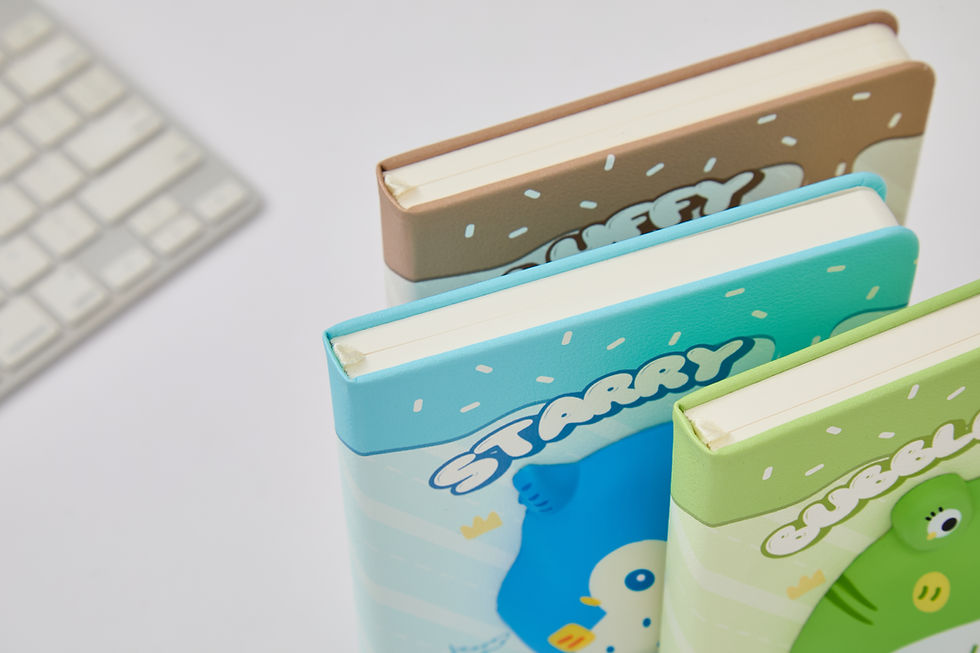
Case binding (sometimes called “hardcover binding”) is the classic technique used for most hardcover books and many premium notebooks. In this method, folded signatures are sewn or glued into a book block and attached to a hard case made of greyboard wrapped with paper, fabric or leather. The binding process involves sewing the pages into signatures, gluing them to a spine and then attaching this block to the rigid cover using endpapers. This combination of sewing and gluing ensures that pages are firmly anchored, giving the notebook a professional appearance and long service life.
Advantages:
Excellent durability: Case‑bound books are extremely durable and can withstand frequent handling.
High‑quality appearance: The hard cover gives the notebook a weighty, premium feel that conveys quality.
Protective cover: Rigid boards protect pages from bending and moisture; covers can be wrapped in paper, fabric or leather for branding.
Customization: You can use foil stamping, embossing or spot UV to create visually striking covers.
Disadvantages:
Cost and weight: Case binding is more expensive than perfect binding and the finished book is heavier. Increased shipping costs are a consideration for large orders.
Bulkiness: Thick covers make the notebook bulkier, which might not appeal to users who prefer lightweight planners.
Best uses: Premium journals, photo books, corporate gifts and notebooks intended as long‑lasting keepsakes. Customers expect case‑bound products to feel luxurious, so this method is suitable for high‑end brands.

Lay‑Flat Case (Otabind & Notch Binding)
Lay‑flat case binding aims to combine the premium feel of a hard cover with the convenience of a flat opening. Two common techniques are Otabind and notch binding. With Otabind, signatures are sewn and glued together with a strip of flexible material between the spine and the cover. This creates an “open spine” that allows the pages to flex away from the case, so the book can open 180° without damaging the spine. Notch binding works similarly but uses deep notches cut into the spine to hold glue more effectively. These lay‑flat methods are often used for cookbooks, manuals and design portfolios that need to stay open hands‑free. They typically cost more than standard perfect binding but less than full Smyth‑sewn case binding.

Concealed Wire‑O Binding
Concealed wire‑O (also called hidden wire‑O) offers the lay‑flat functionality of mechanical binding while maintaining the clean exterior of a case‑bound book. The pages are punched and bound with a wire‑O (twin loop) mechanism, then the bound block is cased into a hard cover. The spine hides the metal loops, so from the outside the notebook looks like a traditional hardback. This hybrid method provides a flat opening and 360° page rotation, making it popular for planners and presentation books. Wire‑O books lay completely flat, allow full 360‑degree page turning and deliver a sleek, professional appearance. However, the metal wires can be bent if mishandled and wire‑O binding is generally more expensive than plastic coil alternatives. Concealing the wire within a case further increases the cost but results in a premium product.

Spiral/Coil in Hard Cover
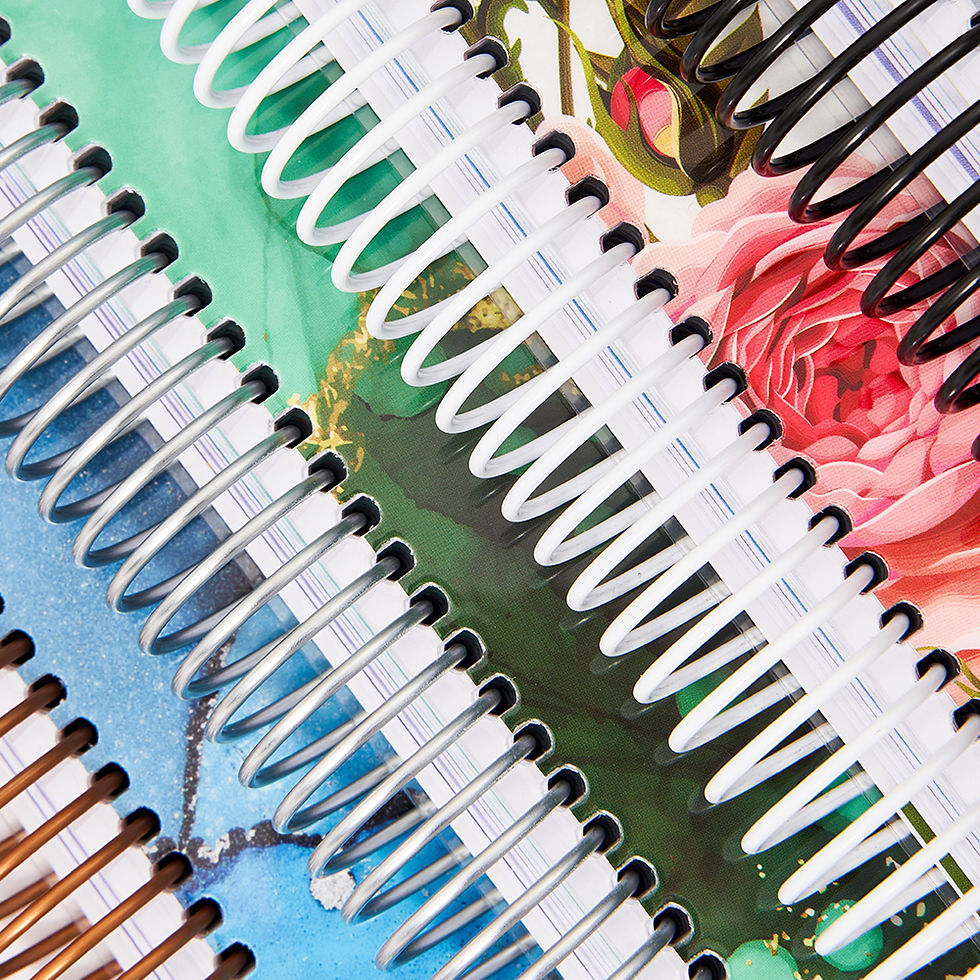
For a more contemporary look, some manufacturers insert a plastic or metal coil into a hard cover. The process is similar to standard spiral binding: pages are punched and threaded with a continuous coil, but the coil is housed between two rigid boards. Spiral‑bound books use a flexible plastic filament that is highly durable and springs back into shape if crushed. Pages can turn 360° and lie completely flat, allowing the book to fold back on itself for easy note taking. Pros include durability, absence of sharp edges and cost‑effectiveness. On the downside, spiral coils may not align pages perfectly across spreads and the look is less formal. In a hard cover, the coil is protected but still visible when the book is open, offering a balance between function and style.
Perfect Binding (Softcover in a Hard Case)
Perfect binding is commonly used for paperback books and some budget notebooks. It involves gluing single sheets or signatures directly to a wrap‑around cover using hot melt adhesive. In notebooks marketed as hardcovers, perfect binding is sometimes combined with a case to create a hybrid product: pages are glued rather than sewn, then the glued block is cased into a rigid cover. Perfect binding is economical, quick to produce and produces a clean, square spine. However, because the pages are only glued, the binding is less durable and does not lay flat.
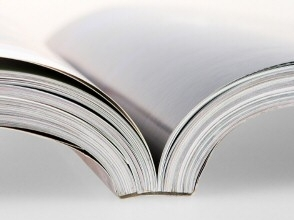
A more premium variation is sewn perfect binding, where pages are sewn into signatures before being glued to the spine. This method increases durability and allows the book to lie flatter. The sewn thread provides additional support, making the book more resistant to wear and tear. The trade‑off is higher cost and longer production time, so this hybrid binding is best suited for high‑quality publications.
Binding Comparison Table
Below is a concise comparison of the main binding types used in hardcover notebooks. The maximum page counts are approximate and depend on paper thickness; they are included to help you plan your project. Single‑sided pages were converted into page counts assuming 80–90 gsm stock.
Binding Type | Construction & Features | Pros | Cons | Typical Maximum Page Count* |
Sewn (Smyth‑sewn) | Signatures stitched together; often rounded spine; glued into case | Lay‑flat, extremely durable | More expensive; limited to signature increments | 500–600 pages (depending on thickness) |
Case/Hardcover | Signatures sewn or glued; attached to rigid boards via endpapers | Premium appearance; durable; protects pages | Heavier & costlier | ~520 pages (hardback book maximum) |
Lay‑Flat Case | Sewn or glued block with flexible strip; case allows spine to separate | Opens 180°; ideal for cookbooks/manuals | Higher cost than standard perfect binding | 300–400 pages |
Concealed Wire‑O | Twin‑loop wire hidden in a case; pages punched | Lays completely flat; professional look | Wires can bend; expensive | ~300–380 pages (wire binding max) |
Spiral/Coil in Case | Plastic or metal coil threaded through punched pages; case covers coil | 360° rotation; durable coils; economical | Pages may misalign; less formal | ~468 pages (coil binding max) |
Perfect Binding | Single sheets or signatures glued to spine; optional case | Economical; clean, square spine | Doesn’t lay flat; less durable | ~260 pages for hardback perfect bound |
*Figures are approximate; page counts include both sides of a sheet and may decrease with heavier paper. |
Spine Types & Components
When designing a hardcover notebook, you’ll choose between a rounded or flat (square) spine. Rounding and backing – techniques developed in the 16th century – involve shaping a sewn book block into a convex form and hammering the shoulders so the cover boards fit snugly. A rounded spine absorbs the swell created by sewing thread and helps the book return to its original form after opening. Flat backs, on the other hand, became common with the advent of double‑fan gluing, which virtually eliminates swell. Both systems work well when executed with craftsmanship, but rounded spines tend to enhance longevity by distributing stress more evenly.
Key components of a hardcover notebook include:
Signatures: Groups of folded sheets sewn or glued together. The number of signatures determines the thickness and affects page count options.
Endpapers: The sheets that attach the book block to the cover; they can be decorative and improve durability.
Headbands: Decorative bands at the top and bottom of the spine that hide gluing and reinforce the block.
Greyboard: Stiff board (often 2,000 microns) used for the covers; it provides rigidity.
Cover material: Options include coated paper, cloth, PU leather and genuine leather. Choices affect cost, feel and sustainability.
Ribbon marker: A decorative, functional element often added to journals and planners.

Adhesives: PUR vs EVA
Not all adhesives are created equal. Traditional perfect binding relies on EVA (ethylene‑vinyl acetate) hot‑melt glue, while premium perfect and case‑bound products often use PUR (polyurethane reactive) adhesive. The difference matters. PUR adhesive offers significantly greater binding strength – page pull tests can be up to 50 % stronger than EVA. PUR is also resistant to ink migration and bonds well to coated or cross‑grained paper. Once cured, it forms an elastomeric film that cannot be remelted and remains stable in extreme temperatures; it can withstand around 350 °F before failing and remains flexible at –20 °F. In contrast, EVA glue can soften at 165 °F to 200 °F and crack at around 30 °F.

Another advantage of PUR is its thin application: only 10–12 ml of adhesive is needed versus 25–35 ml for EVA. This reduced glue layer increases flexibility and allows the book to lay flatter – a characteristic comparable to specialised lay‑flat systems. However, PUR binding requires special equipment and longer curing times. Clean‑up and maintenance are also more demanding. EVA remains popular for budget‑conscious projects and where books need to be rounded during the case‑in process. If durability and environmental resistance are priorities, PUR is the superior choice; but for case‑bound books requiring rounded spines, EVA may still be preferable.
How to Choose the Right Hardcover Notebook Binding
Selecting the optimal binding method involves balancing durability, aesthetics, page count, budget and the user experience you want to deliver. Here are some key considerations:
Purpose & user experience: For scientific or archival notebooks that will be referenced for years, choose sewn or sewn‑perfect binding to ensure longevity and tamper‑evidence. For planners, cookbooks or training manuals where lay‑flat performance is critical, wire‑O, spiral or lay‑flat case binding may be best. Professional presentations benefit from the polished look of case binding or concealed wire‑O.
Page count: Wire and coil bindings accommodate up to roughly 382 and 468 double‑sided pages, respectively. Hardback perfect bound books typically max out around 520 pages. If your project requires more pages, consider reducing paper weight (e.g., 90 gsm vs. 120 gsm) or switching to sewn binding, which can handle very thick books.
Paper weight & thickness: Standard notebook pages are usually 90–100 gsm; heavier paper (120–160 gsm) offers opacity and a premium feel, but will reduce the maximum page count. Covers often use 200 gsm to 350 gsm stock or 2,000 micron greyboard for hard cases.
Budget & production speed: Perfect binding is the most economical and fastest to produce. Coil binding is also cost‑effective and easy to reorder. Sewn and case bindings require more labour and material, increasing cost and lead time. Decide whether the added durability justifies the expense.
Aesthetics & branding: Consider whether you want a square or rounded spine, visible stitching, exposed coils or a concealed mechanism. Case binding and concealed wire‑O present a refined, luxurious look; spiral and wire‑O bindings are more utilitarian. Cover materials can reinforce your brand: cloth and leather convey heritage, while coated paper offers full‑colour printing and PU leather provides an animal‑friendly option.
Environmental impact: Some buyers prefer vegan or recyclable materials. Ask suppliers about FSC‑certified paper and water‑based inks. PUR adhesive is less prone to re‑melting and can improve durability, potentially reducing waste; EVA may be easier to recycle in some facilities. Evaluate trade‑offs between longevity and recyclability.
Testing & prototyping: Always request a pre‑production sample. A physical mock‑up allows you to test lay‑flat performance, binding strength and overall feel before committing to mass production. Because at Lion Paper Products we operate our own factories and partner with factories in Cambodia and South Korea, we can turn around custom samples in about 5–7 days and adjust spine width, cover material or binding style based on your feedback.

Final Words
I hope this comprehensive guide has demystified the world of hardcover notebook bindings. Whether you choose the classic elegance of a sewn case‑bound journal, the modern convenience of a lay‑flat wire‑O planner or the cost‑effectiveness of a perfect‑bound sketchbook, the decision should align with your brand’s story and your customers’ needs. By understanding how each binding method affects durability, aesthetics, page count and user experience, you can make informed decisions that enhance your product line and delight your customers.
At Lion Paper Products we combine decades of experience with state‑of‑the‑art machinery to produce premium notebooks, planners and journals. Our team of dedicated craftsmen and designers handle everything from precision die‑cutting to PUR and EVA binding, ensuring that every notebook you receive is built to last. If you’d like personal guidance on choosing the right binding for your brand, please feel free to reach out to us directly via email or WhatsApp—I’d be happy to discuss your project and provide a custom quote. We take pride in making writing more enjoyable through beautiful, functional products.
—Leo Xia, CEO, Lion Paper Products
You design, we deliver.
FAQs:
Q1: What is the best binding for a hardcover notebook?
A: The most durable option for hardcover notebooks is sewn (Smyth‑sewn) case binding. Signatures are stitched and then glued into a hard case, providing longevity and lay‑flat ability.
Q2: What are the disadvantages of perfect binding?
A: Perfect‑bound pages are only glued, so the spine cannot lay flat and pages may detach over time. The method is less durable than case or sewn binding.
Q3: How do I choose between spiral and wire‑O binding?
A: Spiral coils are cost‑effective, durable and allow 360° page rotation. Wire‑O offers a more professional look, perfect page alignment and lays flat but does not turn 360° and costs more.
Q4: Is wire‑O binding suitable for thick notebooks?
A: Yes, wire‑O binding can handle documents with several hundred pages by using larger wire diameters. However, pages cannot be added or removed easily after binding.
Q5: How many pages can wire‑O or coil bindings hold?
A: Wire, comb and velo bindings can hold up to about 382 double‑sided pages of 90 gsm stock. Plastic coil bindings can handle around 468 pages. Heavier paper reduces the maximum page count.
Are you looking for a reliable manufacturer? Reach out to Lion Paper for a free quote and consultation. Let’s collaborate on creating custom writing paper products that will set your brand apart from the competition!
About Lion Paper
Company Name: Lion Paper Products
Office Address: 20th floor, Chuangyedasha Building, No. 135, Jinsui Road, Jiaxing City, Zhejiang Province, China
Factory Address: No.135, Xuri Road, Jiaxing City, Zhejiang, China
Email: Leoxia@lion-paper.com
Audit Certifications: ISO9001:2015/FSC/SEDEX SMETA/Disney FAMA/GSV/SQP


Comments